At a meeting with IICA Director General Manuel Otero and IICA’s Representative in Mexico, Diego Montenegro Ernst, SENASICA Director in Chief Javier Calderón Elizalde said that the partnership has been vital in protecting the agriculture sector in Mexico and throughout the Americas, and in strengthening the safe production and trade of healthy and safe foods.
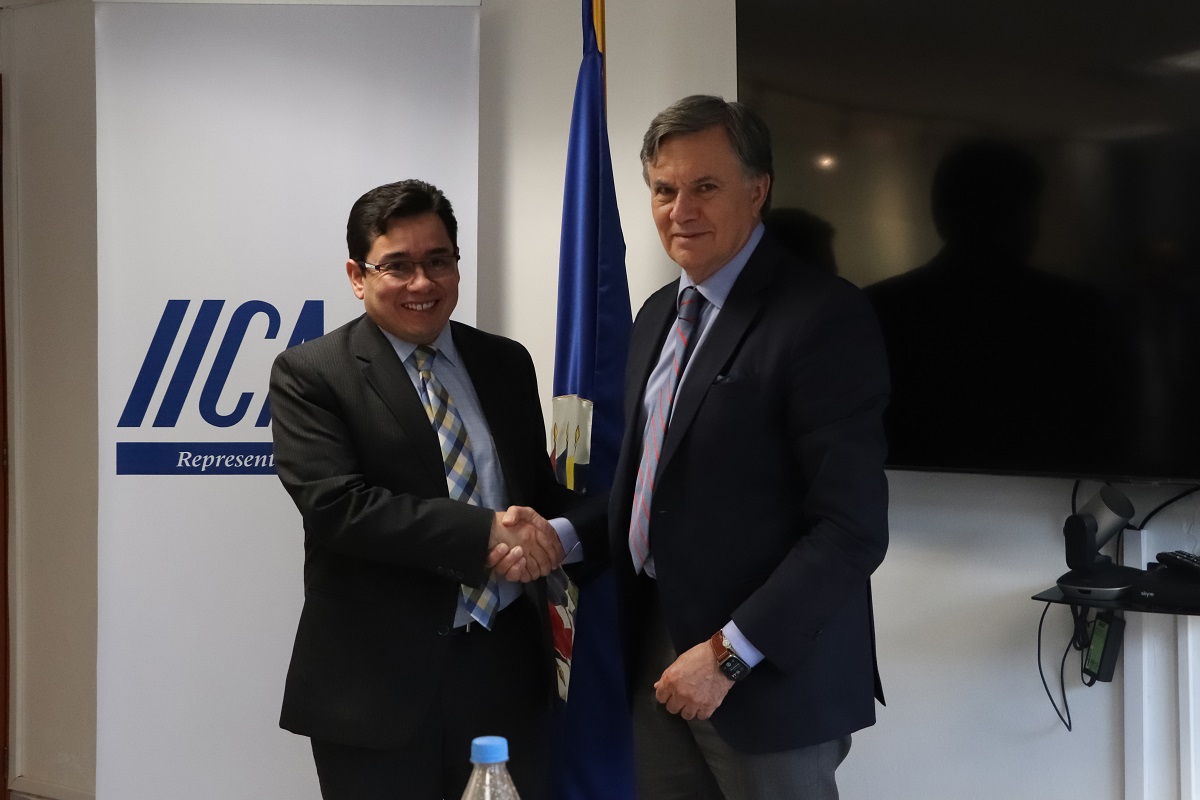
Mexico City, 10 March 2023 (IICA) – The National Service for Agrifood Health, Safety and Quality (SENASICA) of Mexico stressed that its technical collaboration of over thirty years with the Inter-American Institute for Cooperation on Agriculture (IICA) has helped position the country as a world leader in health matters.
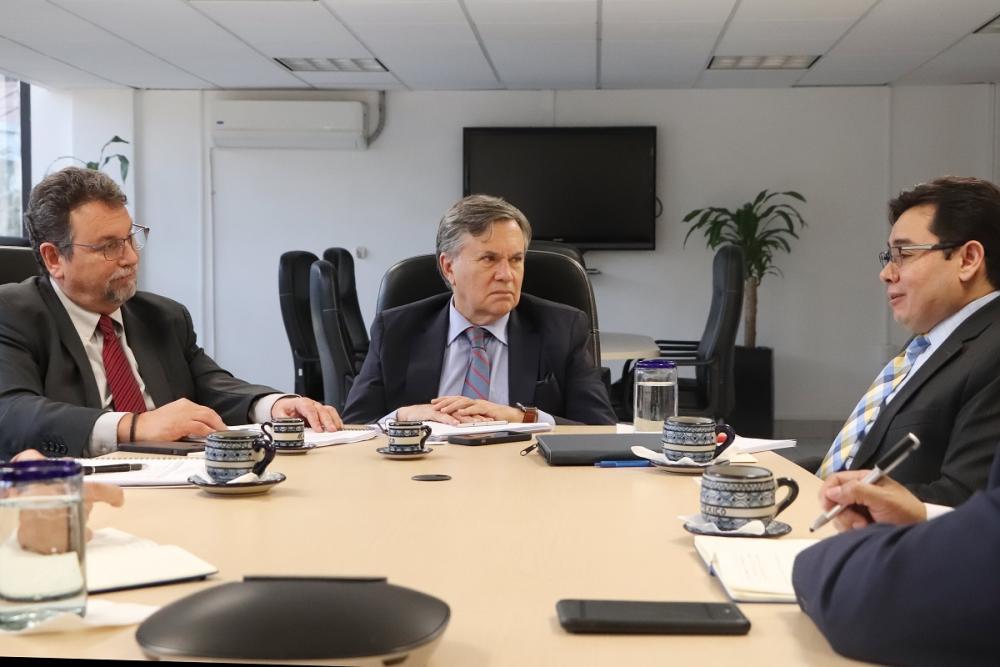
At a meeting with IICA Director General Manuel Otero and IICA’s Representative in Mexico, Diego Montenegro Ernst, SENASICA Director in Chief Javier Calderón Elizalde said that the partnership has been vital in protecting the agriculture sector in Mexico and throughout the Americas, and in strengthening the safe production and trade of healthy and safe foods.
Calderón said that Mexico has today an exceptional international health status, and in two decades has gone from being a deficit country to a major exporter of safe foods.
In this regard, the SENASICA Director in Chief said that in light of competition in food trade, countries must aim to constantly improve productive processes to guarantee the supply of foods at affordable prices and help farmers, especially small-scale ones, to access more and better markets.
Calderón also said that the Mediterranean Fruit Fly Program (MOSCAMED) administered by the Ministry of Agriculture and Rural Development (SADER) agency on the southern border is one example of the effectiveness attained by SENASICA and IICA, particularly in the implementation of actions against pests that could damage agriculture in Mexico and the rest of the continent.
“Mexico’s health concerns are not isolated; pests and diseases do not recognize borders, and that’s why in protecting agrifood production in Mexico, we protect it throughout the region”, he said.
Calderón also explained that, with IICA’s support, Mexican technical experts share their expertise with peers in other countries, in order to strengthen defense barriers against underlying risks, such as African swine fever (ASF), which has been present for over a year in the Dominican Republic and Haiti, and Fusarium oxysporum sp. cubense Tropical Race 4 (Foc TR4), which affects Colombia and Peru.
“SENASICA’s work to harmonize techniques for the prevention, control and elimination of pests and diseases would not succeed without IICA’s leadership, which brings together the agendas of 34 countries of the continent, from Canada to Argentina and Chile. We have constant communication with all the countries of the Americas; this is a major issue, which is why we organizations are involved in the day-to-day and IICA has that experience to bring efforts together”, he added.
IICA Director General Manuel Otero said that for three decades of uninterrupted relations with Mexico, the Institute has enabled SENASICA to provide the best possible service to the farming sector and consumers. “Mexico’s agricultural health status is exceptional. The challenge is to maintain it and replicate it in the region”, he said.
Diego Montenegro Ernst, IICA’s Representative in Mexico, said that cooperation with SENASICA in 2023 will focus on technical cooperation programs with health agencies such as that of California, USA, which is interested in learning from Mexico’s experience with the MOSCAMED program.
He also said that digital extension programs will be implemented to facilitate access to knowledge, information and agricultural technologies for farmers, rural groups and organizations. He said that several countries have made requests to visit SENASICA’s Health Emergencies Operations Center (COES), the infrastructure through which specialized personnel monitor exotic pests and diseases around the world, provide information on technical areas and support the work of plant and animal health inspection officers at ports, airports and borders to prevent their entry into Mexico.
Also present at the meeting were Martin Marajas and José Luis Ayala, administrator and technical coordinator of the IICA Delegation in Mexico, respectively, and Héctor Iturbe, Technical Secretary of IICA’s Governing Bodies.
More information:
Institutional Communication Division.
comunicacion.institucional@iica.int