At the 91st WOAH General Session, the participants underscored the importance of coordination among the countries of Americas as an embodiment of solidarity, transparency, and collaboration, which enabled 33 nations to present joint positions for review and approval by the other 150 WOAH member countries.
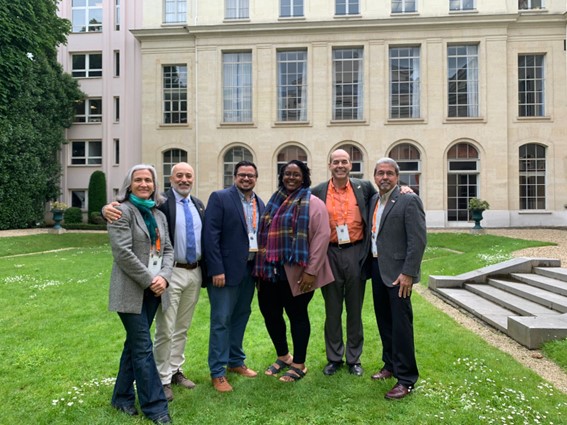
París, 6 June 2024 (IICA) – Delegates from the countries of the Americas at the World Organisation for Animal Health (WOAH) Assembly of Delegates, held in Paris, presented seven joint positions of regional interest with technical support from the Inter-American Institute for Cooperation on Agriculture (IICA) and the United States Department of Agriculture through its agencies FAS and APHIS (Foreign Agricultural Service and Animal and Plant Health Inspection Service).
The 91st General Session of the WOAH coincided with the 100th anniversary of the organization’s founding, and included the participation of IICA Director General Manuel Otero, IICA’s Animal Health and Food Safety Program (AHFS) manager José Urdaz, IICA Representative in Brazil Gabriel Delgado, and AHFS technical specialist Jaime Romero. The participants underscored the importance of coordination among the countries of the Americas as an embodiment of solidarity, transparency, and collaboration, which enabled 33 nations to present joint positions for review and approval by the other 150 WOAH member countries.
The approved standards aim to improve animal health and trade, rural welfare and food security, public health, and the environment.
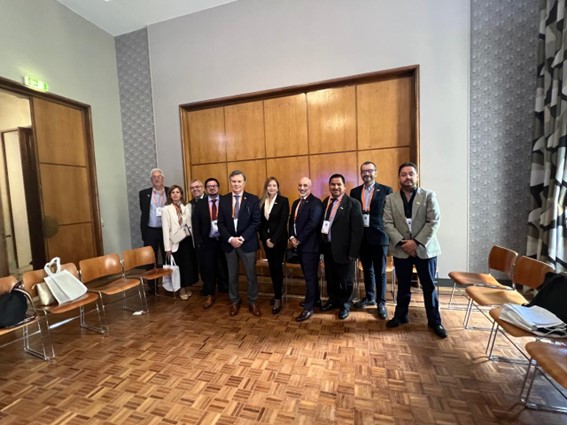
In this context, Otero, accompanied by Urdaz and Romero, met with delegates from the Andean region countries at WOAH, including ICA Colombia’s Deputy Manager of Animal Protection, Edilberto Brito; Agrocalidad Ecuador’s General Coordinator of Animal Health, Christian Zambrano; and Bolivia’s SENASAG National Head of Animal Health, Esper Burgos, as well as representatives from academia and the productive sector of these countries.
During the meetings, national and regional priorities were discussed, along with opportunities to deepen IICA’s cooperation in the region and the joint work with the General Secretariat of the Andean Community under the IICA-SGCAN agreement.
Regarding issues such as avian influenza and African swine fever, a request was made for continued coordinated work, as well as for further cooperation actions and support for holding in-person and virtual meetings, by the heads of animal health of the four Andean countries. The role of IICA in helping to share the positive experience of the Permanent Veterinary Committee of the Southern Cone (CVP) was particularly noted. It was also announced that Ecuador will host the Regional Commission for the Americas Conference in November, presenting an important opportunity to continue these actions.
Otero also met with Chile’s Minister of Agriculture, Esteban Valenzuela, and the head of the Animal Health Department of Chile’s Agricultural and Livestock Service (SAG), Hugo Araya, to discuss issues related to brucellosis, a zoonotic disease.
With Rosemary Sifford, APHIS Deputy Administrator, he reaffirmed the collaborative ties and reviewed work related to African swine fever in the Caribbean, extending to Central America, and expected to be implemented in South America. Attention was also drawn to the need for collaboration in the fight against the cattle screwworm in Central America and highly-pathogenic avian influenza.
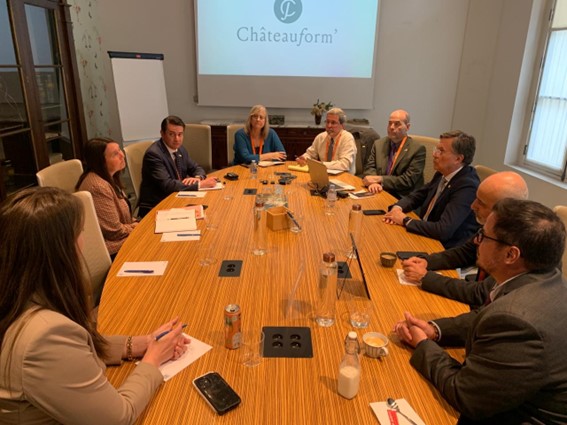
Other meetings were held with the Acting President of the Permanent Veterinary Committee (CVP), Hugo Araya, and its technical secretary, Gabriela Espejo, both from Chile’s SAG.
Accompanied by leading authorities of animal health, the private sector, and other members of the delegations from the six CVP countries, they expressed their satisfaction with the fruitful joint technical cooperation actions and requested the renewal of the existing agreement for another four years.
The formulation of joint positions was also highlighted, pointing out the crucial approval of the chapter on foot-and-mouth disease at the WOAH General Session. Mention was made of the workshop on the economics of foot-and-mouth disease that IICA will conduct in Chile in the second half of the year. Additionally, the role of IICA in supporting the sharing of experiences between the CVP, the CAN, and the OIRSA was emphasized, and support was requested from IICA to strengthen and coordinate the links between the CVP and the CAS.
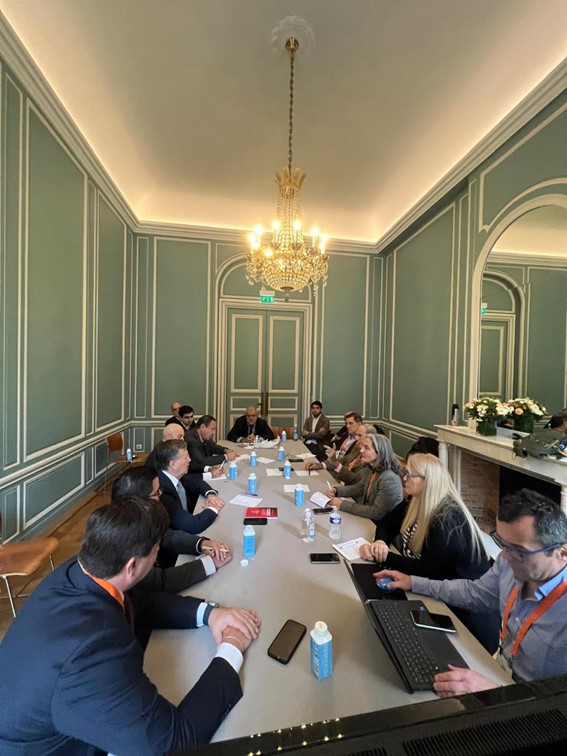
Other meetings were held with the Acting President of the Permanent Veterinary Committee (CVP), Hugo Araya, and its technical secretary, Gabriela Espejo, both officials from Chile’s Agricultural and Livestock Service (SAG).
More information:
Institutional Communication Division.
comunicacion.institucional@iica.int