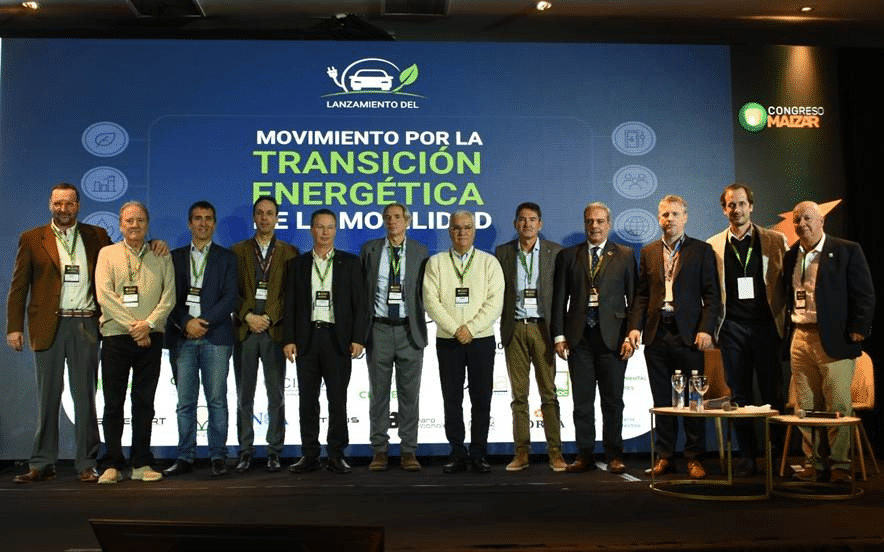
Buenos Aires, 2 June 2026 (IICA) — Within the framework of the Maizar 2026 Congress, the Inter-American Institute for Cooperation on Agriculture (IICA) participated in the signing of a Letter of Intent to create the MobilityEnergy Transition Movement, an initiative that brings together companies, industry associations, technical organizations, agricultural institutions, and civil society organizations from Argentina.
In addition to IICA, the signatory institutions include Toyota, Bosch, Stellantis, John Deere, the Argentine Sugar Center, Maizar, Carbio, the Corn Bioethanol Chamber, Ciara, Interis, DS Ingeniería y Proyectos, Acsoja, the Obispo Colombres Agro-Industrial Experimental Station, the IPAAT of Tucumán, CEPREB, CASFER, the Pan-American Chamber of Advanced Biofuels, the Argentine Chamber of Alcohols, Porta Hnos., and the Nueva Generación Argentina Foundation, among other organizations linked to energy and agro-industrial development.
The IICA Representative in Argentina, Fernando Camargo, highlighted the importance of the agreement and stated: “I believe that today we are beginning an absolutely unprecedented and revolutionary movement for agriculture and for the energy transition in Argentina. We have signed a letter of intent and we will join forces to embark on a path that Brazil has already been following for some time and for which Argentina is now prepared.”
“This is an initiative aimed at promoting a strategic agenda to accelerate the energy transformation of the mobility sector in this country,” added Agustín Torroba, IICA Specialist in Biofuels and Renewable Energies.
The shared aspiration of the participating entities is to build a common agenda that will accelerate the development of sustainable energy solutions, strengthen industrial competitiveness, and promote an energy transition adapted to Argentina’s capabilities and opportunities. Biofuels emerge as one of the leading solutions, alongside other options such as hydrogen and electric mobility.
During this first stage, IICA will assume the functions of coordination and provisional technical secretariat. The Institute will be responsible for institutional coordination and the organization of the work agenda until a formal governance structure is defined.
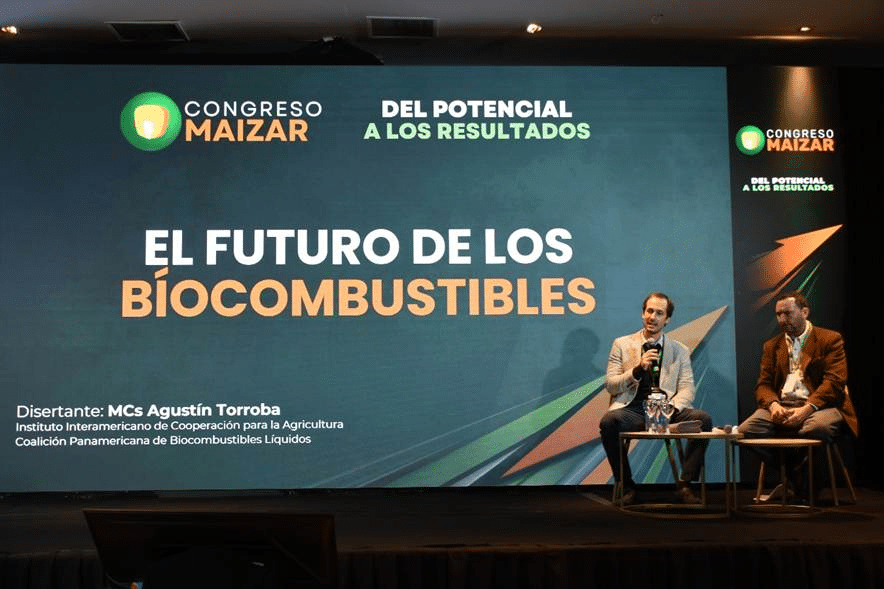
In addition, both IICA and CPBIO participated in various panels focused on the future of biofuels. The discussions on biofuel development and the launch of the Mobility Energy Transition Movement were moderated by Patrick Adam, Executive Director of the Corn Bioethanol Chamber.
In that context, Agustín Torroba presented on the opportunities available to Argentina in the production of Sustainable Aviation Fuels (SAF) and marine biofuels. “Argentina is still significantly behind in SAF production; there is not a single plant currently in operation. This situation should be changed, and to do so it would be advisable to advance CORISA environmental certifications for potential agricultural value chains such as corn and vegetable oils, and to move forward with environmental diplomacy actions in forums where civil aviation sustainability standards are discussed, actively involving the private sector,” said Torroba.
He also highlighted the growth in the use of biofuels for the maritime sector, where they are blended with fuel oil and are showing sustained international expansion, with dynamics similar to those of sustainable aviation fuel. This creates opportunities for biodiesel, which can be blended with marine fossil fuel at rates of up to 30%. There are also dual-fuel vessels that operate on pure methanol and ethanol depending on the port where they refuel. Currently, there are 293 dual-fuel vessels, representing only 0.3% of the global fleet, but more than 10% of new shipbuilding orders worldwide have these characteristics. This makes ethanol an excellent option for decarbonizing maritime transport.
The panel also featured the participation of Daniel González, Secretary of Energy and Mining Coordination of Argentina, who referred to the biofuels bill promoted by the national government, which proposes increasing ethanol blends from 12% to 15% and biodiesel blends from 7.5% to 10%.
More information:
Institutional Communication Division.
comunicacion.institucional@iica.int