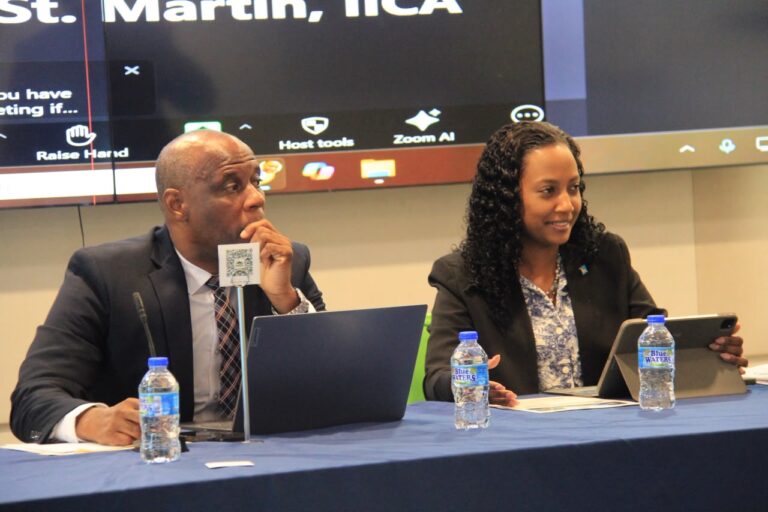

Colombia’s Vice Minister of Agricultural Affairs, Geidy Xiomara Ortega Trujillo, presented the main policy instruments being used to promote the adoption of bioinputs in her country.
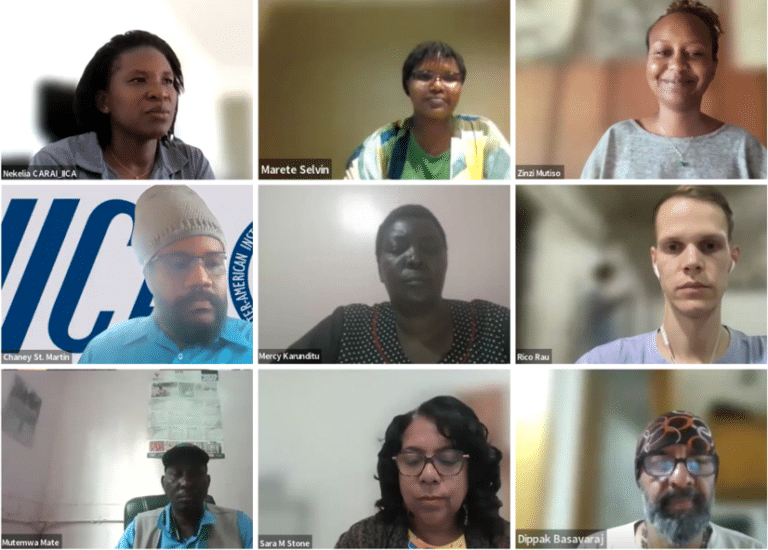
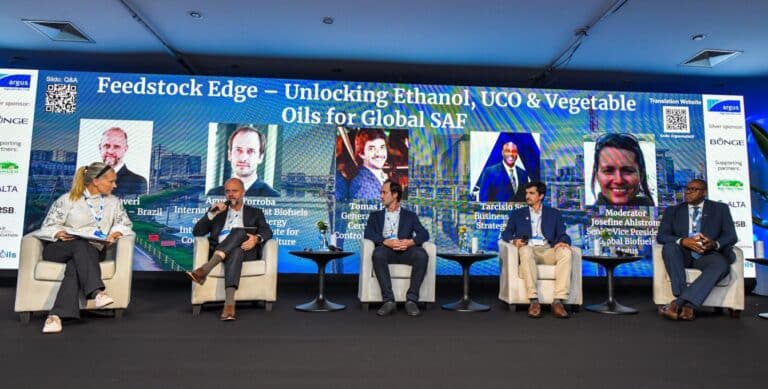
Bogotá, 29 October 2025 (IICA). More than 200 representatives from 18 countries, plus 47 speakers, came together for the Third Pan-American Bioinputs Forum in Colombia, an event consisting of two days of technical and political dialogue and one day of field visits. It was a reaffirmation of the commitment of the Americas to more sustainable, competitive and science-based agriculture.
Organized under the leadership of the Inter-American Institute for Cooperation on Agriculture (IICA) in its capacity as the Executive Secretariat of the Hemispheric Bioinputs Platform, working in tandem with Colombia’s Ministry of Agriculture and Rural Development (MADR), AGROSAVIA, the Colombian Agricultural Institute (ICA), the World BioProtection Forum and the From Farm to Fork initiative (GIZ), the forum has established itself as the principal event in the region for technical and political discussions on bioinputs.
During the opening ceremony, Vice Minister of Agricultural Affairs Geidy Xiomara Ortega Trujillo highlighted Colombia’s leadership and the importance of cooperation between countries to advance toward more sustainable agriculture.
“Colombia has made decisive progress in promoting bio-inputs, underpinned by a bioeconomy policy that combines science, regulation and sustainability. This forum demonstrates that cooperation between countries is key to scaling up biological solutions that improve productivity and protect the planet”, the Vice Minister said.
IICA’s representative in Colombia, Breno Tiburcio, welcomed the participants and emphasized the fact that the forum reflects the type of cooperation that the Institute encourages. “IICA promotes a vision in which the bioeconomy and bioinputs are essential elements for transforming agriculture, regenerating soils and reducing dependence on synthetic chemical products. When countries share knowledge, change becomes possible and takes place more quickly”, he suggested.

Participants in the Pan-American Bioinput Forum pictured during the technical visit to AGROSAVIA’s La Selva Research Center, where they learned about successful practices for the development and application of bioinputs for more sustainable agriculture.
The progress achieved in recent years is the result of a collective, hemisphere-wide effort. Under the Hemispheric Bioinput Platform countries have harmonized ideas, generated scientific evidence, and constructed a shared vision of how to scale up technically sound biological solutions in a responsible manner.
Managed by IICA, the Platform offers the sector advice on good practices for the development, production and evaluation of bioinputs; coordinates public and private efforts; promotes strategic partnerships for knowledge sharing: and involves the entire value chain in addressing common challenges. It also proposes guidelines, methodologies and strategies for guiding national policymaking, and connects the technological supply with the demand, facilitating connections between specialists, institutions and companies from different countries.
Minshad Ali Ansari, founder and CEO of Bionema Group and President of the World BioProtection Forum, highlighted the region’s potential to spearhead the global biological transition.
“Latin America has the biodiversity, talent and motivation to spearhead the global biological revolution. Real innovation doesn’t end in the laboratory; it must be translated into reliable products, efficient regulation and empowered farmers”, Ansari said.
Harold Gamboa, IICA international specialist and Executive Secretary of the Hemispheric Bioinputs Platform, closed the meeting with a message that underlined the need for science and action.
“Each bioinput is a case of the extraordinary intelligence of Nature being placed at the service of agriculture. The region not only needs to innovate; it needs to re-learn from the biology that regenerates soils, protects plants and sustains life. The Pan-American Bioinput Forum is not just an event; it is a declaration of intent, with many voices and many countries insisting that we must translate into action”, Gamboa said.
The forum concluded with a technical field tour that allowed 70 people to visit the facilities of Natural Control, Flores El Capiro, and AGROSAVIA’s La Selva Research Center, where they observed successful practices in the development and application of bioinputs, an example of how biological innovation can transform agriculture at the point where everything begins: the land itself.
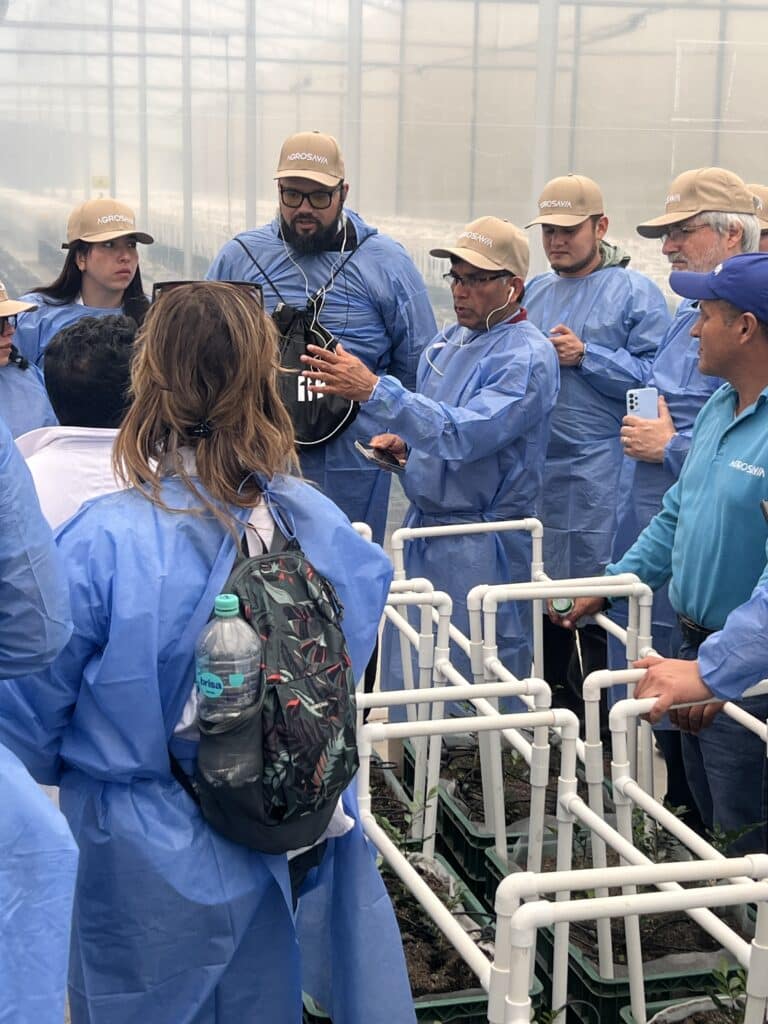
During the technical tour organized for the Pan-American Bioinputs Forum, participants visited production facilities where they learned about innovative processes for the development and application of bioinputs that help make agriculture more sustainable.
“The hemisphere’s agricultural future will depend on our ability to translate science into policy, policy into action and action into real impact. The region can no longer simply talk about biological transition; it must test it, measure it and experience it in the field, with farmers, researchers and regulators working together”, the IICA specialist added.
The Institute and its partners reaffirmed their commitment to continue promoting regional cooperation through the Hemispheric Bioinput Platform’s working groups, dedicated to regulation, adoption and financing, to transform knowledge into tangible results that strengthen sustainable agriculture in the Americas.
More information:
Institutional Communication Division.
comunicacion.institucional@iica.int