Inter-American Institute for Cooperation on Agriculture

IICA and PROCINORTE deliver hands-on training in Mexico to strengthen preparedness for African and Classical Swine Fever

Tiempo de lectura: 3 mins.

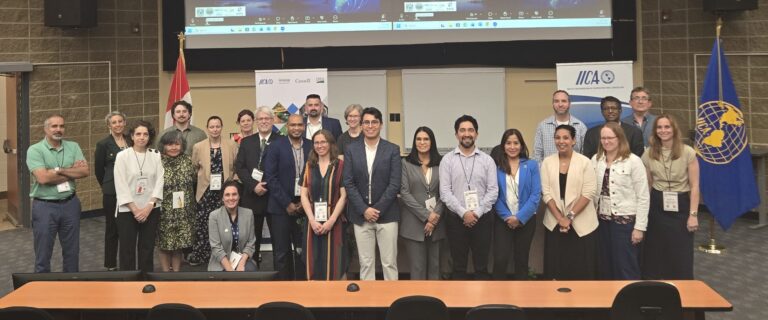
On 27–28 January 2026, PROCINORTE’s Animal Health Working Group and the PROCINORTE Executive Secretariat delivered an in-person training course in Guadalajara, Mexico: “African and Classical Swine Fever: Detection, Prevention and Control.”

Designed for government and private-sector veterinarians, technical personnel, and professionals from Mexico’s swine sector, the course aimed to strengthen technical competencies and preparedness for the detection, prevention, and control of African swine fever (ASF) and classical swine fever (CSF), with a focus on epidemiology and response capacity in the event of a potential introduction.

The two-day program combined technical sessions with practical training. Day one took place at Fiesta Inn Guadalajara Aeropuerto and covered core topics such as ASF/CSF pathogenesis and transmission pathways, the global situation, Mexico’s experience in eradicating CSF, sampling and shipment criteria for laboratory diagnosis, key diagnostic techniques and their limitations, containment and control protocols, epidemiological surveillance, on-farm biosecurity measures, and safe carcass disposal.

Day two was held at the Regional Animal Pathology Laboratory in El Salto and featured hands-on practice in necropsy techniques under suspected swine disease scenarios, as well as sampling and handling procedures to support reliable diagnostic results.

It is also worth noting that IICA Canada hosts PROCINORTE’s Executive Secretariat, supporting coordination and technical cooperation across the region.
Share

Related news​

San José, Costa Rica

April 23, 2026

IICA and the Hemispheric Bioinputs Platform launch a series of international dialogues on innovations that are revolutionizing this key sector for agriculture in the Americas

As many as 180 people from a number of countries across the region took part in the first session in the series, which was entitled The new generation of CRISPR-edited microbial biofertilizers. CRISPR is a biotech tool used to modify the DNA of microorganisms such as fungi and bacteria with great precision, so that they absorb nutrients and interact with crops more efficiently, giving rise to technologies with less environmental impact.

Tiempo de lectura: 3mins

San José

April 22, 2026

With IICA’s participation, consortium of national agricultural research systems solidifies its standing as a united voice to influence global innovation agendas

A year after its launch, the global consortium that brings together national agricultural research systems (NARS) has taken important steps towards solidifying its standing as a united voice, with the aim of influencing policymaking, mobilizing resources, and participating effectively in international agendas on this topic.

Tiempo de lectura: 3mins

Santiago de Chile

April 22, 2026

Water as a priority: IICA shares specific technical cooperation practices at forum in Chile

The Inter-American Institute for Cooperation on Agriculture (IICA) actively participated in a discussion on one of the planet’s most vital resources: water. It did so within the framework of the Ninth Meeting of the Forum of the Countries of Latin America and the Caribbean on Sustainable Development, organized by the Economic Commission for Latin America and the Caribbean (ECLAC) and held in the Chilean capital.

Tiempo de lectura: 3mins