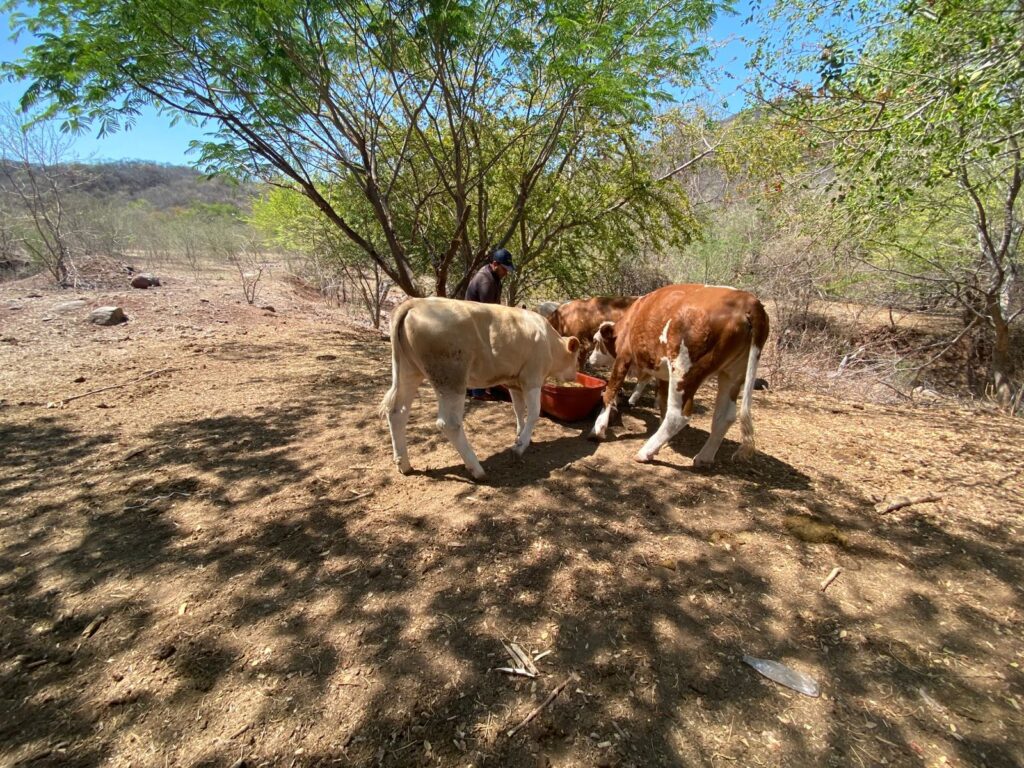
Mexico City, 17 June 2026 (IICA). On small cattle farms in different regions of Mexico, irregular rainfall, heat waves, droughts, and floods are now part of the everyday challenges that livestock producers face.
These conditions affect water availability, pasture, and fodder, and also increase the risk of pests, diseases, and parasites, with direct impacts on the nutrition, health, and productivity of livestock.
In response to these challenges, the Inter-American Institute for Cooperation on Agriculture (IICA),under the aegis of the SAbERES project, is implementing a strategy aimed at promoting resilient and sustainable livestock farming through ecosystem-based adaptation practices tailored to local climate conditions in the states of Chiapas, Jalisco, Michoacán, and Tabasco, in the west and southeast of the country.
The strategy promotes measures designed to enable cattle farming families to strengthen their production units, restore the natural environment, and improve the availability of key resources for livestock farming.
SAbERES is currently promoting territorial innovation processes with organizations and families that raise livestock on almost 17,000 hectares of land, enhancing the capacities of nearly 2000 farmers.
Trees that provide shade and food and give life to grazing land
One of the key measures has been to increase tree cover on the cattle farms involved through the establishment of living fences and the conservation of trees scattered across grazing land. These practices help generate shade, improve the microclimate, conserve biodiversity, and provide food for livestock during the dry season, or the period during which water levels are at their lowest. In addition to their ecological benefits, they help reduce heat stress in livestock, improve soil conditions, and boost the productivity of livestock systems.
“The use of living fences reduces the cost of replacing posts. By conserving trees scattered across grazing land, we ensure that food is available during the dry season from a wide variety of trees, including species such as the guamúchil, plum, mojote and cascalote. We create a microclimate on the farm and achieve biological control by attracting birds to the area,” explained Leticia Vaca Cárdenas, a cattle farmer from José María Morelos, Tomatlán, Jalisco, in western Mexico.
Better water distribution to strengthen production
Another key component is efficient water management, which is achieved by employingcollection, storage, and distribution practices, such as the use of jagüeyes and ollas de agua (natural depressions and small artificial reservoirs), rainwater harvesting systems, and roofing and designs that make it possible to exploit water resources.
According to the cattle farmer, these actions ensure the supply of water for livestock and improve pastureland management.
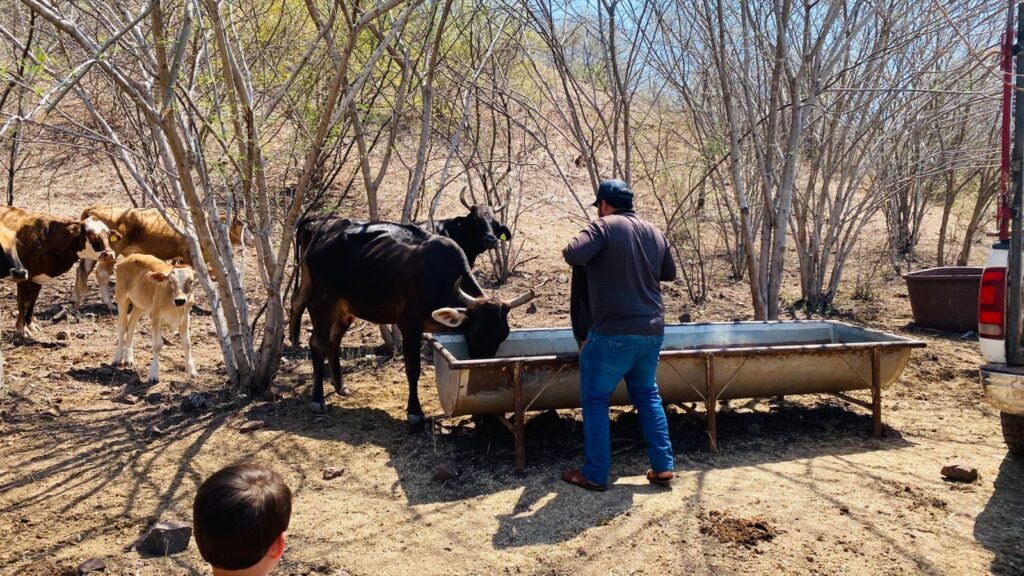
“Collecting rainwater ensures water is available, and we distribute it across our grazing land, bringing the water closer to the cattle and thus preventing physical wear and tear,” she said.
These measures make it possible to better cope with periods of drought and climate variability, reducing the vulnerability of production units.
More diverse and resilient production systems
The strategy also promotes silvopastoral and agrosilvopastoral systems for cattle production. These are integrated models that simultaneously strengthen productivity, natural resource conservation, and climate resilience through the coordinated management of trees, pasture, fodder, soil, water, and livestock. These practices foster the recovery of ecological functions on cattle farms, improve animal welfare, and generate environmental, productive, and economic benefits for livestock farming families.
Likewise, increased tree cover and more efficient water management are complemented by the diversified use of pasture and fodder, the division of grazing land, the use of electric fences, the establishment of biomass and protein banks, and the implementation of rotational grazing systems. These practices make it possible to optimise the use of fodder, stimulate the recovery of plant cover, and improve the infiltration of water into soils.
“Rotational grazing on our pastureland and the establishment of protein banks help us improve animal nutrition, and productivity increases. We improve the natural fertility of the soil with manure and urine, and the most important thing is the reduction in production costs. Thus, we have healthy soils and long periods during which the land is left fallow, and we improve biodiversity,” added the Jalisco producer.
Territorial innovation networks to learn and transform
Through territorial innovation and learning networks, farming families participate in collaborative processes in which they exchange experiences and knowledge, validate practices in the field, and increase their capacity to adapt to climate change.
Blanca Indira Romero Goicoechea, from the La Chuchilla ranchería (communal settlement) in Balancán, Tabasco, in the southeast region of the country, emphasized that sustainable livestock farming makes it possible to recover and conserve the natural environment, improve the income of farming families, and strengthen collective work in the territories.
“We are one of the more than 1800 families that are building sustainable stock raising, learning and collaborating in territorial innovation, and learning networks,” she said.
What makes this experience important is that it shows how, based on concrete practices and technical support in the territory, livestock families can strengthen their production systems, make better use of natural resources, and move towards more sustainable models.
The experience promoted by IICA in Mexico demonstrates that climate adaptation in livestock farming can be built from within the territory, through practical solutions that integrate technical knowledge, local innovation, and sustainable natural resource management.
More information:
Institutional Communication Division.
comunicacion.institucional@iica.int