
IICA participated in a discussion on water management during the Ninth Meeting of the Forum of the Countries of Latin America and the Caribbean on Sustainable Development, organized by ECLAC and held in Santiago, Chile.
Santiago, Chile, 21 April 2026 (IICA). The Inter-American Institute for Cooperation on Agriculture (IICA) actively participated in a discussion on one of the planet’s most vital resources: water.
It did so within the framework of the Ninth Meeting of the Forum of the Countries of Latin America and the Caribbean on Sustainable Development, organized by the Economic Commission for Latin America and the Caribbean (ECLAC) and held in the Chilean capital.
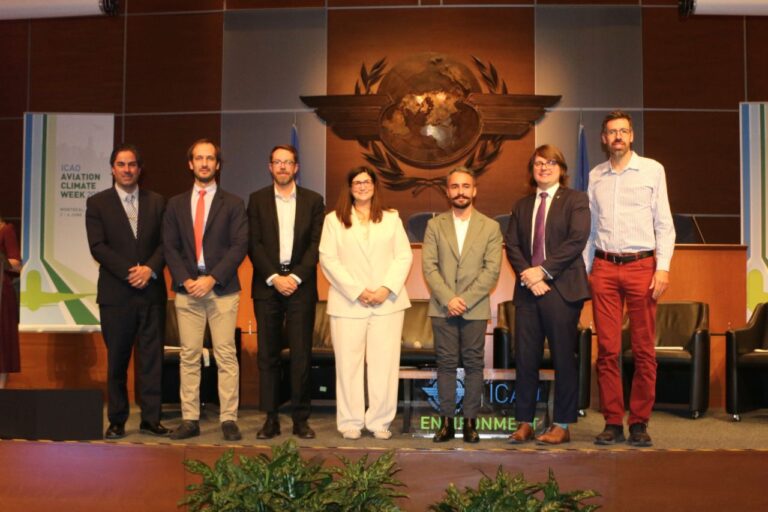
Hernán Chiriboga, IICA Representative in Chile, took part in a panel discussion on clean water and sanitation, whose other participants included René Orellana, FAO Deputy Director-General and Regional Representative for Latin America and the Caribbean, who served as the moderator; Ruth Quevedo, Deputy Minister of Water and Basic Sanitation of Colombia; David Fariña, General Director of Water Resources Protection and Conservation of Paraguay; and James McPhee, Full Professor of Civil Engineering at the University of Chile.
In his remarks, Chiriboga shared three specific technical cooperation initiatives that IICA is promoting in the region to improve the care and responsible use of water:
1. Non-flooded, low-methane and water-saving rice
Traditional flooded rice cultivation generates large amounts of methane emissions, making this sector the second largest emitter of the gas after livestock farming. The Inter-American Institute for Cooperation on Agriculture (IICA) promotes a non-flooded cultivation technique that significantly reduces emissions, while also achieving substantial water savings. To measure and verify these advances in the field, IICA has provided high-tech equipment as part of a multi-country project implemented in Latin America.
2. Water and Soil Conservation Works (WSCWs) on regenerative demonstration plots
IICA supports the implementation of water and soil conservation works (WSCWs) on farms adopting a regenerative approach. These are approximately 20 easy-to-implement, low-cost projects that make it possible to retain water and restore soil fertility. Their design makes them replicable across the hemisphere, especially in areas with eroded soils or coastal dryland climates, demonstrating that food production and water conservation are fully compatible objectives.
3. Irrigation with clay pots for urban and peri-urban agriculture
Reviving an ancestral technique, IICA is promoting the use of clay pots as a precision irrigation system for smallholders in urban and peri-urban areas. This ancient, low-cost, and highly efficient method delivers water directly to the roots of plants, minimizing losses from evaporation. This initiative also boosts the local economy by integrating artisans and farmers in a collaborative effort, creating agroecological irrigation systems that link a cultural tradition with sustainable food production.
More information:
Institutional Communication Division.
comunicacion.institucional@iica.int