San José, 22 April 2026 (IICA) –A year after its launch, the global consortium that brings together national agricultural research systems (NARS) has taken important steps towards solidifying its standing as a united voice, with the aim of influencing policymaking, mobilizing resources, and participating effectively in international agendas on this topic.
With the participation of the Inter-American Institute for Cooperation on Agriculture (IICA), in its capacity as the Executive Secretariat of the Forum of the Americas for Agricultural Research and Technological Development (FORAGRO), the Global NARS Consortium (GNC) was officially launched in April 2025 in Nairobi, Kenya, during CGIAR Science Week. During that event, international organizations, the private sector, researchers, and policymakers from around the world discussed ways to increase productivity and promote new technologies in rural areas.
The establishment of this consortium of national agricultural research systems from more than 30 countries was based on the premise that no country can resolve the issue of food security on its own. This is especially true within the current context of growing risks and biodiversity loss, coupled with a decline in the availability of development funding.
In late 2025, the strategy and planning of the Global Forum on Agricultural Research and Innovation (GFAiR) and its linkages with the various regional forums, the GNC, and CGIAR were validated.
On that occasion, the region’s national agricultural research and innovation institutes (NARIs) shared their perspectives and analyzed opportunities to collaborate with institutes in other regions. Participants also shared their input regarding the GNC’s role in strengthening partnerships between NARS and CGIAR to capitalize on science and innovation to transform agrifoodsystems.
TheGNC seeks to strengthen partnerships between countries in the Southern region and international scientific organizations, with the aim of improving their representation at the global level and better positioning their shared priorities.
More than 250 institutions, including IICA, attended the launch event in Nairobi. The consortium is now comprised of 220 organizations from 34 countries, and has achieved progress in establishing a democratic governance structure that amplifies the voices of women and youth within research systems.
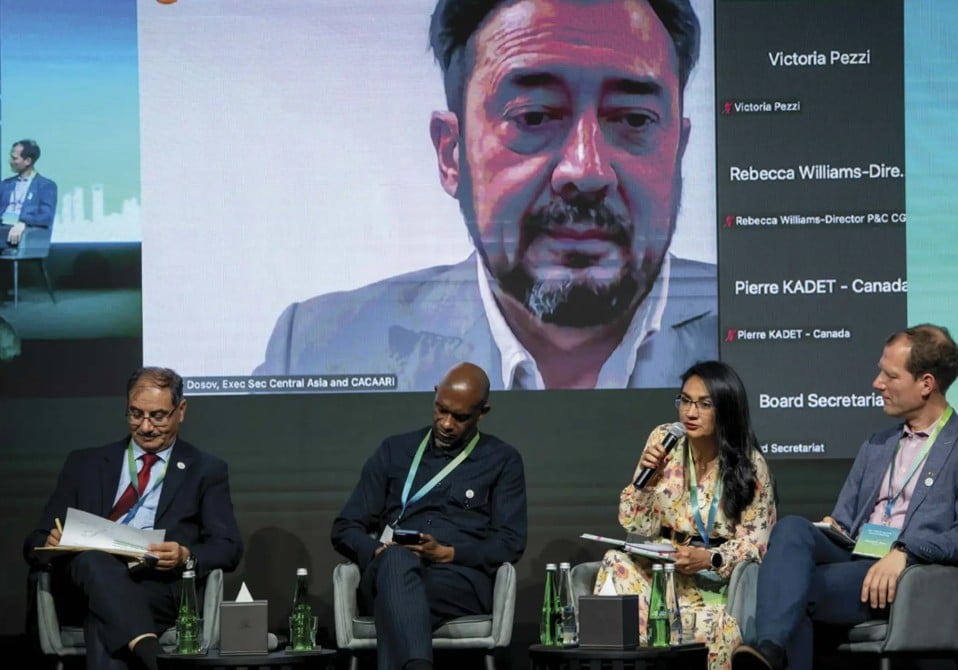
The GNC seeks to contribute to agricultural transformation. In that regard, the consortium’s Coordinator, Botir Dosov, noted that although research systems play a critical role in agricultural innovation, their voice remains fragmented.
One of the key roles of the initiative is to serve as a cross-regional learning platform that enables institutions in the Americas to collaborate with those on other continents, for instance. It also seeks to empower national research systems so that they may take part in shaping their own work agendas, which are often determined by global institutions.
FORAGRO contributed to drafting the 2026 action plan of GFAiR and the GNC. The plan includes strategic actions to strengthen the participation of the region’s national agricultural research systems in GFAiR and the GNC; the development of case studies; as well as efforts to advance collective actions aimed at reviving forgotten or underutilized crops, fostering inclusive agricultural digitalization, driving the implementation of agroecological practices, and preventing extreme weather events.
“The GNC could become an incredibly important platform for the region’s national agricultural research institutes given the potential to exchange information, negotiate joint projects, and identify solutions to current issues based on the experiences of other regions,” noted Hugo Chavarría, Executive Secretary of FORAGRO.
“Interregional efforts to scale up technologies by sharing good practices, science-based solutions, and experiences play a key role in ensuring that science, technology, and innovation translate into productivity, added value, and sustainability,” added Karen Montiel, Innovation Specialist at IICA.
The consortium highlights the essential role farmers and local communities must play in co-leading research projects to ensure that they adequately reflect their needs and realities. Another priority of the consortium is to contribute to securing long-term financing to carry out sustainable projects that address critical challenges such as soil degradation and the reemergence of transboundary plant and animal diseases.
More information:
Institutional Communication Division.
comunicacion.institucional@iica.int