San José, 27 May 2026 (IICA). Following the renewal of their working partnership, IICA and CIRAD are to promote actions in Latin America and the Caribbean designed to contribute to the development of research, innovation, and capacity building in areas critical to sustainability and rural well-being.
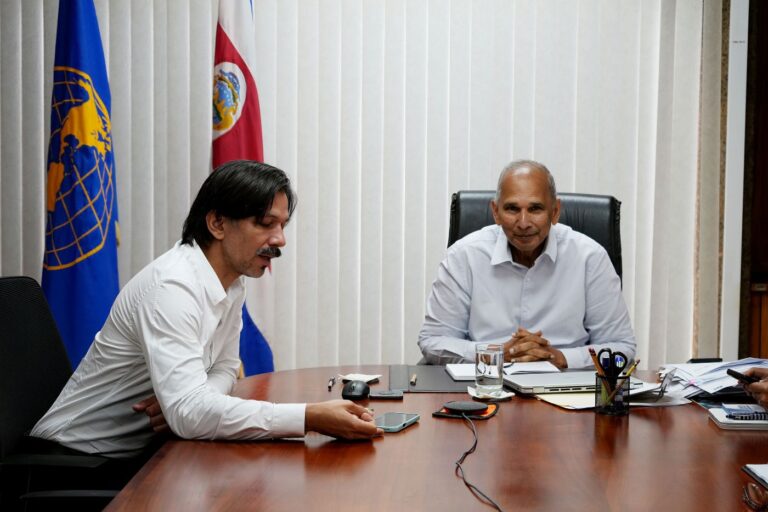
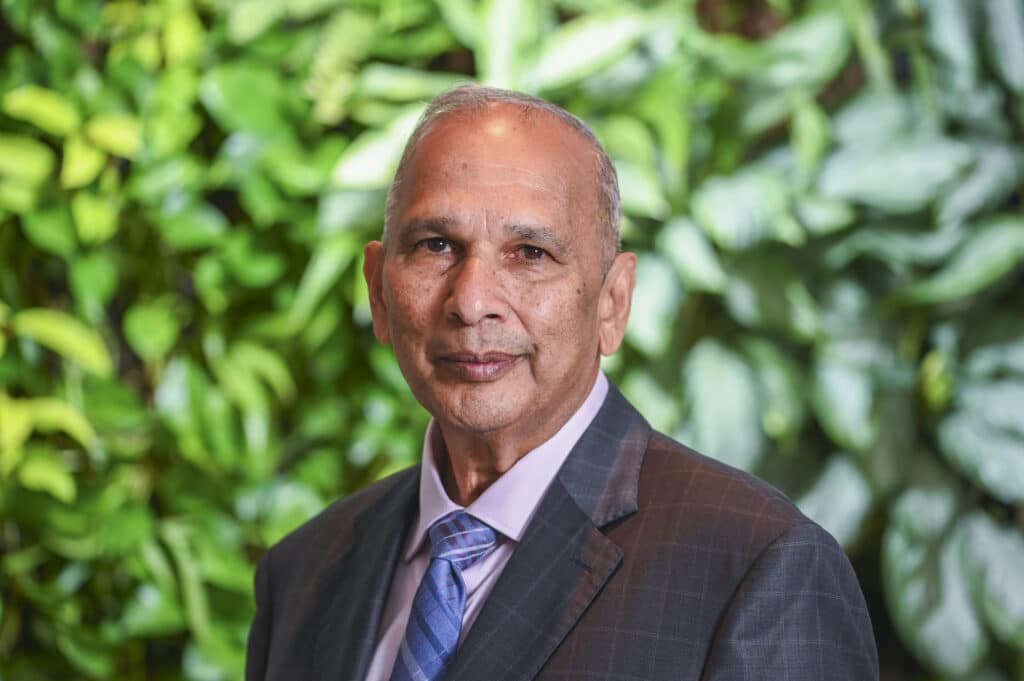
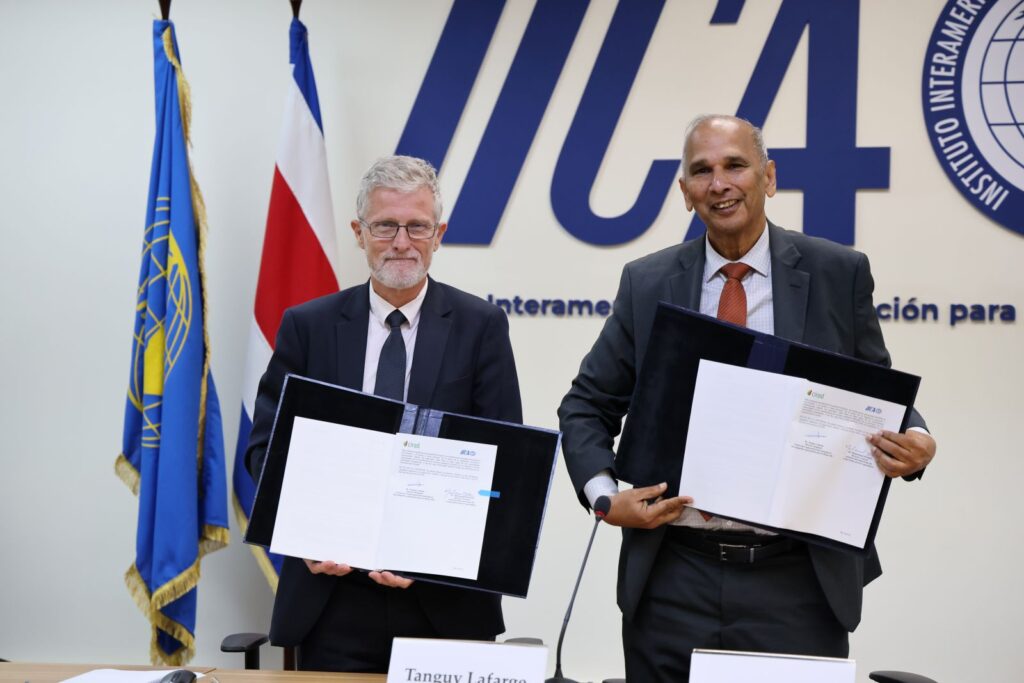
A four-year agreement was signed by Muhammad Ibrahim, Director General of the Inter-American Institute for Cooperation on Agriculture (IICA), and Tanguy Lafarge, Regional Director of the French Agricultural Research Centre for International Development (CIRAD).
The work will prioritize initiatives that form part of a comprehensive approach to agroecological transition and agricultural health in areas such as agroforestry and forest management, resilient and competitive tropical agriculture, science, technology and innovation, bioinputs that reduce dependence on agrochemicals, integrated crop management and regenerative agriculture, precision agriculture, animal and plant health, soils and ecosystems, public policies for sustainable agrifood systems, governance, and institutional coordination.
“Latin America and the Caribbean face critical challenges, from transboundary diseases such as fusarium wilt in bananas and the screwworm in cattle, to high production costs and environmental challenges; hence the coordination of research with innovation is key to tackling the vulnerability of the agrifood sector. CIRAD is a strategic partner for this, given its experience and presence in tropical regions, promoting South-South cooperation,” the IICA Director General said.
“IICA is a key priority partner with which we want to build common initiatives. For CIRAD, research only makes sense if it impacts development and producers, and it is essential that science is linked to public policies designed to support transformations in the agricultural sector, for example, through the network of 23 global, multi-stakeholder collaboration platforms, and the four we have in Latin America and the Caribbean,” Tanguy Lafarge explained.
“Thanks to its international reach, CIRAD facilitates connections with initiatives and the exchange of innovations with Africa, Southeast Asia, and Europe,” he added.
Dialogue on Innovation for Sustainability
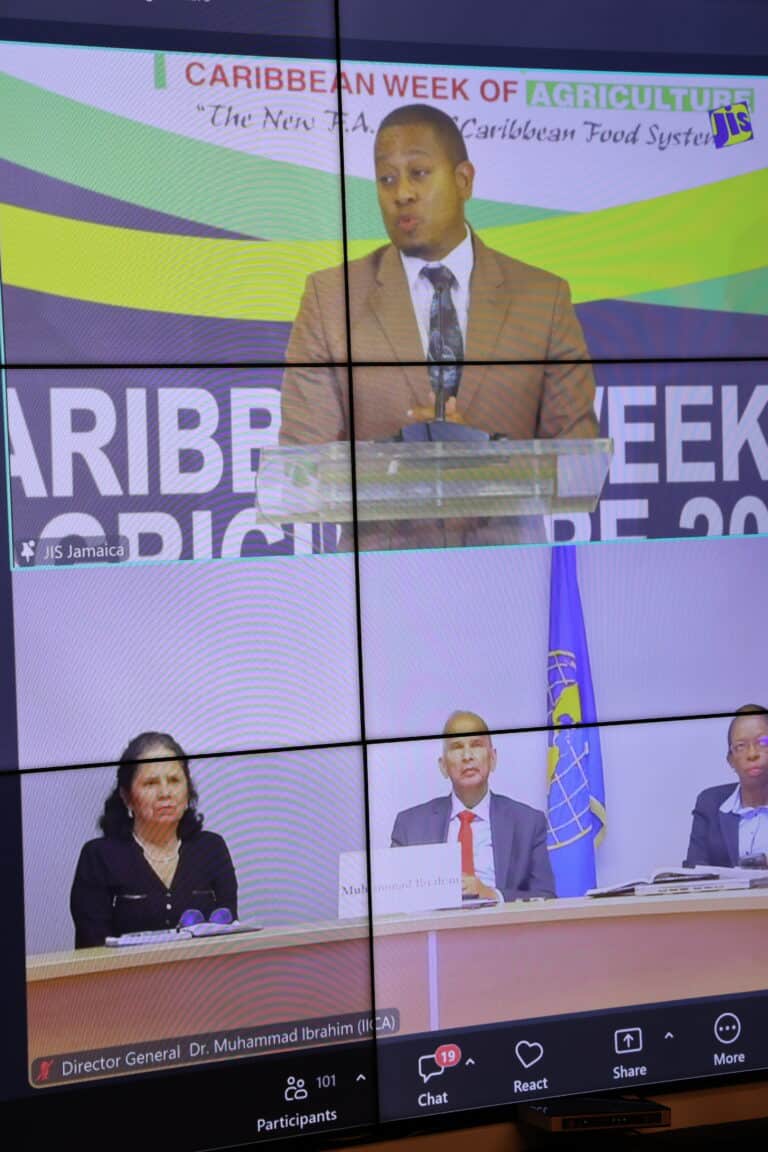
To kick off the new stage of cooperation, the two institutions held a technical forum that brought together more than 80 participants. Divided into three sessions, it focused on issues that are a priority for the future of agriculture in the region.
The first session addressed the agroecological transition, including the use of good agricultural practices, integrated pest management, the reduction of pesticide residues,and the use of bioinputs. The speakers were Harold Gamboa, international specialist with IICA’s Innovation and Bioeconomy program, and Luc Villain, a CIRAD researcher specializing in sustainable coffee production systems and the scientific director of the Ecoffee initiative, working at the Agroforestry and Genetic Improvement of Coffee and Cacao Unit of the Tropical Agricultural Research and Higher Education Center (CATIE).
Gamboa emphasized the need to speed up the agroecological transitionin Latin America and the Caribbean through the use of bioinputs, good agricultural practices, and integrated pest management, as well as the importance of coordinating science, policies, and the market in order to overcome gaps in regulation, financing, and capabilities.
“Bioinputs are no longer an isolated technical issue but a strategic priority for the sustainability, innovation, and resilience of agricultural systems,” the IICA specialist pointed out.
Villain presented Ecoffee, a multisectoral initiative under a public-private partnership that CIRAD has spearheaded since 2020, whose objective is to reduce the use of pesticides in coffee-growing systems worldwide.
“The fact that the use of pesticides in Latin America has increased six times over in the past 30 years highlights the urgent need to speed up the agroecological transition in crops such as coffee. It is possible to reduce pesticide use through integrated pest,disease and weed management strategies, combining tools such as resistant varieties, bioinputs, and good agricultural practices, and through the participation and coordination of all the stakeholders in the value chain,” he explained.
The second session focused on the transformation of agrifood systems, linked to the improvement of nutrition and food quality, biodiversity, equipment prototypes, and marketing. The speakers were Isahí Ugalde, a food quality specialist at IICA, and Adrien Servent, a researcher at CIRAD who specializes in the processing of food and food products.
Ugalde pointed out that to transform agrifood systems, advantage must be taken of biodiversity and native foods to improve nutrition, promote innovation in processing and equipment for SMEs, and strengthen marketing with value added and standards that make it possible to reduce losses and compete in markets. “Today, hunger, undernourishment, and obesity coexist within the same food systems, which demonstrates the urgent need to transform our production models. Innovation must turn biodiversity into nutritious food with market value,” he observed.
Servent, a member of CIRAD’s QualiSud research unit, gave details of this initiative, which promotes quality, safety, and innovation in agrifood systems by strengthening technical and scientific capacities for the sustainable development of agricultural and food chains. “There is no one-size-fits-all solution for agribusiness innovation; every company requires support and scientific and technical solutions adapted to its production needs. Food processing must take advantage of biodiversity through innovative, sustainable technologies that add value and strengthen local businesses,” he said.
The last block focused on agroforestry and the development of forest products. The session was led by researchers from CIRAD’s Plant Health Unit, ecologist Mónica Arias, and plant pathologist Catherine Abadie, together with Daryl Medina, Coordinator of the Forest Alliance of the Living Forests of Honduras Project, who is based at IICA’s Delegation in that country.
Arias spoke about Agroforesta, an interagency scientific collaboration platform that promotes agroforestry systems in Latin America. She and Abadie cited positive developments andongoing research on pests and diseases of diversified coffee, cacao, and banana systems.
“The Agroforesta platform promotes agroforestry as a solution to conserve biodiversity and strengthen food security in the region,” Arias explained.
Abadie demonstrated the reduction in the incidence of banana diseases through “the inclusion of cacao cultivation within these plantations, as an example of possible sustainable solutionsto the excessive use of agrochemicals.” She also presented a project coordinated by CIRAD in Costa Rica to “assess the effect of agronomic practices on the health components of coffee, cacao, and banana agrosystems.”
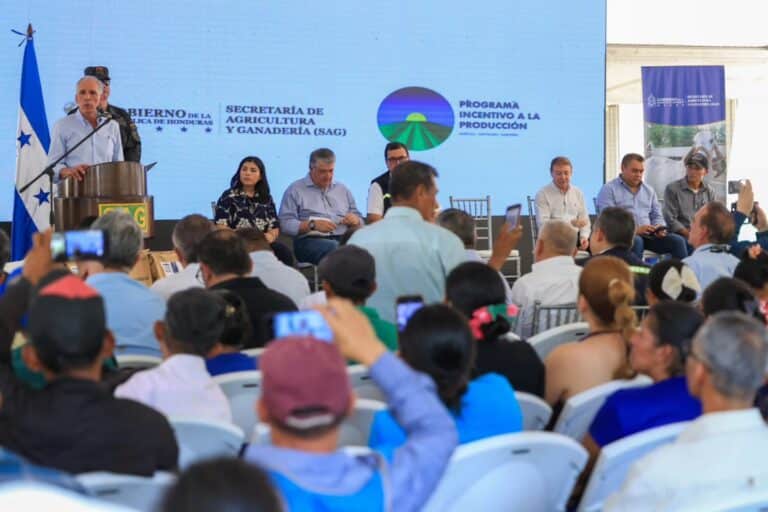
Medina presented the Living Forests of Honduras initiative, a conservation project promoted by the European Union and IICA, together with the Forest Conservation Institute (ICF), which aims to curb deforestation, mitigate climate variability, and strengthen the governance and sustainability of theCentral American country’s forestry sector.
“We promote a vision that integrates forests into production systems, strengthening the relationship between agriculture and forest resources to generate sustainability and rural development. The initiative aims to improve forest governance and move towards agroforestry systems that reduce emissions, restore landscapes, and improve the livelihoods of communities,” Medina concluded.

More information:
Karen Montiel, IICA Technical Specialist.
karen.montiel@iica.int
Catherine Abadie, CIRAD researcher.
catherine.abadie@cirad.fr