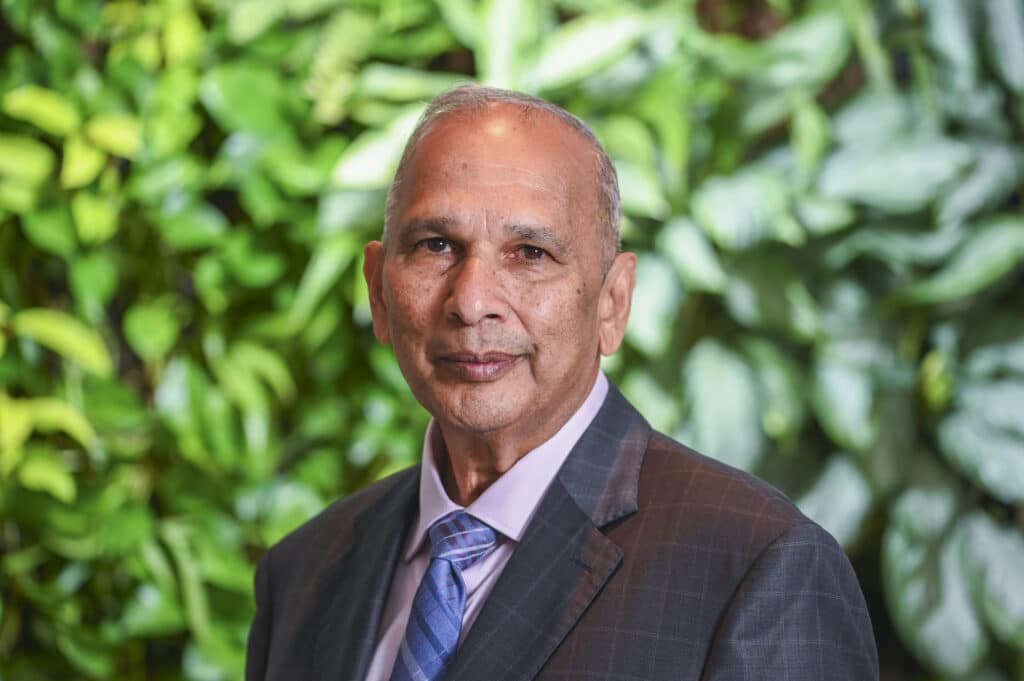
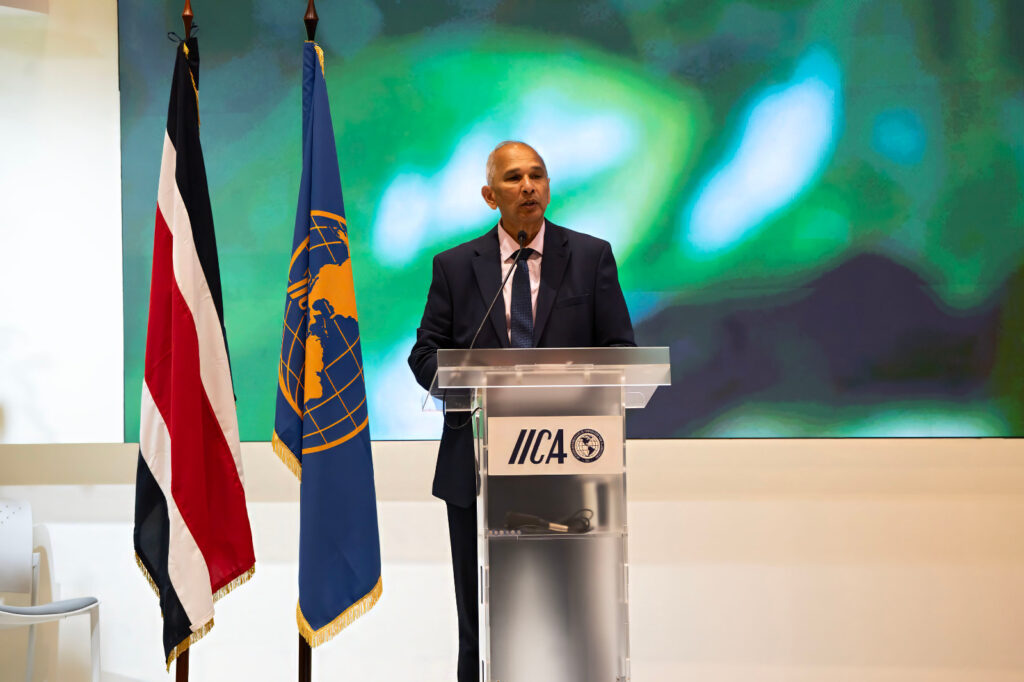
Muhammad Ibrahim, Director General of IICA.
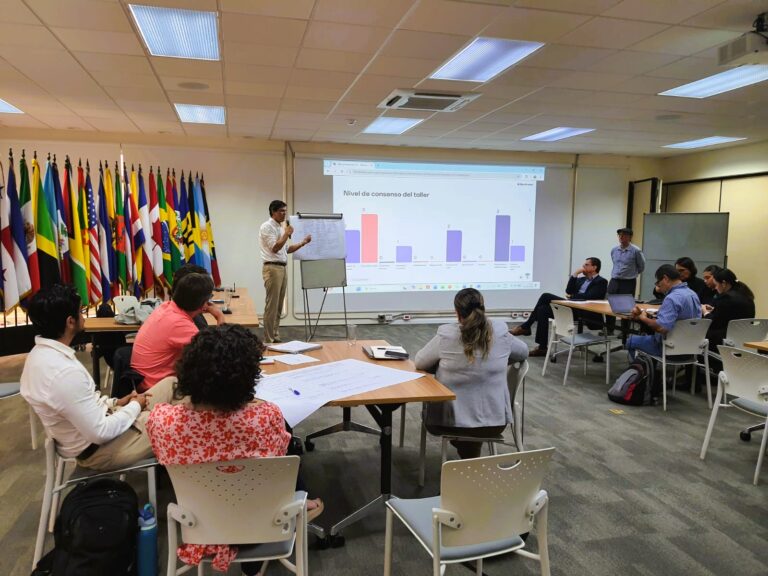
San Jose, 28 May 2026 (IICA) – Member countries of the Inter-American Institute for Cooperation on Agriculture (IICA) expressed support for a presentation by Director General Muhammad Ibrahim during a meeting of the Special Advisory Commission on Management Issues (SACMI), where he outlined the key areas of focus of the organization’s work from now until 2030.
The SACMI is an advisory body to IICA’s governing bodies, facilitating open and ongoing dialogue between the countries and the Director General.
The meeting is the first formal working meeting between authorities of the ministries of Agriculture of the Member States—to which IICA is accountable—and the current Director General, who assumed office at the start of this year.
The Commission consists of a group of Member States of the Institute, selected by the Executive Committee, based on the principle of geographic representation. This year’s Committee is made up of authorities from Argentina, The Bahamas, Bolivia, Brazil, Canada, Mexico, Panama, and the United States of America.
Ibrahim advised the meeting about progress thus far in developing the 2026-2030 Medium-term Plan (MTP). This roadmap for the organization’s work focuses on efforts to strengthen the Institute’s role as a strategic partner of the countries in promoting economic prosperity and improved food security, environmental sustainability, and resilience.
The Director General also provided an overview of activities carried out since the start of 2026, emphasizing visits to various countries of the Americas, where he had discussed the priorities and needs of agriculture with ministers and authorities in the agriculture sector. He also held discussions with representatives of the private sector, farmer organizations, and financial institutions.
Productivity and competitiveness
On behalf of his government, Donald Willar, International Trade Specialist at the United States Department of Agriculture (USDA) commended IICA for its work, noting that the organization should continue to provide technical cooperation to benefit producers and to foster food security, productivity, and agricultural competitiveness in the region.
Willard stated that, “The implementation of the Medium-term Plan (MTP) will yield results. IICA plays a central role in building coalitions in the hemisphere, which provide a coordinated response to international trade measures that affect our farmers, such as the European Union (EU) Deforestation Regulation.”
In closing, he stressed that, “We must work with IICA and the countries to prevent and eradicate diseases that affect food production and to safeguard against the introduction of obstacles to trade for our producers. This is our hemisphere and the United States is ready to work together.”
Daryl Nearing, Deputy Director of Agriculture and Agri-food Canada, also endorsed the MTP, and highlighted its emphasis on technical and scientific cooperation, international trade, and animal and plant health.
“We place great importance on the fact that IICA is prioritizing the incorporation of science and innovation in agriculture to help farmers to produce more and generate more income. IICA is a powerful tool to support our agricultural producers,” he argued.
Lourdes Cruz, Director General of Multilateral Affairs of Mexico’s Secretariat of Agriculture and Rural Development (SADER), stressed that Ibrahim had had fruitful discussions with her country since assuming office, to benefit agricultural needs throughout the region.
Cruz stressed that, “For us, one particularly valuable aspect of the IICA 2026-2030 Medium-term Plan is that it speaks to regional diversity, given that we have an extremely heterogenous agricultural sector throughout the hemisphere.”
Diana de Guinard, Head of the International Technical Cooperation Office of the Ministry of Agricultural Development of Panama, indicated that the Medium-term Plan is aligned with the priorities and needs of the agriculture sector in her Central American country and underscored the fact that discussions with the Director General had enabled them to identify priority needs shared with other countries in the region.
Practical actions and measurable results
Ibrahim explained that IICA’s work is results-oriented and based on practical actions, producing measurable results for people and communities.
He stressed that, “For an organization like IICA, which promotes the transformation of the agrifood systems of the Americas and the sustainable development of rural areas, it is critical that the needs of producers, rural families, and vulnerable communities remain a central focus of our work.”
He maintained that, “Agriculture is pivotal to sustainable development and is closely linked to economic inclusion and environmental sustainability, in a climate of growing uncertainty. Thus, the work of our institution must continue to focus on our mission.”
The Director General spoke about the challenges posed by economic uncertainty, rising food prices, and environmental stress. He warned that, “In this context, the full integration of small farmers and marginalized rural communities into markets, value chains, and production opportunities provided by new technologies will be essential to expanding resilience and advancing social inclusion.”
The 2026-2030 Medium-term Plan has established four central technical cooperation programs: Science, Technology, and Innovation for Production Development; International Trade, Regional Integration, and Agribusiness; Agricultural Health, Biosecurity, and Food Safety and Quality; and Strategic Natural Resources for Agrifood System Productivity and Resilience.
Francisco Alpízar, Technical Advisor to the General Directorate of IICA, who provided details on the MTP, explained that one of the priorities will be to adapt the technical cooperation portfolio to the needs of the varying production models throughout the extensive and diverse American hemisphere, in which differences are sometimes evident even within the same country.
More information:
Institutional Communication Division.
comunicacion.institucional@iica.int