Inter-American Institute for Cooperation on Agriculture

Sustainable development

Addressing the Global Value Chain

Tiempo de lectura: 3 mins.
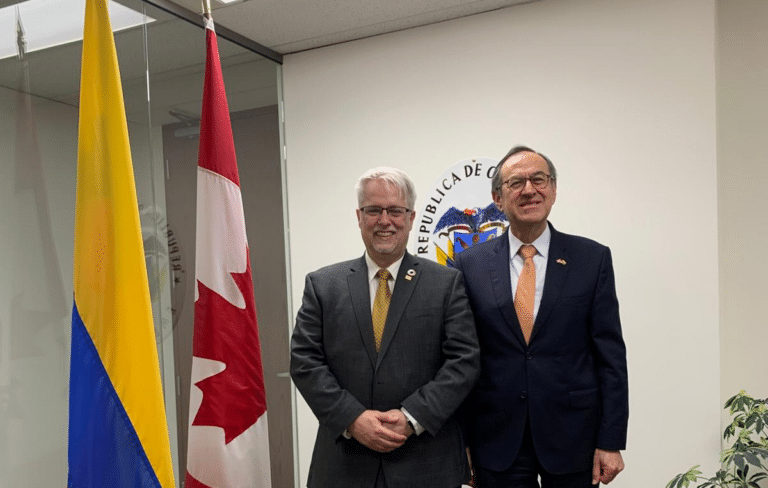
Dr. Audia Barnett, Representative of IICA Delegation in
Canada with Mr. Anders Aeroe, Director, ITC and Mr.
Nicholas Mudungwe, COMESA Leather & Leather Products
Institute.
Dr. Audia Barnett, Representative of IICA Delegation in
Canada with Mr. Anders Aeroe, Director, ITC and Mr.
Nicholas Mudungwe, COMESA Leather & Leather Products
Institute.

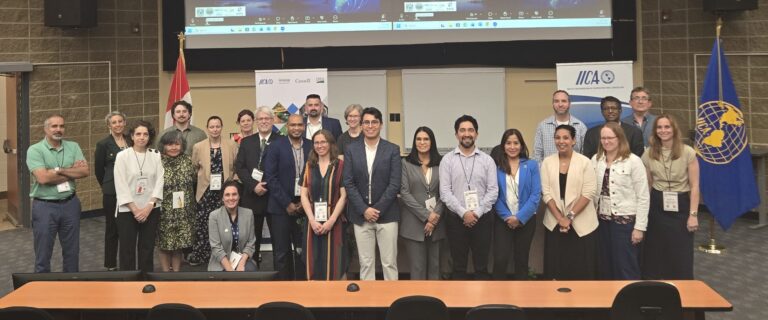
The International Centre for Trade (ITC) and the International Labour Organization (ILO) recently hosted an annual meeting of the United Nations Value Chain Development expert group, in Geneva.  Consistent with the theme of “Partnership for Value Chain Development”, several related organizations were invited to participate, among which was the IICA Delegation in Canada.  Other non-UN delegates were drawn from the private sector, academia and Non-Governmental Organizations.

The workshop was designed to explore best practices in Value Chain Development implementation as well as possible collaboration opportunities amongst UN agencies and development practitioners. The Plenary and Open Space discussions provided information on current programmes and projects, tools and innovations relating to market systems for SME to assure value chain competitiveness.  Of specific interest was the successful case study of the Leather value chain of the Common Market for Eastern and Southern Africa (COMESA), which shared lessons from which other regions, including the Americas could benefit.   New insights were also gained on the Block Chain Technology and the Donor Committee for Enterprise Development Standard and Results Measurement  (www.enterprise-development.org).

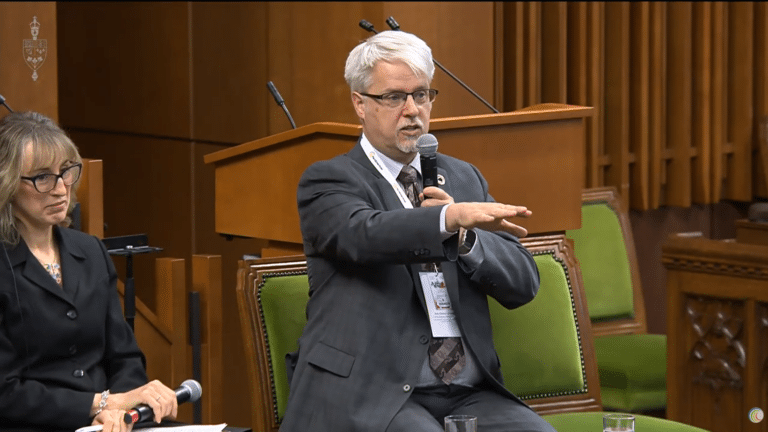
The Representative of the IICA Delegation in Canada provided Closing Remarks for the 1-day meeting which afforded important and strategic networking opportunities.

Recognizing that the Sustainable Development Goals present a unique opportunity to put in evidence how trade and SME development are linked to the achievement of all 17 goals, the UNVCD expert group was established some 5 years ago.   The group is a UN inter-agency effort to support value chain development (VCD) that aims to develop a common understanding of what constitutes a value chain, how to design value chain development projects and to elucidate the benefits of VCD.


For more information:

Dr. Audia Barnett

Audia.barnett@iica.int
Share

Related news​

San José, Costa Rica

May 29, 2026

IICA Director General receives overwhelming support in presenting the key pillars of the Institute’s work for the next four years, with a focus on strengthening the agriculture sector of the Americas

Member countries of the Inter-American Institute for Cooperation on Agriculture (IICA) expressed support for a presentation by Director General Muhammad Ibrahim during a meeting of the Special Advisory Commission on Management Issues (SACMI), where he outlined the key areas of focus of the organization’s work from now until 2030.

Tiempo de lectura: 3mins

San José, Costa Rica

May 28, 2026

Latin America and the Caribbean develop shared agenda for sustainable dairy farming with support from IICA, CAF, and regional partners

Producers, technical specialists, and institutions in different areas of Latin America and the Caribbean are taking part in a coordinated effort to develop a regional agenda for sustainable dairy farming. The initiative is spearheaded by the Inter-American Institute for Cooperation on Agriculture (IICA), CAF-Development Bank of Latin America and the Caribbean, the Pan-American Dairy Farming Federation (FEPALE) and Chile’s Dairy Consortium.

Tiempo de lectura: 3mins

San José

May 27, 2026

IICA and CIRAD renew strategic partnership to promote agroecological innovation and more sustainable agrifood systems in Latin America and the Caribbean

The work will prioritize initiatives that form part of a comprehensive approach to agroecological transition and agricultural health in areas such as agroforestry and forest management, resilient and competitive tropical agriculture, science, technology and innovation, bioinputs that reduce dependence on agrochemicals, integrated crop management and regenerative agriculture, precision agriculture, animal and plant health, soils and ecosystems, public policies for sustainable agrifood systems, governance, and institutional coordination.

Tiempo de lectura: 3mins