There is need for promoting more harmonized and equivalent mechanisms among the ECS to consolidate agricultural exports to markets outside of the sub-region.

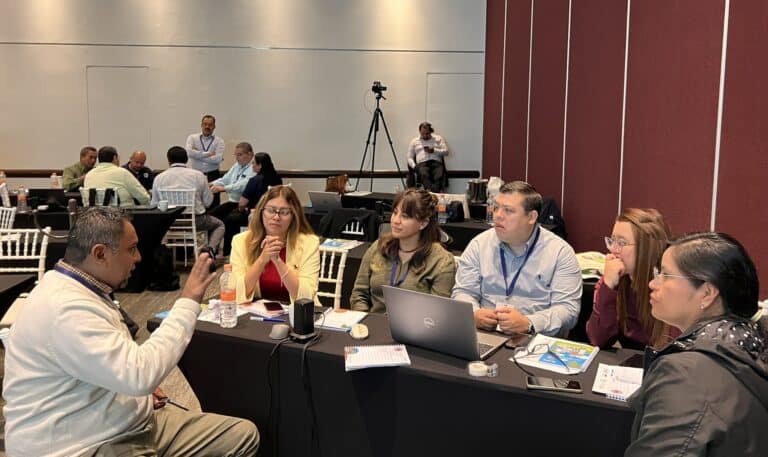
Antigua and Barbuda. The Inter-American Institute for Cooperation on Agriculture (IICA), in collaboration with the Antigua and Barbuda Ministry of Trade, Commerce, Industry, Sports, Culture and National Festivals, held a Codex workshop aimed at strengthening the capacities of the Codex contact points and national committees to be more effective in their participation in the work of Codex.
The Codex Alimentarius Commission is the body responsible for the adaption of standards and guidelines for protecting the health of consumers and ensuring fair trade practices so as to facilitate the international food trade.
The activity, financially supported by the United States Department of Agriculture (USDA), was directed toward the six countries that make up the Eastern Caribbean States (ECS): Saint Lucia, Grenada, Antigua and Barbuda, Saint Vincent and the Grenadines, Saint Kitts and Nevis and Dominica.
According to Craig Thomas, IICA´s national specialist in Antigua and Barbuda, the capacities of the national Codex committees and contact points have been limited. Some of the major areas of capacity deficiencies include: preparation of national positions, national information dissemination mechanisms, managing the stakeholder co-opting process for reaching consensus on codex matters and preparation for effective participation in Codex meetings.
Moreover, there is need for promoting more harmonized and equivalent mechanisms among the ECS to improve cooperation and understanding of varying commitments.
In 2017, the ECS Region will promote the free movement of goods, including agricultural commodities, among islands within the subregion and opportunities for consolidating fresh agricultural exports to markets outside of the ECS will be strengthened. Therefore, the region must be cognisant of the rising concerns regarding food safety issues in the global food trade, and member states must have harmonized systems in addressing such issues.
Against this background, the ECS has chosen to expedite its involvement in the Codex Alimentarius Commission and its subsidiary bodies in an effort to have a greater voice and participation in international standardization. All of the territories are members of the Commission of the Codex Alimentarius and have established their National Codex Contact Point (NCCP) and National Codex Committee (NCC) to liaise with the Commission and facilitate participation in the Commission’s activities.
IICA’s ECS Representative, John King, referred to the efficient management of Codex Alimentarius at the national level, which requires human resources quantity, quality and availability with respect to human resources, and involves scientific and financial resources as well as coordination with the private sector. More precisely, it requires strong political support for management and sustainability over time.
The Honourable Chet Green, Minister of Trade, Commerce, Industry, Sports, Culture and National Festivals of Antigua and Barbuda, reiterated the importance of formalizing the Codex Committee through the establishment of a legal framework and development of a national agenda.
This workshop was part of a twinning program under IICA’s regional program for promoting the participation of the Americas in the Codex Alimentarius, with the objective of strengthening the National Codex Committee. The project identified Brazil to serve as its twinning partner and to assist in achieving the programme objectives.
This project will also support the development of a sub-regional mechanism for improved communication among the ECS territories in Codex and trade related matters, which is key to improving communication and discussion among the countries.
More information: