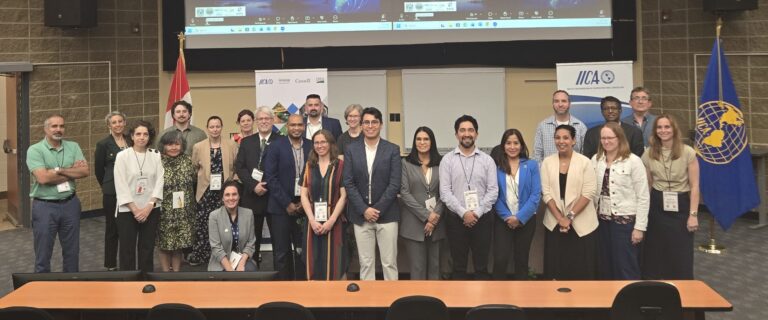
Agriculture and Agri-Food Canada (AAFC) shared aspects of the recently concluded 3 Sisters Value Chain Project involving First Nation communities in Quebec on seeking to identify prospects for partnerships for future activities, this presented an excellent opportunity for IICA and PROCINORTE.

The 3 Sisters usually refers to beans, squash and corn grown together by indigenous groups in North America. The remarkable feature of this simple but effective system is the fact that each of the 3 crops benefit from each other. The corn provides a structure for the beans to climb, the beans provide the nitrogen to the soil , and the squash retains moisture in the soil and also helps to prevent the growth of weeds. Agriculture and Agri-Food Canada (AAFC) shared aspects of the recently concluded 3 Sisters Value Chain Project involving First Nation communities in Quebec on seeking to identify prospects for partnerships for future activities, this presented an excellent opportunity for IICA and PROCINORTE. The effective management of plant genetic resources of indigenous populations is on the active agenda of the NORGEN Task Force of PROCINORTE, which has conducted joint activities with AAFC and the University of Laval in the past.
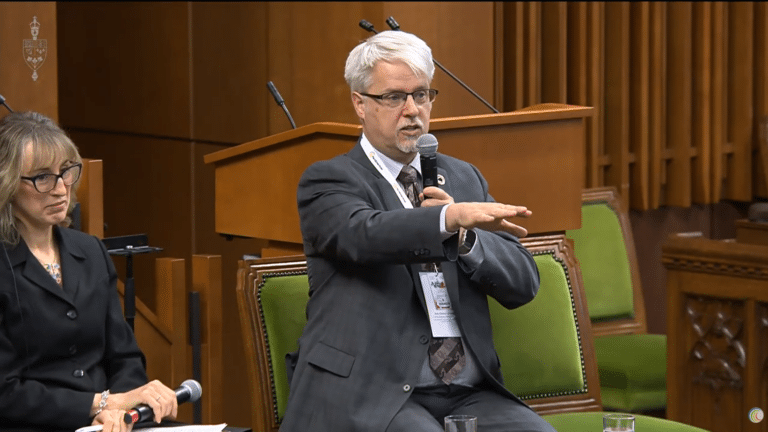
IICA Representative in Canada, Dr. Audia Barnett spoke to an audience comprising representatives from First Nations groups, Government, private sector and academia about IICA and PROCINORTE, explaining that work carried out on genetic resources was of great interest to Latin American & Caribbean countries. Dr. Axel Diederichsen, Research Scientist and Curator, Plant Gene Resources of Canada, also leader of the NORGEN Task Force, advised of the role and importance of collections of food and other crops in national gene banks. There was a great deal of interest in the 3 & 4 “Sisters” in Mexico and the practices being used by indigenous groups there. Mexican Scientist, Dr. Flavio Aragon, of INIFAP shared best practices for conservation and management of seed resources, which included exchanges among indigenous groups as well as lodging seeds with the national gene bank. Other formal presentations and discussions underscored the eagerness to move ahead with new collaborations and projects that can help local indigenous groups to manage their genetic resources, and to commercialize value added products.
For additional information:
Dr. Audia Barnett