The initiative, executed by IICA, USDA-FAS and USAID, seeks to support capacity-building in strategic topics for the countries.
San Jose, 10 April 2017 (IICA). More than 106 new professionals are now qualified to provide training to exporters, producers and professionals from the academic and public sectors in preventive controls for human food. This will improve compliance with new requirements for exporting processed products to the United States (U.S.) market.
These 106 new trainers will be able to assist countries in complying with Preventive Controls for Human Food Rule of the Food Safety Modernization Act (FSMA).
These newly-trained professionals are located in the following countries in the Americas: 20 in Costa Rica, 19 in the Dominican Republic, 18 in Guatemala and El Salvador, 17 in Honduras, 7 in Panama, 4 in Nicaragua and 3 in Haiti.
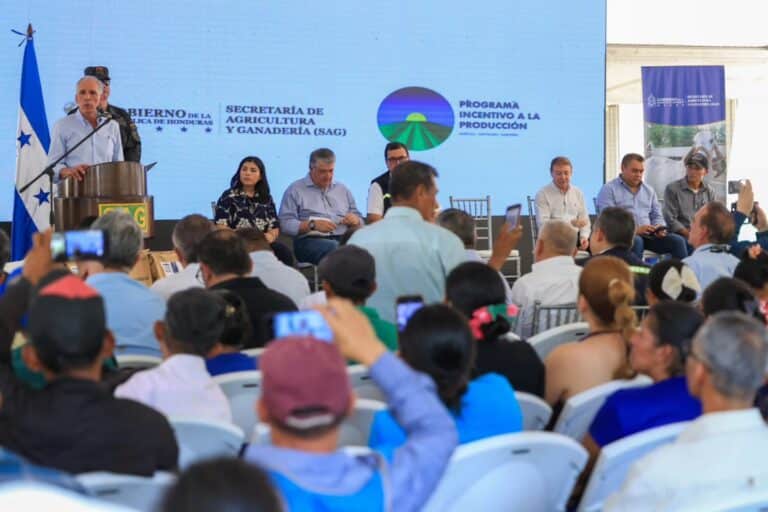
Training was provided by means of three sub-regional workshops carried out in El Salvador, Guatemala and the Dominican Republic during the first three months of 2017.
This initiative, geared toward “training of trainers,” is the product of a strategic partnership between the Inter-American Institute for Cooperation on Agriculture (IICA), the Foreign Agricultural Service (FAS) of the United States Department of Agriculture (USDA), and the United States Agency for International Development (USAID), with support from Texas Tech University (TTU).
“The activity was carried out within the framework of the Food Safety and Agricultural Sustainability Training (FAST) program, which seeks to strengthen capabilities in selected countries in Central America, South America and the Caribbean, in order to support value chains that export food to the United States, as well as foster compliance with the regulations of the Food and Drug Administration (FDA) detailed in the FSMA,” stated Ana Marisa Cordero, Agricultural Health and Food Safety Specialist at IICA.
Jocelyn Brown and Betsy Baysinger, deputy administrator and director, respectively, of the USDA Office of Capacity Building and Development, reiterated the office’s interest in supporting capacity-building in topics of strategic interest to countries, such as guaranteeing the safety of food for human consumption.
In April and May of this year, similar workshops will be conducted in Peru, Colombia and Paraguay. As of the second semester of the year, a new capacity-building process will begin, geared toward facilitating compliance with the regulation on fresh produce.
More information:
Ana Marisa Cordero, Agricultural Health and Food Safety Specialist at IICA.