The podcast includes a segment devoted to the Living Soils of the Americas initiative spearheaded by IICA together with the Rattan Lal Carbon Management and Sequestration Center (C-MASC) of The Ohio State University.
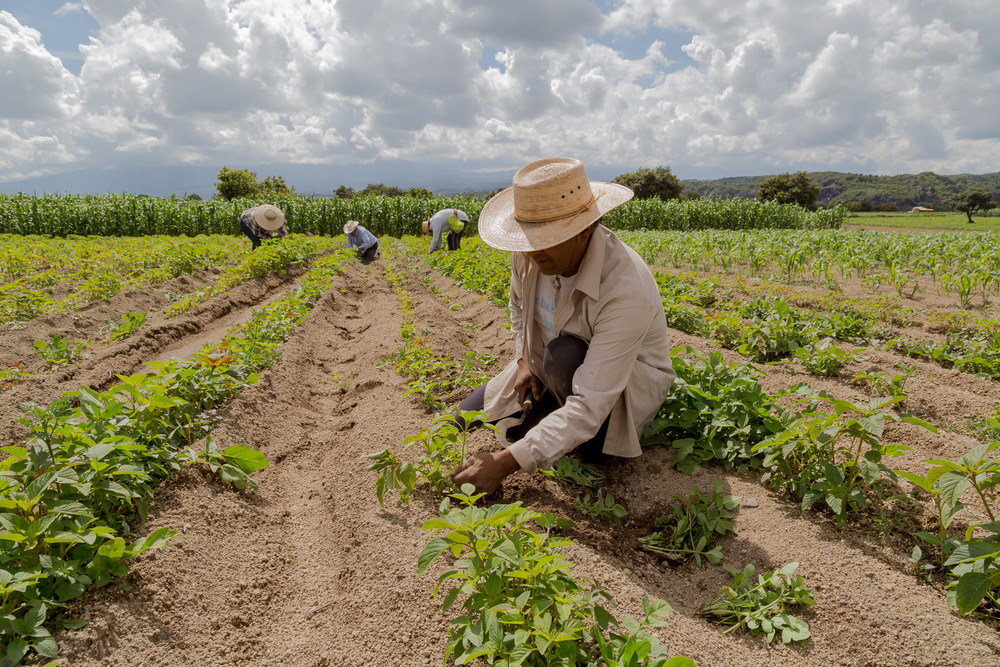
San Jose, 12 July 2023 (IICA). Biofuels development has tremendous potential in the Americas given the region’s vast agricultural production as well as many countries’ commitment to advancing the industry, which contributes to reducing greenhouse gas emissions and fostering sustainable agricultural practices.
This is the message conveyed by three international experts in a new episode of the “IICA en Acción” podcast series of the Inter-American Institute for Cooperation on Agriculture (IICA). The podcast includes a segment devoted to the Living Soils of the Americas initiative spearheaded by the organization specializing in agriculture and rural life in the hemisphere together with the Rattan Lal Carbon Management and Sequestration Center (C-MASC) of The Ohio State University.
“The Americas is the region of the world that has achieved the greatest progress with respect to biofuels, both in terms of production as well as use or consumption. The mandatory blending of ethanol in gasoline is an average of 18% in the region, which is much higher than in any other region of the world”, noted Federico Salcedo, a regional bioethanol consultant for the U.S. Grains Council.
He added that certain countries have an even higher percentage, such as Brazil and Paraguay, which have a 27% and 25% blend, respectively. A few other countries have not yet embarked on this path, “which represents a challenge but also an opportunity”, explained the expert.
According to Salcedo, “the vast majority of Latin American countries produce oil, but they are not self-sufficient. However, most South American countries have the potential to produce biofuels given their focus on agricultural production”.
Patrick Adam, Executive Director of Argentina’s Corn Bioethanol Chamber, highlighted the advantages of “biofuel, a word that involves many stakeholders, many sectors and many raw materials. We focus primarily on bioethanol because it is competitive, and is the one with the greatest potential to grow in the short and medium term”.
During his interview with “IICA en Acción”, Adam referred to a meeting held in Costa Rica in May, which was attended by 320 participants, including international specialists, government authorities, aviation businessmen, and leaders of the fuel industry and the main biofuels chambers of the Americas.
The Pan American Liquid Biofuels Coalition (CPBIO) was launched during the meeting by 25 organizations, which signed a declaration in which they called for a more robust institutional framework and greater coordination to promote biofuels.
“The coalition has allowed for identifying commonalities, and we are determined to assist all countries in advancing the development of bioethanol, which fosters regional development, generates genuine employment, and allows for reducing the carbon footprint by up to 80%”, said Adam.
In turn, Carlos Mateus, Legal Director of the National Biofuels Federation of Colombia, stated that “agriculture is the sector with the greatest prospect of advancing, growing and developing new products and raw materials that are more productive and efficient”.
The interview will be available on IICA’s Spotify channel as of 10 July.
A large number of officials and experts on soils and sustainable agriculture have participated in the segment of the podcast dedicated to the Living Soils of the Americas initiative, sharing their experiences and the progress achieved in different countries of the region.
For example, to name just a few, the program has interviewed IICA Director General Manuel Otero; award-winning Rattan Lal, one of the world’s leading experts on soil sciences; Argentine Secretary of Agriculture, Livestock and Fisheries, Juan José Bahillo; and the Chief of the Natural Resources and Conservation Service of the United States Department of Agriculture, Terry Cosby.
Private sector entities that have partnered in this initiative, namely Bayer, Syngenta and PepsiCo, have also participated.
More information:
Institutional Communication Division.
comunicacion.institucional@iica.int