IICA and several other agencies are to implement a project aimed at updating the information on agricultural research and development in the two regions, in order to highlight the need for increased investment in those areas.
San Jose, Costa Rica, April 9, 2013 (IICA). A regional initiative is to be carried out to compile first-hand information and generate up-to-date statistics on the degree status of human resources and the structure, size, and level of investment in research and development (R&D) in Central America and the Caribbean.
The information generated by the project will be used to update the most recent data available, which in the case of Central America corresponds to 2006, and in the Caribbean, to 1996.
The Inter-American Institute for Cooperation on Agriculture (IICA), the Agricultural Science and Technology Indicators (ASTI) initiative and the International Center for Tropical Agriculture (CIAT) will be responsible for the project’s implementation, in collaboration with the agricultural research institutes of every country involved.
“One of IICA’s tasks in the area of innovation is to raise awareness of the need to invest in R&D, but in order to do so, data is required on what the countries are doing and how they are doing it,” explained IICA innovation specialist Viviana Palmieri during the launch of the initiative.
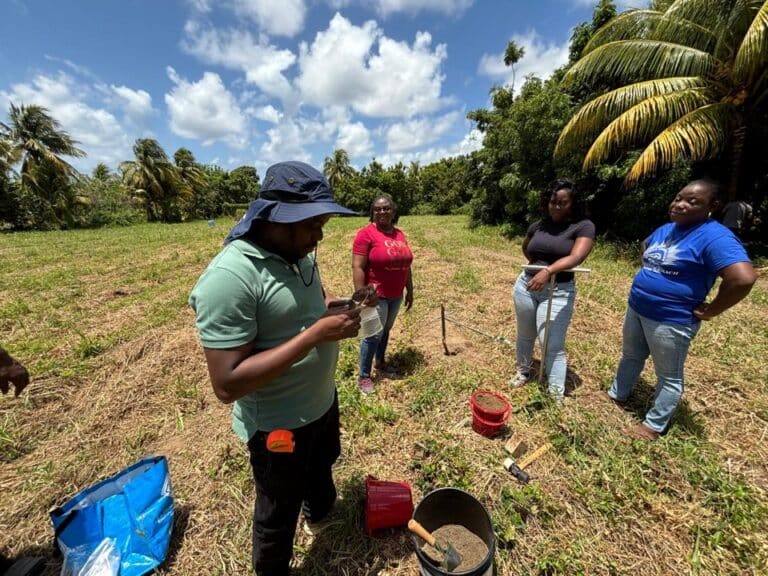
Staff of the research institutes designated as focal points in each country is being trained in the methodology used by the ASTI, to ensure that the data is compiled scientifically and the information from the different countries is comparable.
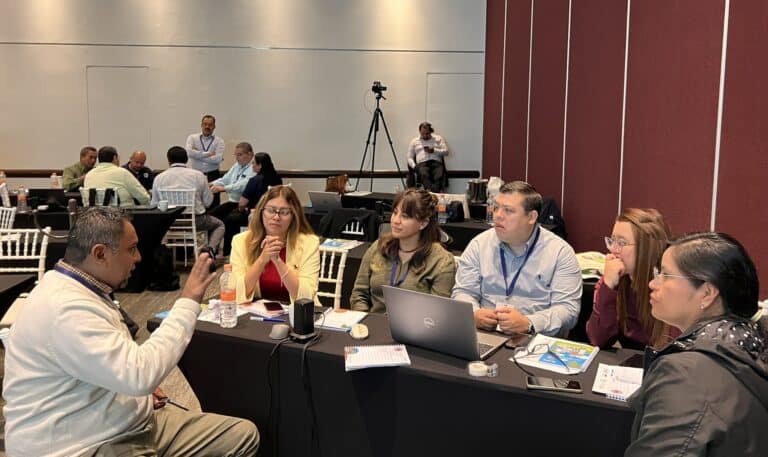
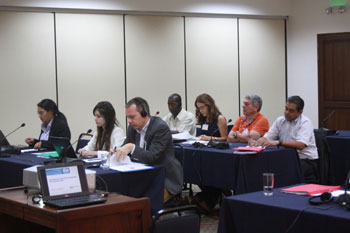
The IFPRI/ASTI–CIAT–IICA Training and Implementation Workshop “Monitoring of capabilities and investments in agricultural R&D in Central America and the Caribbean” took place at IICA Headquarters from March 19-20, 2013.
“Agricultural R&D contributes to agricultural development, economic growth, and poverty reduction, but its results take time. That is why many countries do not invest enough,” commented ASTI representative Nienke Beintema.
The project will take approximately one year to complete, during which time the agencies involved will hold several meetings. Once it is processed, the information will be available for use via the ASTI Web page: http://www.asti.cgiar.org/.
Global and regional data
The study conducted in Central America in 2007-2008 revealed that, at that time, there were 903 researchers and 63 agricultural research agencies. However, the degree status of the researchers was the lowest in the world; in other words, fewer of them had doctoral degrees in comparison with their counterparts in other regions.
In 2006, USD105 million were invested in R&D in the Central American region, with Costa Rica leading the way. In Guatemala and El Salvador, investment fell by half between 1996 and 2006. Furthermore, during the same period 37% of the investment in R&D came from the governments and 27% from donors, while producer associations contributed 25% from their own resources.
The global figures indicate that developing countries are currently the pacesetters as far as increased public spending in R&D is concerned, with their share of the world total rising from 39% in 2000 to 46% in 2008. The private sector has also increased its investment in R&D, especially in middle-income countries.
Global investment in R&D is up, but the increase is due to higher spending in specific countries, such as China and Brazil.
For more information, contact:
viviana.palmieri@iica.int