San José, Costa Rica, 5 June 2025 (IICA). Costa Rican cacao producers were honored for the excellence of their products and for their valuable contribution to the economic development of rural areas, nutrition in the region, and the strategic role of cacao as a driver of social inclusion, sustainability, and food security in Latin America and the Caribbean.
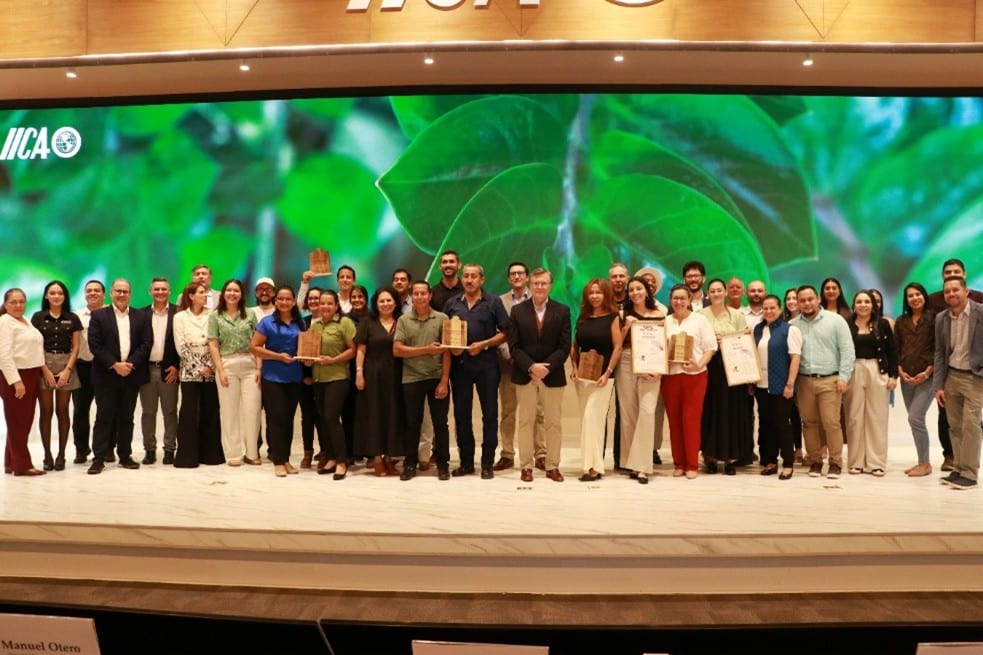
The awards ceremony for Costa Rica’s 2025 National Cacao of Excellence Competition took place at the Headquarters of the Inter-American Institute for Cooperation on Agriculture (IICA). Producers were recognized not only for the exceptional quality of their cacao, but also for the key role they play in strengthening local economies, boosting productive activity in rural communities, promoting environmentally responsible agricultural practices, and helping to improve access to nutritious food in the region.
Experts analyzed 15 samples of cacao from various parts of the Central American country, with the five that received the highest scores then declared winners of the 2025 competition. The same five samples were sent to Rome, Italy, where they will represent Costa Rica in the international “Cacao of Excellence” competition, the stepping stone to the International Cocoa Awards.
The winners of the competitionLa Vaca Muca S.A., Finca Venecia S.A., Hacienda Dos Lagunas, COOPECACAO NORTE NORTE R.L., and OSACOOP R.L.consolidated their position as outstanding examples of businesses that are contributing to sustainable progress, social inclusion, and food resilience in Latin America.
The winners of Costa Rica’s 2025 National Cacao of Excellence Competition were recognized for the quality of their beans, for promoting a vision of sustainability and biodiversity conservation, and for improving the lives of producers.
The event was attended by senior officials from IICA and the Central American country’s agriculture sector, and medium- and small-scale cacao producers.
IICA Director General Manuel Otero said that Latin America and the Caribbean accounted for 20% of global cacao production, so the competition demonstrated that the region can not only compete in terms of quality, but also be a pacesetter with its vision of sustainability, equity, and excellence.
“Cacao is not just an emblematic crop; it is a living expression of our cultural roots, a source of rural employment, and a powerful tool for the inclusion of small producers and indigenous communities”, Otero concluded.
Fernando Vargas, Costa Rica’s Deputy Minister of Agriculture and Livestock, emphasized that Costa Rican cacao is recognized internationally, and not only for its flavor; its quality, diversity, and sustainability make it unique in the world. He also noted that the competition was a tribute to the efforts of those who grow and process it every day with dedication and passion.
“Awards of this kind are a source of pride for Costa Rica’s agriculture sector. They remind us that behind every cacao bean are stories of effort, tradition, and love for the land that deserve to be celebrated”, Vargas added.
“This award opens new doors in international markets for our producers”, commented Mario Sáenz Alfaro, Export Development Manager at Costa Rica’s Trade & Investment Promoter (PROCOMER).
He also stressed the importance of adopting an intelligent approach to historically high cacao prices, adding that traceability, best practices, and certifications are key to positioning Costa Rican cacao as a world-class product.
Cacao as a bridge to development
The award received by the producers highlights the strategic role of cacao as a driver of social inclusion, sustainability, and food security in Latin America.
This fact was highlighted by Lorena Muñoz Morera and Ana Yancy Mora Azofeifa of OSACOOP R.L., a cooperative located in Puerto Jiménez, in the Costa Rican province of Puntarenas.
Muñoz remarked that being among the winners of the contest was an acknowledgement of the collective efforts of a cooperative that works closely with its members to ensure they have better economic opportunities, strengthen their productive capacities, and position their cacao as a high-quality product in specialized markets.
Mora emphasized that events of this kind highlighted the silent but constant work of rural communities, where cacao is not just a crop, but a tool for social and environmental transformation.
More information:
Institutional Communication Division.
comunicacion.institucional@iica.int