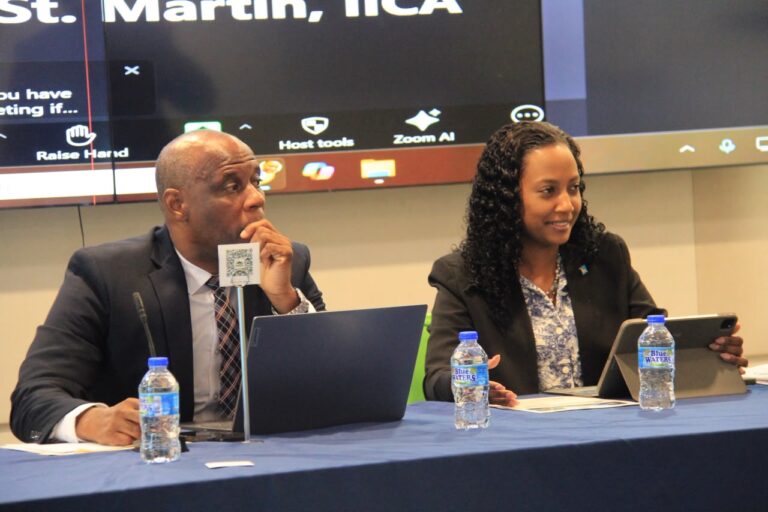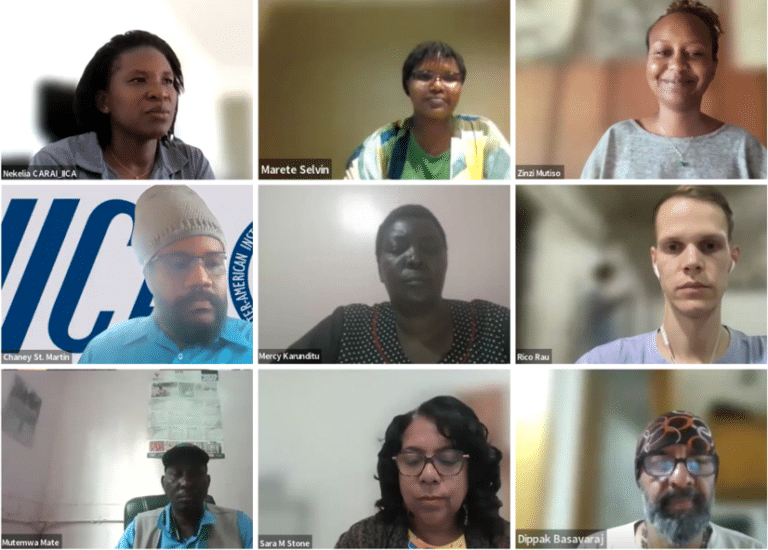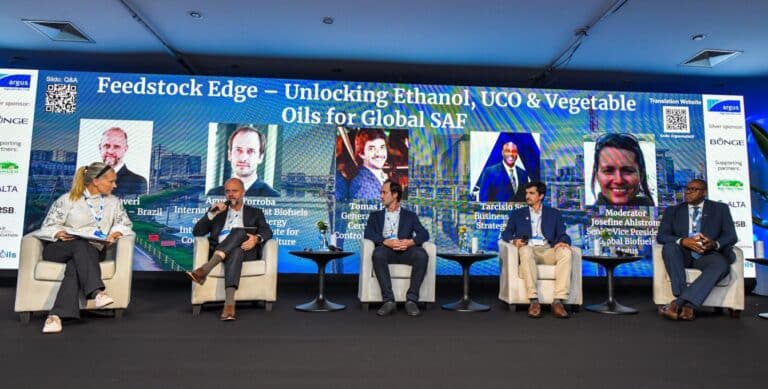

Gabriel Delgado, IICA Representative in Brazil.
Buenos Aires, 9 December 2025 (IICA). Representatives of Brazil’s most important agro-industrial cooperatives visited Argentina to learn about productive ventures and familiarize themselves with the incorporation of new technologies and the progress that agriculture is making in the area of sustainability in this country, which, like Brazil, is a powerhouse of food production.
The delegation took part in a seminar on the outlook for trade relations in the agriculture sector between the two countries, designed jointly by the Embassy of Brazil in Buenos Aires and the delegation of the Inter-American Institute for Cooperation on Agriculture (IICA) in Argentina.
During the seminar, IICA’s Representative in Argentina, Fernando Camargo, gave a presentation on the technical cooperation projects that the organization is carrying out in the region, while IICA’s Representative in Brazil, Gabriel Delgado, spoke about the historical differences and similarities in the development of crop and livestock farming in the two countries.
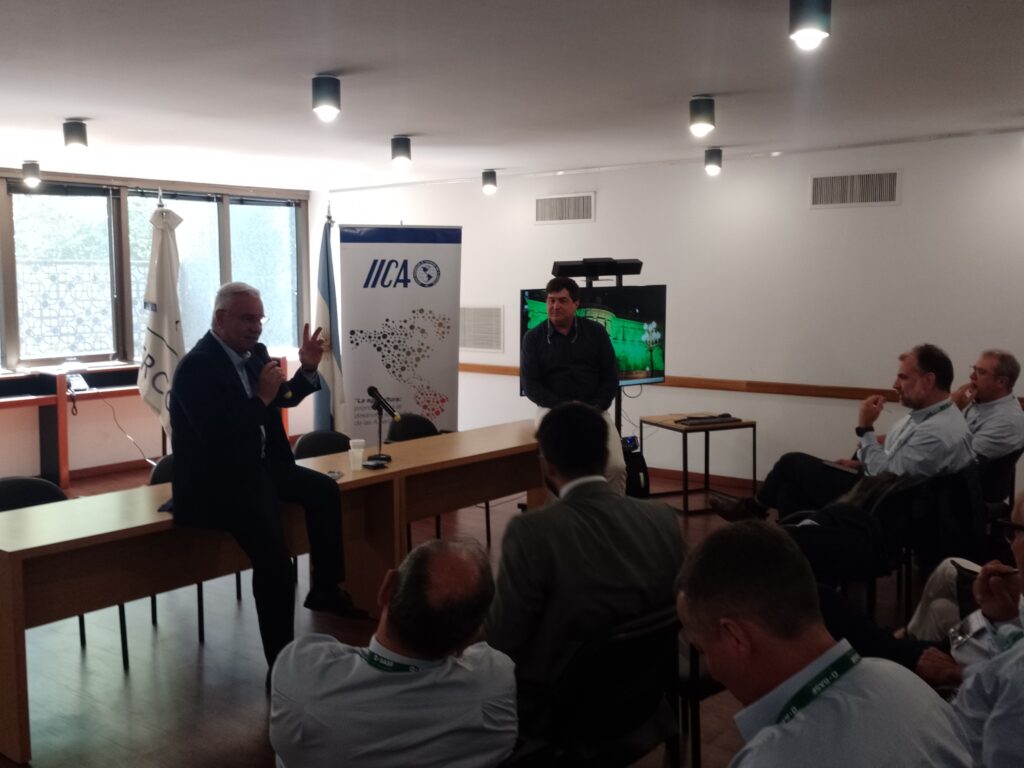
Fernando Camargo, IICA Representative in Argentina, and Gabriel Delgado, IICA Representative in Brazil.
Brazil’s Ambassador to Argentina, Julio Bitelli, and the head of his embassy’s Agriculture and Environment section, Fernando Zelner, also took part.
The Secretary of the Confederación Intercooperativa Agropecuaria (CONINAGRO), Mario Raiteri; the President of the Corporación Vitivinícola Argentina (COVIAR), Mario González; and the head of the Federación de Cooperativas Federadas (FECOFE), Juan José Rossi, gave details of the operation and importance of the cooperative movement in Argentina for the agro-industrial sector, and discussed relations between Brazil and Argentina with the visitors.
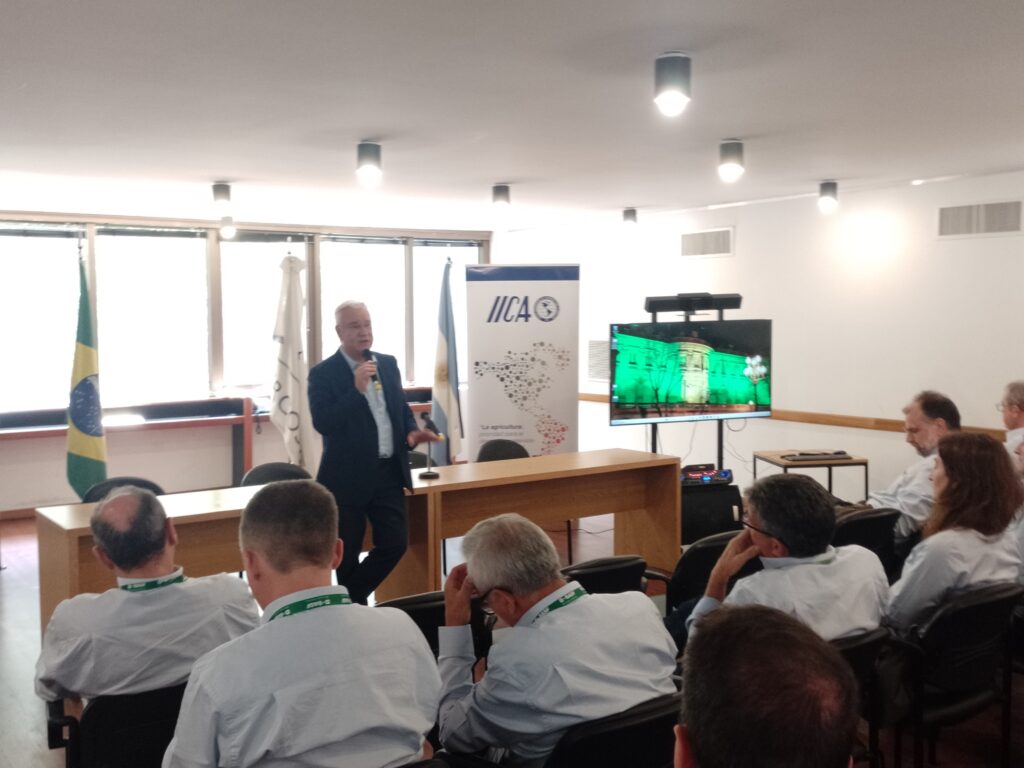
Fernando Camargo, IICA Representative in Argentina.
The 30 cooperatives that took part account for roughly 60% of the value that the sector generates in Brazil. They are leading producers of crops such as soybeans, corn, wheat, barley, rice, coffee and sugarcane. They also produce and participate in the agro-industrial chains of pork, beef and poultry, as well as those of juices and dairy products.
Additionally, during their stay in Argentina, the visitors toured the Faculty of Agronomy of the University of Buenos Aires (FAUBA) and were received at the Buenos Aires Cereal Exchange, the country’s oldest business enterprise, founded in 1854.
More information:
Institutional Communication Division.
comunicacion.institucional@iica.int