A biosecurity training manual and video have been produced for use by backyard poultry producers and Extension Officers.
Belmopan, Belice, 21 august (IICA) – Recognising the need to improve productivity in backyard chicken rearing, the Belize Poultry Association (BPA) and the Inter-American Institute for Cooperation on Agriculture (IICA) received financial support from Australian Aid (through their High Commission in Trinidad & Tobago) to support a ‘biosecurity in backyard poultry’ project in the south of Belize.
Chickens reared without coops, or in poorly designed coops, can be exposed to predators (such as rats, snakes and dogs) and are frequently subjected to diseases caused by contact with the neighbours’ chickens and wild birds or carried into the flock by visitors or on contaminated equipment. In 2016, several villages in the south were infected with Newcastle Disease. This devastated the affected villages killing all chickens within only a few weeks. This project aims to help reduce the risk of this happening in the future.
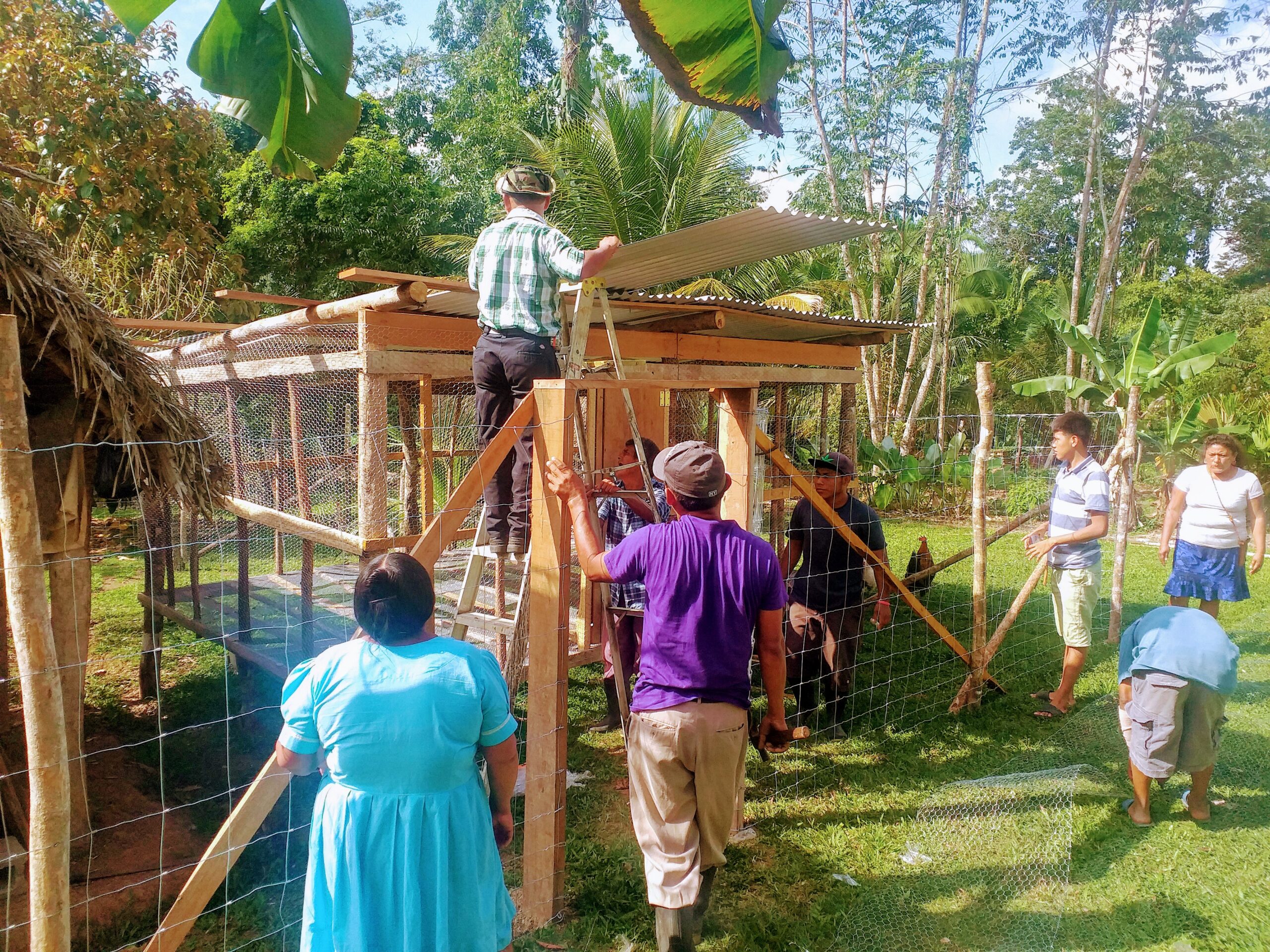
Under this project, IICA, the BPA, BAHA and the MFAI have been working with selected villagers in Corazon Creek, San Pedro Columbia, Red Bank and San Roman – in southern Belize. The project has provided training in poultry biosecurity for the villagers (including training in vaccination for Newcastle Disease) and some building materials (chicken wire, nails, roof zinc etc.) for thirty-four families to construct model biosecure chicken coops and implement biosecurity systems that will reduce disease entry and spread. The villagers provided wooden materials (for the coop frames and fence posts) and labour to construct the coops, and the MFAI provided staff to demonstrate the construction of the first few coops and to coordinate project activities in each village. A biosecurity training manual and video have been produced for use by backyard poultry producers and Extension Officers.
Key features of poultry biosecurity include: keeping the poultry in a coop (preferably off the ground) at night to protect them from predators and weather and to keep them separate from other birds and animals; use of a perimeter fence around the coop to control access to the chickens and prevent them from wandering around the village; keeping different types of poultry separate; washing hands and using clean footwear each time the chicken area is entered; and, finally, vaccinating chickens against Newcastle Disease, once every three months. The vaccine is cheap and available from the district Agriculture Office or the Belize Poultry Association in Belmopan.
Biosecurity defined:
A set of management and physical measures designed to reduce the risk of introduction, establishment and spread of animal diseases to, from and within, an animal population. (Source: World Organization for Animal Health (OIE))
More information:
Institutional Communication Division of IICA.
comunicacion.institucional@iica.int
Your local District Agriculture Office
Belize Agricultural Health Authority (Dr. Joe Myers) Tel: 302 1388
Belize Poultry Association (Mr. Armando Cowo) Tel: 822 3221
Inter-American Institute for Cooperation on Agriculture Tel: 822 0222
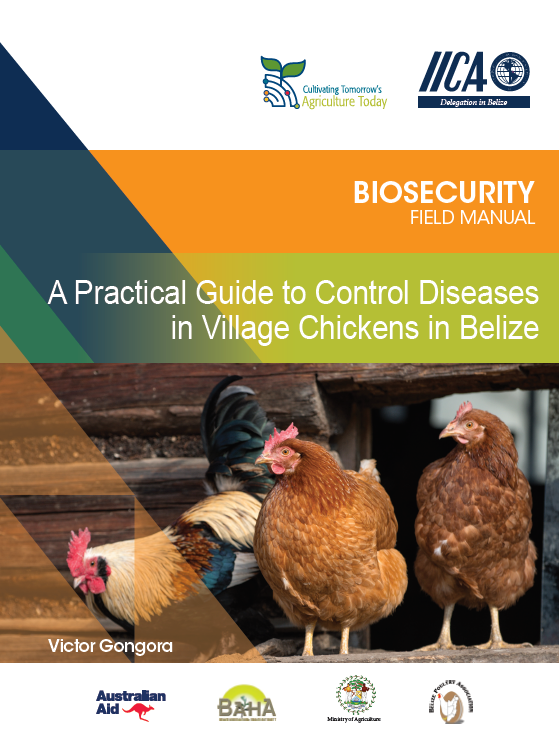
For a free electronic copy of the Biosecurity Field Manual send an email request to iica.belize@iica.int