Working with the Executive Secretariat of the Central American Agricultural Council, the countries are preparing a proposal that would establish microbiological criteria related to unprocessed foods.
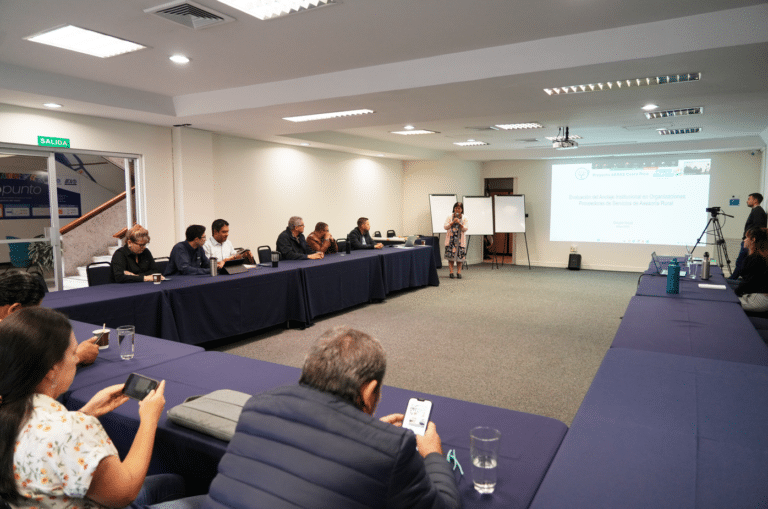
San Jose, Costa Rica, September 23, 2014 (IICA). Officials from the ministries of agriculture and health of Central America and the Dominican Republic and private sector representatives shared concepts and learned about the experience of the U.S. with microbiological criteria for unprocessed foods, as part of the efforts to create a set of regulations in the region.

A meeting was held at the Headquarters of the Inter-American Institute for Cooperation on Agriculture (IICA), in Costa Rica, to enable specialists from the U.S. Department of Agriculture (USDA) and the Food and Drug Administration (FDA) to present their country’s microbiological criteria as input for the construction of a technical and scientific base in the Central American countries.
The U.S. Grocery Manufacturers Association also took part in the activity.
The Codex Alimentarius defines a microbiological criterion as a risk management metric that indicates the acceptability of a product for human consumption based on the absence, presence or amount of microorganisms and the amount of toxins or metabolites that it contains.
“These microbiological standards, which would apply to unprocessed foods produced and marketed within the countries and those imported from other nations, are designed to protect consumer health and ensure fair trade practices,” explained Alejandra Díaz, an IICA specialist in agricultural health and food safety.
The meeting, organized by IICA and the Executive Secretariat of the Central American Agricultural Council (SECAC), was supported by the USDA and the FDA.
The proposed standards are being developed by a group of delegates from the Ministries of Agriculture of Costa Rica, El Salvador, Guatemala, Honduras, Nicaragua and Panama. The regulations will be binding once they have been approved by the Council of Ministers of Economic Integration (COMIECO), within the framework of the Central American Customs Union.
The Dominican Republic also participated in the workshop.
For further information:
alejandra.diaz@iica.int