The workshop was supported by the Sanitary and Phytosanitary Measures (SPS) Project, being implemented by the Inter-American Institute for Cooperation on Agriculture (IICA).
Trinidad, October 6th (IICA). CARIFORUM Countries were given the opportunity to review draft International Standards on Phytosanitary Measures (ISPMs), which are critical for the trade of plants and plant products.

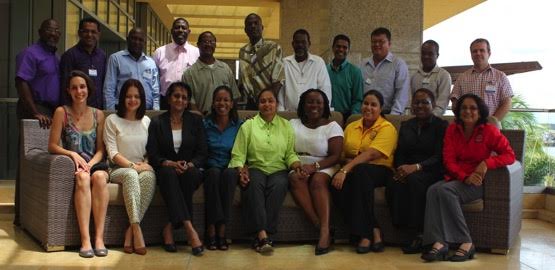
Representatives from 13 countries participated in the International Plant Protection Convention, IPPC workshop, which was held in Trinidad and Tobago, in early October.
The IPPC is recognized under the World Trade Organisation (WTO) Agreement on Sanitary and Phytosanitary Measures (SPS) for setting international standards and guidelines on plant related issues for international trade in agriculture.
Along with the revision of the draft standards, participants were exposed to several resource tools and materials that will enable increased understanding and greater implementation of areas such as pest risk analysis, surveillance and pest reporting. They were given the opportunity to review and comment on two draft ISPMs and upload these comments on the IPPC’s Online Comment System (OCS). Individual countries will also post national comments on the OCS based on the discussions that took place at the workshop.
The IPPC Secretariat and the 10th European Development Fund (EDF) Sanitary and Phytosanitary Measures (SPS) Project, being implemented by the Inter-American Institute for Cooperation on Agriculture (IICA), jointly funded this workshop.
“This regional consultation on draft ISPMs is one of those opportunities in which, as a region we can influence the final product. It is therefore important that countries in our region are involved in the standard setting process so that we can have a say in the formulation of these international standards,” said Gregg Rawlins, IICA Representative in Trinidad and Tobago.
Presenting remarks on behalf of the European Union, Ulrich Thiessen, EU Delegation of Trinidad and Tobago, stated that the contribution of the 10th EDF SPS Project is one avenue through which the EU continues to support the CARIFORUM region in the implementation of the commitments undertaken under the Economic Partnership Agreement (EPA). He further noted that the EU is grateful for the region’s participation in this process.
The overall objective of the 10th EDF SPS Project is to strengthen agricultural health and food safety systems in CARIORUM States so as to increase production and trade in agriculture and fisheries, which meet international standards while protecting plant, animal and human health and the environment.
More information: