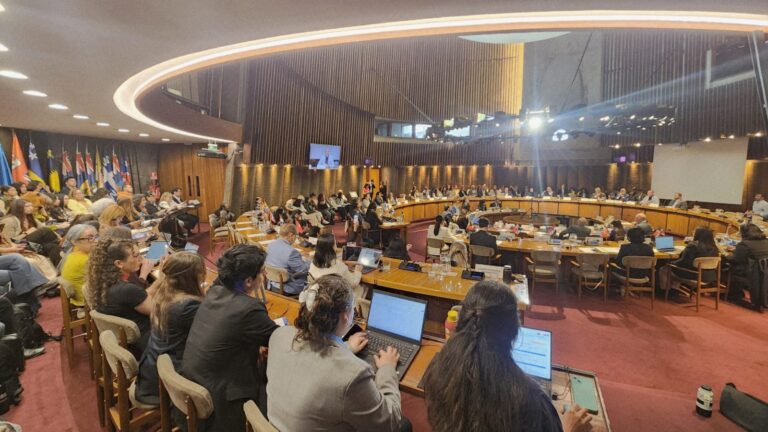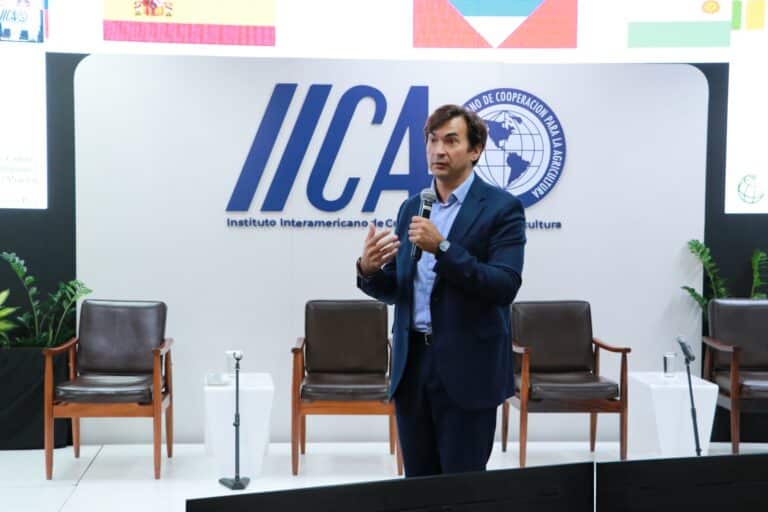
The Foreign Agricultural Service of the United States and IICA are working together to drive technical capacity building in the countries of the region.

San Jose, 27 May 2019 (IICA). Technical personnel from Costa Rica, Guatemala, Honduras, Panama and the Dominican Republic who are responsible for pesticide registration and the development of regulations on maximum residue limits (MRLs) in agricultural products explored the benefits of harmonizing standards at the regional level.
The specialists participated in a workshop in Antigua, Guatemala that was organized by the Foreign Agricultural Service (FAS) of the United States Department of Agriculture (USDA) with support from the Inter-American Institute for Cooperation on Agriculture (IICA).
MRL is the maximum concentration of a pesticide residue that is permitted in a product, in order to ensure that it does not pose a threat to human health. MRLs are established by Codex Alimentarius, a series of international food standards that regulate food safety and quality as well as the fairness of international food trade. In cases where Codex has not established a MRL, countries must have the capacity to adopt one.
According to Erick Bolaños, Agricultural Health Specialist at IICA, the workshop enabled 17 technical specialists from the region to develop their capabilities in matters related to pesticides and MRLs, as well as to share experiences and analyze current challenges.
“We identified a baseline for the most sensitive issues related to pesticide registration as well as the development and approval of MRLs. Each country presented the main characteristics of its regulatory framework,” noted Bolaños.
He added that reaching a consensus and harmonizing standards would facilitate regional trade and government management; it would also provide exporters and importers with legal certainty and prevent a discretionary adoption of standards.
The next workshop in October will focus on a number of topics: the requirements of the shared dossier for product registration, biopesticides, crop grouping, the regional warning system, risk evaluation and the regional list of restricted pesticides.
These meetings form part of a broad strategy aimed at improving regulatory frameworks for MRLs in Central American countries; strengthening the technical and management capabilities of public officials; and generating field information that can facilitate the establishment of MRLs under a regional or multilateral vision.
More information:
Erick Bolaños, Agricultural Health Specialist at IICA.