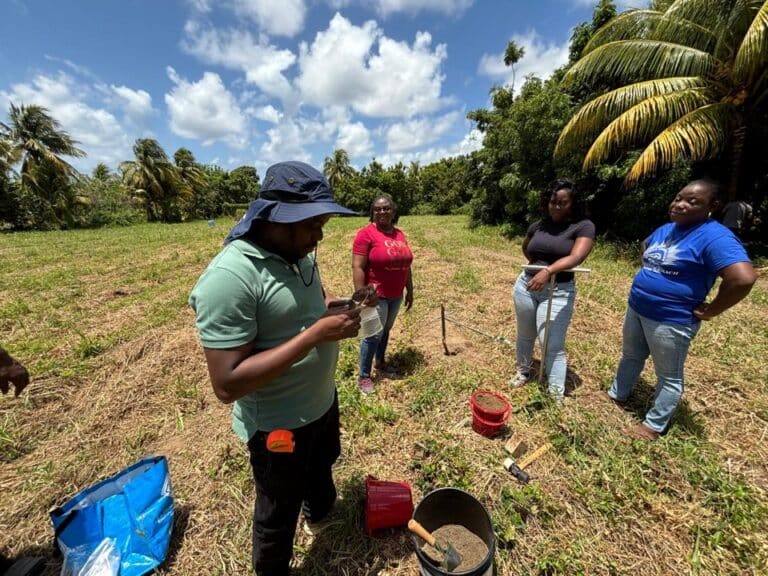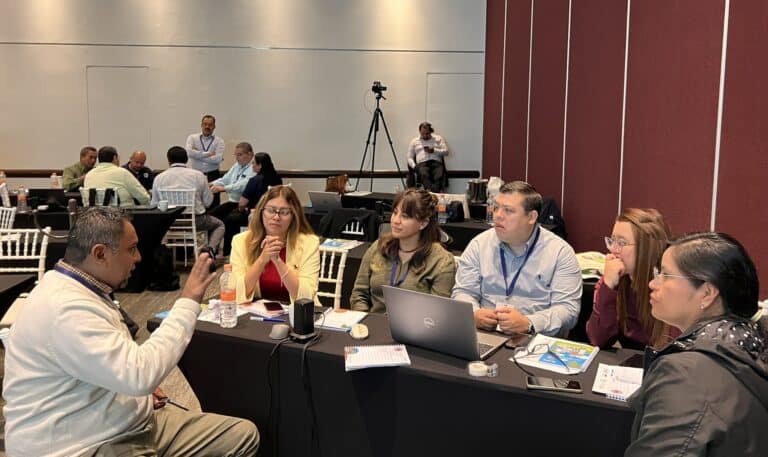
The training took place in 2015 and 2016 as part of the IICA project: Regional Virtual School for Food Inspectors (RVSFI).
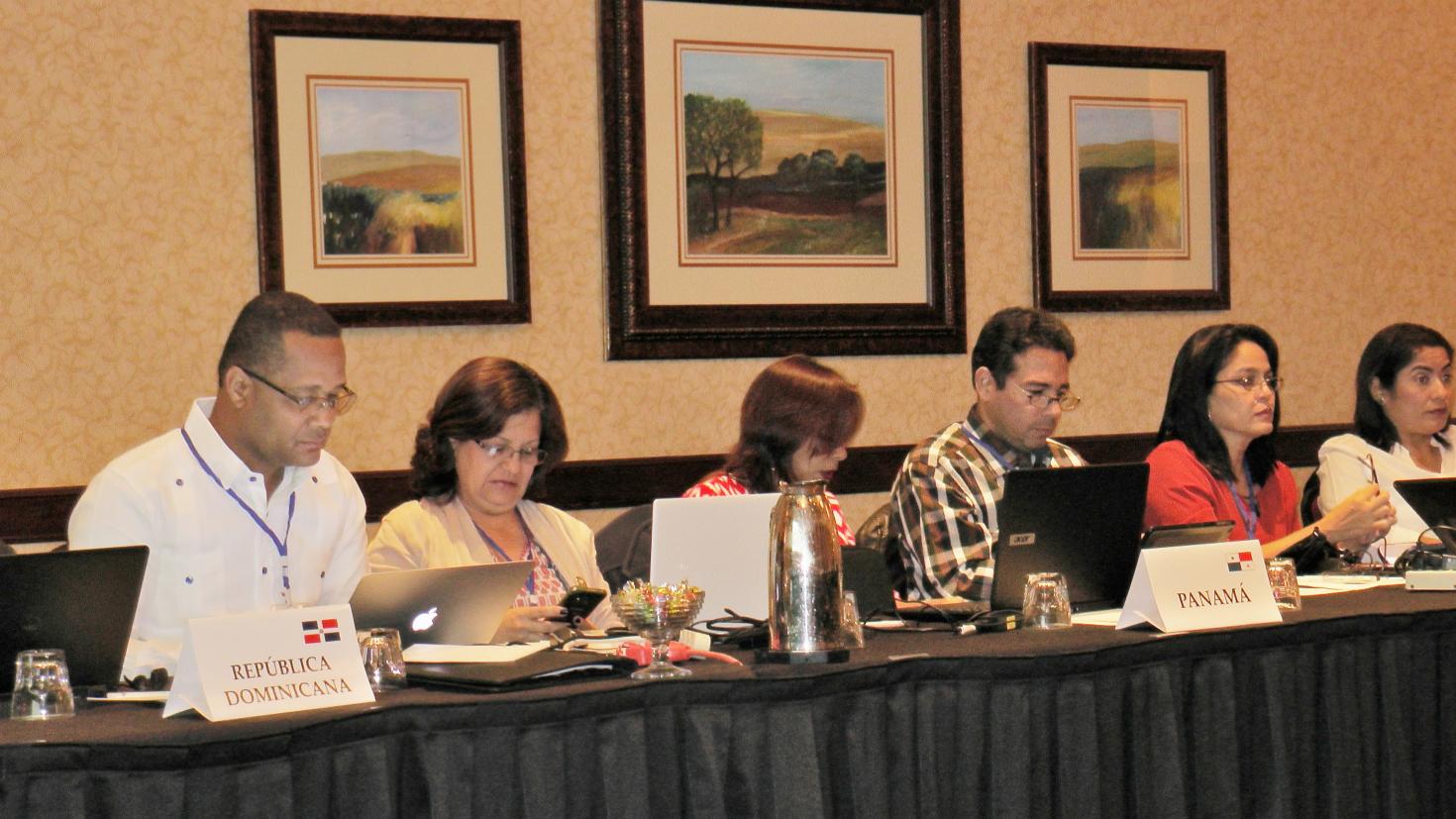
Nebraska, May 24, 2016 (IICA). Over 400 food inspectors from the countries of Central America and the Dominican Republic are now better equipped to assess fresh and processed food inspection processes, thanks to an initiative developed by the Inter-American Institute for Cooperation on Agriculture (IICA).
The Regional Virtual School for Food Inspectors (RVSFI) was created in 2013 as the first school of its kind to offer a virtual training course based on modern risk-based food inspection methods.
“The inspector course has been so useful and valuable that some of the participating universities have already expressed interest in making it a full diploma program with academic standing on a permanent basis, as a way to facilitate trade and have more harmonized procedures in the region,” said RVSFI coordinator Ana Marisa Cordero.
Course graduate Eva Bravo explained how important it is for professionals in this field to keep up-to-date, especially because standards are in constant flux.
“The modules were well structured. It starts with guidelines on how to manage the virtual platform and then continues with the actual course content, moving from the most basic to the more complex, and the academic level is rigorous throughout,” she noted.
Alexis Sandí, assistant director of Costa Rica’s National Animal Health Service (SENASA), agreed with her and added that he had heard high praise from SENASA officers who took the course, especially regarding the quality of the content and the ease of use.
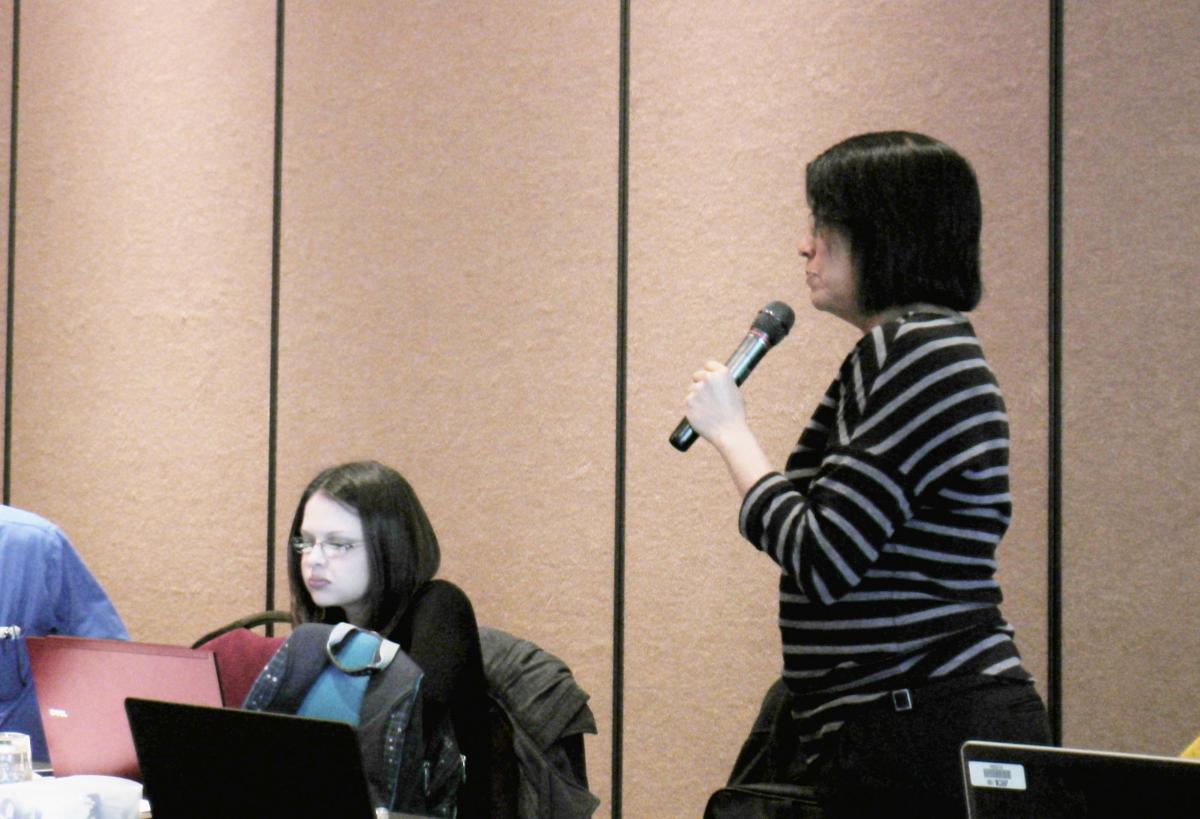
RVSFI is intended to improve food safety and thus contribute to public health and facilitate trade by means of modern, harmonized inspection procedures. Through this school, inspectors in all the countries of the region acquire a common foundation of up-to-date knowledge.
The first phase of the course, offered in 2015, was successfully completed by 173 inspectors. The second phase was finalized at the end of April, 2016, with over 231 graduates.
“Three different groups of people benefit from this initiative,” explained Cordero. “The first are consumers, who will have access to wholesome foods free of contaminants; the second are the official food services that will be able to use modern, science-based inspection methods; and finally, the countries of the region will be able to accelerate progress on the Central American customs union and implementation of the Central American Agricultural Policy.”
RVSFI and the two courses are available to the countries in the region as an international public good that they can use to strengthen their own food inspection mechanisms.
The project will end in June of this year at a meeting where IICA will submit the final results, along with proposals for keeping the initiative in operation.
The Institute was involved in providing technical support for the development of course materials. It also built a training course for food safety auditors, based on modern auditing methods, that is now ready for implementation.
The RVSFI was carried out with the participation of the following universities: Rafael Landívar, Guatemala; Universidad Nacional de Agricultura, Honduras; Universidad ISA, Dominican Republic; Universidad de Panamá; Universidad de Costa Rica; Universidad José Matías Delgado, El Salvador; Universidad Nacional Autónoma de Nicaragua, León; and the University of Belize.
Support was also received from the health and agriculture ministries in the countries of Central America and the Dominican Republic, as well as some of their associated entities.
More information: ana.cordero@iica.int
Audio in spanish only.