Inter-American Institute for Cooperation on Agriculture

Rural development

Cost of Production Training

Tiempo de lectura: 3 mins.

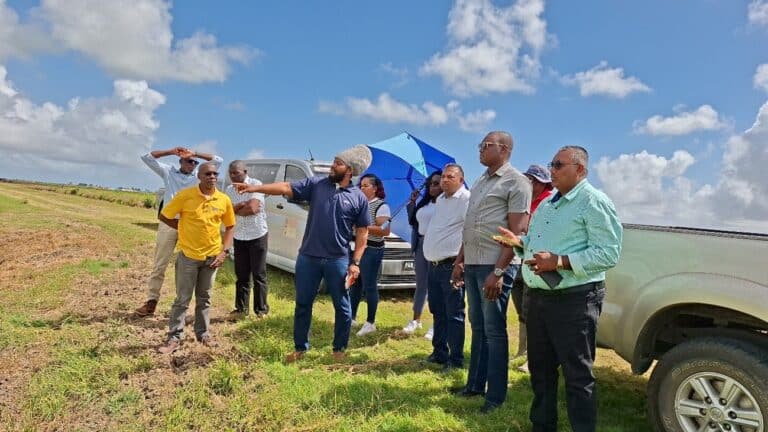
The IICA Delegation in Guyana in collaboration with the New Guyana Marketing Corporation for the past few months executed Cost of Production training sessions targeting both farmers and agro processors, so that they can adequately negotiate realistic and competitive prices on the market.

The IICA Delegation in Guyana in collaboration with the New Guyana Marketing Corporation for the past few months executed Cost of Production training sessions targeting both farmers and agro processors, so that they can adequately negotiate realistic and competitive prices on the market.

Many producers do not know their costs of production and as a result many management decisions made are flawed.  The activities targeted both hinterland and coastal communities.  The Training team comprised of IICA technical staff members in collaboration with personnel from the New Guyana Marketing Corporation.  Training sessions were held in the following locations:

  • St. Ignatius Region 9,
  • Supernaam Region 2,
  • Parika Region 3,
  • Crabwood Creek Region 6 and
  • Georgetown Region 4.

The training in Cost of Production is an intervention of farmer empowerment by IICA to allow farmers and agro-processors targeted to be better able to improve their linkages and access to markets both rural, local rural and international markets allowing them to plan and organise their entrepreneurial activities.  This training is critical since it will facilitate producers have access to differentiated markets for different products. Thus contributing to food security.

This area of training falls under Component 4 (Agricultural Markets Development and Market Access) of the IICA’s flagship Project Competitiveness and Sustainability of Agricultural Chains for Food Security and Economic Development one of the more prominent relevant results.  Over 120 farmers and 40 agro-processors have been trained.


More information: arnold.demendonca@iica.int

Share

Related news​

Grupo de participantes del proyecto regional PIVOT reunidos en la sede del IICA, en una iniciativa que promueve la prevención y preparación frente a riesgos sanitarios con potencial epidémico y pandémico en América Latina y el Caribe, mediante el enfoque Una Salud, que integra la salud humana, animal y ambiental.

San José, Costa Rica

May 12, 2026

IICA and international partners activate the PIVOT project to strengthen preparedness for avian influenza and other diseases of animal origin in the region

The Inter-American Institute for Cooperation on Agriculture (IICA) is forging ahead with the planning of the regional project Prevention of Infections through Surveillance at the Source of Transmission in Latin America and the Caribbean (PIVOT), aimed at strengthening the prevention of health risks with epidemic and pandemic potential in Latin America and the Caribbean, adopting the One Health approach that integrates human, animal and environmental health.

Tiempo de lectura: 3mins

Valparaíso, Chile

May 12, 2026

From erosion to harvest: an experience in soil recovery and productive diversification in Chile’s coastal drylands

IICA is working together with the Cuncumén Peasant Agricultural Cooperative on a 17.3-hectare farm, with funding from the Foundation for Agricultural Innovation (FIA), in a project called “Silvoagricultural Diversification as a Productive Methodology and Strategy and Optimization of On-Farm Irrigation in the Dryland Conversion Area of Cuncumén, San Antonio Province”.

Tiempo de lectura: 3mins

Tapachula, México

May 8, 2026

Without smart financing, there is no transformation: the other side of tropical agriculture

Behind many of the current debates on tropical agriculture —regarding productivity, sustainability, innovation— there is a variable that is becoming increasingly important, although it does not always feature prominently in the discussions: financing. Factors such as the way in which it is allocated, and the incentives and conditions involved, are becoming crucial.

Tiempo de lectura: 3mins