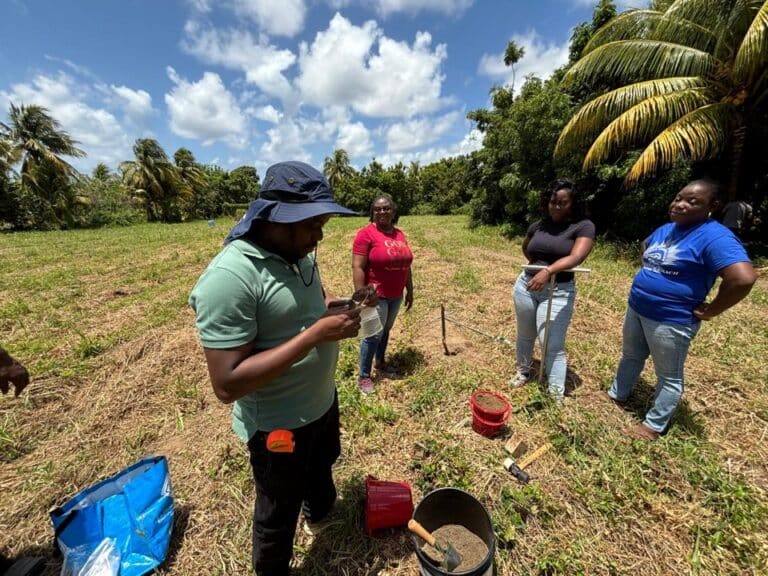
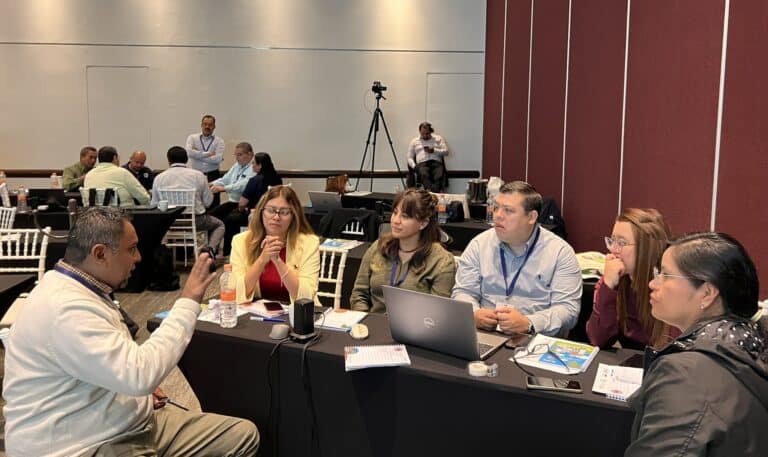
The course is free and available on the IICA training platform (https://elearning.iica.int/). It provides important information about Fusarium, its historical, social, and economic consequences, its rate of propagation, and how it could affect global food security.
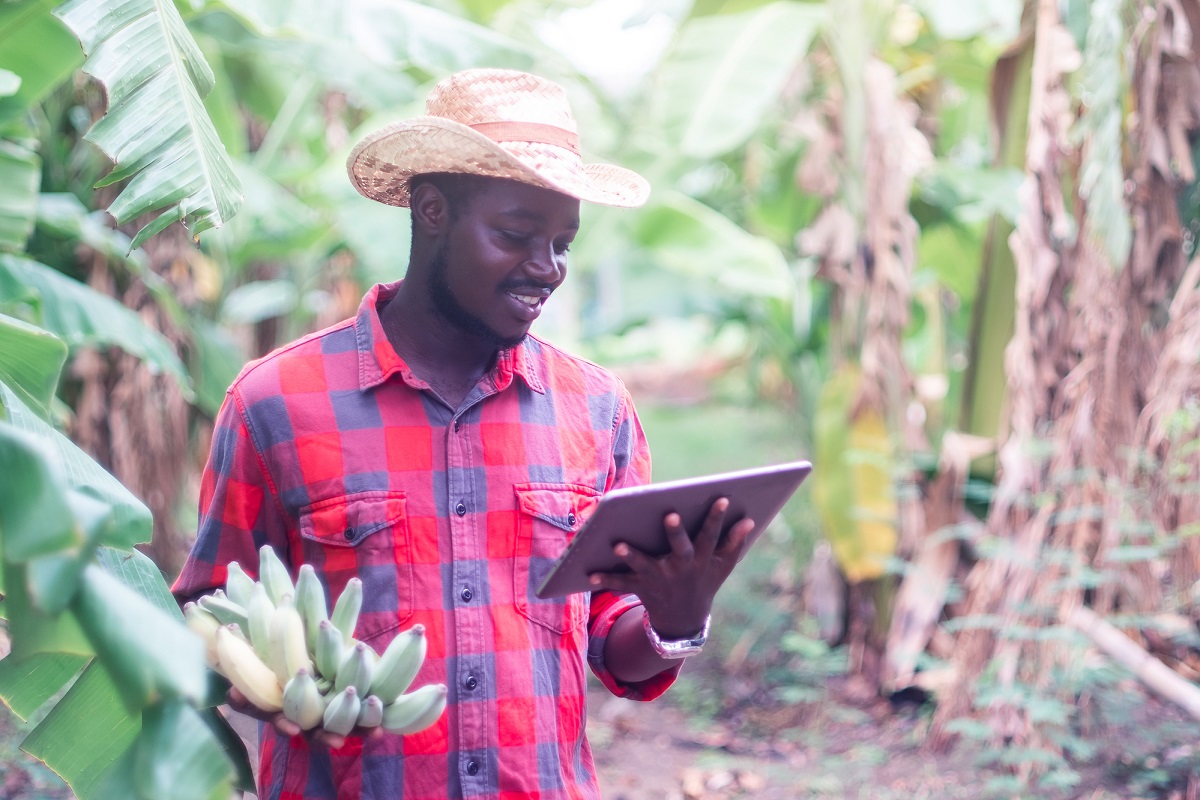
San Jose, 18 May 2021 (IICA). Bayer, through the e-learning platform of the Inter-American Institute for Cooperation on Agriculture (IICA), has launched the online course Biosecurity: the threat posed by TR4, a tool that provides important information about the Tropical Race 4 strain of the fungus Fusarium, which poses a serious threat to the world’s production of bananas, and the food and nutrition security of millions of families that depend on the crop.
This new training option is one of the 13 modules being developed under the BayG.A.P. initiative, a Bayer program aimed at providing producers and other stakeholders in the supply chain with training, advice, and support related to the process of verifying their produce.
The course Biosecurity: the threat posed by TR4 is free and designed for producers—regardless of the size of their farms or whether they use modern methods—, distribution channels, irrigation districts, technical advisers and, more generally, all individuals involved in the production of bananas. (It is available here)
“The aim is to inform people about the characteristics of the disease—the basic aspects of the fungus Fusarium oxysporum f.sp. cubense – Strain 4 (Foc TR4), the symptoms as they appear according to the plant’s stage of development, the impact on banana production, and the biosecurity measures that should be implemented to halt its transmission and spread to uninfected areas,” explained Beatriz Eugenia Arrieta, Regional Manager Food Chain Value, Bayer Crop Science.
The online training course is comprised of five modules. The first presents a history of the disease and the socioeconomic consequences, and details of its detection and epidemic dynamic, and the threat to the banana industry.
The second module deals with the cycle and symptoms of the disease, and the third with how it spreads, including aspects related to plants, soils and substrata, and water. The fourth focuses on prevention measures (educational, preventive, and containment actions).
The final module explains how the disease can be controlled—through the nutritional management of plants, the use of different cultivation systems, and the management of other plant factors.
“After learning about the disease, the ease with which it spreads, and the length of time that the fungus remains in the soil, we hope the reaction of farmers will be to immediately implement the measures described in the course”, Arrieta added.
This training option was also made available to the Global Alliance to Combat Fusarium TR4, created in February, whose mission is to assist the banana sector and its stakeholders in combatting the disease through the development of knowledge, technology and mechanisms that help provide a definitive scientific solution. The Alliance is working on three fronts: prevention and training, plant breeding, and control methods.
The Alliance is comprised of 25 institutions, and includes representatives of the private sector, academia, civil society organizations, government institutions and international agencies (IICA among them). The other members asked the Institute to serve as the secretariat of the Alliance’s Executive Committee.
Other members of the Alliance include the International Institute of Tropical Agriculture (IITA), Costa Rica’s National Banana Corporation (CORBANA), Bayer, Chiquita Brands International, the Red Solidaridad, and the University of Wageningen (Netherlands). (For more information, visit https://iica.int/en/global-alliance).
A pandemic that affects bananas
Although Tropical Race 4 (TR4) does not pose a threat to human health, it can destroy plantations of a crop on which thousands of rural families depend for their livelihoods. It spreads through the soil and there is currently no known way of eradicating it. The disease can only be prevented from spreading by burning entire banana plantations, and, as the soil can no longer be used, thousands of hectares of fertile farmland are lost.
Bananas are grown in 135 countries on all five continents. As well as playing a key role in global food security, many people depend on the production, transportation and marketing of bananas for their livelihoods. Indeed, it is estimated that 400 million people depend on the fruit, either as a source of food or income.
In the LAC region, bananas are one of the few crops that provide rural dwellers with income throughout the year, and also account for one quarter of the daily calorie intake of the most vulnerable populations.
In fact, bananas are the world’s fourth biggest food crop, surpassed only by wheat, rice and corn, and the fifth most consumed unprocessed crop.
At present, the disease is mainly found in tropical and subtropical countries. It has been detected in a total of 19 nations.
The presence of the fungus was recently confirmed in the north of Peru, setting off alarm bells in neighboring Ecuador, which is taking action to prevent it from spreading.
More information:
IICA Institutional Communication Division.
comunicacion.institucional@iica.int