The initiative, which is intended to combat speculation and make the agricultural sector more sustainable, was developed by the Ministry of Agricultural Development with technical support from IICA.
Panama, January 19, 2011 (IICA). During the launch of the Agrifood Chains Program, held on January 12 in Panama, the Director General of the Inter-American Institute for Cooperation on Agriculture (IICA), Victor M. Villalobos, said “It is important that the producer, before planting, know what he/she can sell. That is why agrifood chains, in which all links of the chain are represented, are organized.”
Producers, distributors and supermarkets participate in the chains for the purpose of identifying consumer demands and establishing a direct relationship among themselves, in an effort to reduce the number of intermediaries, who usually end up keeping most of the profits and engaging in speculation.

The program was developed by the Ministry of Agricultural Development (MIDA) with support from IICA. The first phase consists of creating agrifood chains in the rice, milk, corn, beef, bean, plantain, yam, cassava and vegetable sector.
The program covers all aspects of the process, from planting to marketing and consumption, and is intended to increase the production high quality products for the family food basket that will bring higher prices for producers in the long term.
“The producer must not only be a provider of food, but also know what the needs of the market are and adopt new technologies. If not, the crisis in the sector will continue,” said Villalobos. According to IICA Representative in Panama, Gabriel Rodriguez, the Institute will continue to provide technical assistance to the MIDA specialists, who will instruct the producers on the management of their crops.
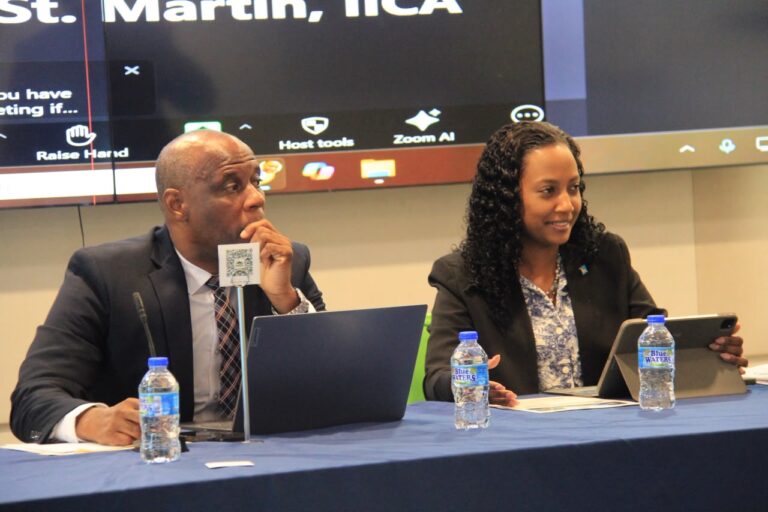
During the launching, Minister of Agricultural Development Emilio Kieswetter thanked IICA for its assistance in the formulation of the Program and in the preparation of the Strategic Plan for the Agricultural Sector 2010-2014, which coincides in many aspects with IICA’s Medium-term Plan.
Following the presentation of the Program, the Director General met with the Agriculture Committee of the National Assembly, explaining briefly the general guidelines IICA will follow during his administration.
For more information, contact
gabriel.rodríguez@iica.int