The Global Alliance Against TR4, whose Executive Secretariat is operated by IICA and which is composed of major stakeholders in the world’s banana industry, promotes research aimed at finding resistant varieties and increasing on-farm prevention practices.
Mérida, Mexico, 1 June 2026 (IICA). More than 100 banana producers from Latin American, Caribbean and African countries came together to discuss the main challenges they face in preventing the spread of the banana disease caused by the Tropical Race 4 (TR4) strain of the Fusarium fungus, which threatens their main source of income and, with it, the food security of thousands of people in the regions affected.
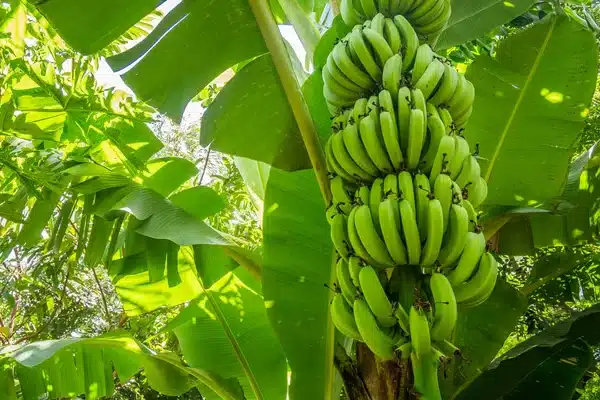
So far, no means of eradicating this soil-borne disease has been found. The pathogen affects Cavendish banana varieties, which are the main ones grown for commercial purposes around the world.
In recent years, Fusarium TR4 -native to Asia- has been found in plantations in Latin America, in countries that are among the world’s largest banana producers.
The meeting in Mérida was convened by the Global Alliance Against TR4, whose Executive Secretariat is operated by the Inter-American Institute for Cooperation on Agriculture (IICA) and whose members include public- and private-sector, academic, civil society, and international organizations.
The producers identified five main challenges that are an obstacle to more efficient progress in the prevention of the disease: economic pressures, the fact that the information available remains scattered, the need for greater technical support adapted to the situation on each farm, weak coordination between sector stakeholders, and gaps in practical training for field workers.
The meeting also highlighted the fact that banana production is vulnerable for two reasons: firstly, because of the biological risk posed by Fusarium TR4 and, secondly, due to the economic risk faced by an industry in which the price of a box of bananas has remained stable, while costs have been rising.
“Spaces like this are what the industry needs the most. When producers speak frankly, we listen and learn,” said José Manuel Domínguez, Senior Manager of Fresh Fruit Business Operations at Bayer, one of the members of the Alliance and a promoter of the event in Mexico.
Set up in 2020, this network promotes international scientific research to find landraces of banana tolerant to Fusarium TR4, and on-farm and online training to prevent the spread of the disease.
Details of the latest research on ways to combat TR4 were presented at the meeting in Mexico, including soil microbiome analysis, experiences in the Philippines with integrated protection system management, and the need to incorporate new varieties of bananas into markets.
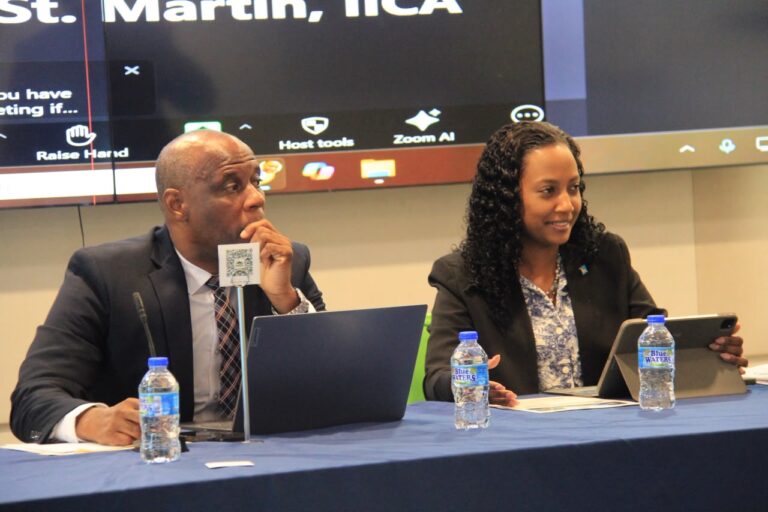
“Prevention must be translated into solutions that can be applied on the farm. For that reason, the Global Alliance Against TR4 promotes the implementation of biosecurity measures, the continuous training of teams to expand our work, the regional exchange of knowhow, the use of evidence-based tools, and practical cooperation among stakeholders,” said Lloyd Day, Executive Secretary of the Alliance and Deputy Director General of IICA.
“The response to TR4 is not only technical, it is collective,” he added.
More information:
Institutional Communication Division.
comunicacion.institucional@iica.int