IICA participated in the International Forum on Bioenergy, during which it argued that bioeconomy allows for reassessing natural resource use and agricultural coordination.
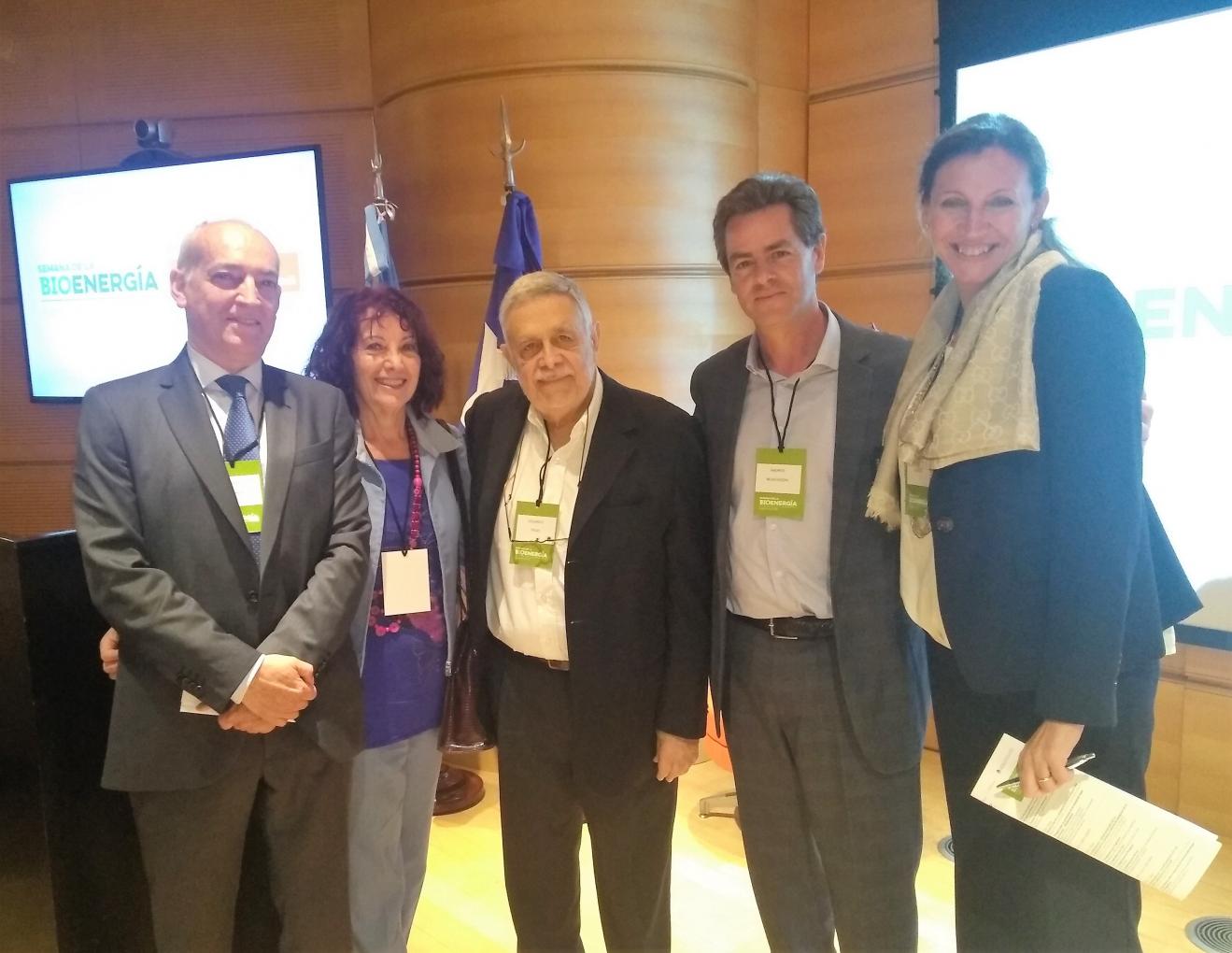
Buenos Aires, Argentina, 19 October 2018 (IICA). During an international forum in Buenos Aires, which was attended by the Inter-American Institute for Cooperation on Agriculture (IICA), representatives of the public and private sectors of the bioenergy chain in Argentina and abroad proposed visions and strategies for developing bioenergy and its impact on societies, the environment, and the economy.
The national, regional and international bioenergy framework; the promotion of bioenergy in Argentina; the sharing of experiences and opportunities related to the use of dry biomass to generate bioenergy; the development of liquid biofuels, biogas and second-generation biomethane; and opportunities for developing bioenergy were the main issues addressed during the International Forum on Bioenergy.
Representatives from Japan, Brazil, Chile, Uruguay, Mexico, the United States and several countries in Africa attended the event, which was organized by the Government Secretariat for Agroindustry of the Ministry of Production and Labor, the Government Secretariat for Energy of the Ministry of Finance, the Food and Agriculture Organization of the United Nations (FAO) and the Global Bioenergy Partnership (GBEP).
“Bioeconomy not only affords a valuable opportunity to capitalize on new knowledge, but it also allows for reassessing the role of natural resources in the economy and in the way in which agriculture interacts with the rest of the economy. More importantly, it allows for identifying the ways in which natural resources can contribute to territorial development,” stated Eduardo Trigo, Advisor to the Bioeconomy and Production Development hemispheric program of IICA.
The specialist participated in the panel discussion entitled “Challenges and opportunities in the development of bioenergy,” along with Renato Godinho, Director of the Renewable Energies Department of the Ministry of Foreign Affairs of Brazil; Martín Fraguío, of the Group of Producing Countries from the Southern Cone (GPS); and Candice Wilson, of the U.S. Grains Council.
Trigo defined bioeconomy as the use of resources, processes, technologies and biological systems to produce products and services.
“It is an all-encompassing concept that includes everything from integral biomass use to knowledge-based innovations and state-of-the-art technologies across all sectors of the economy,” he explained.
At the close of the forum, Miguel Almada, National Director of Bioenergy at the Secretariat of Agroindustry, highlighted Argentina’s commitment to bioenergy development and value adding.
Adrián Murchinson, Secretary of Food and Bioeconomy of the Secretariat of Agroindustry, described the global forum as a bridge that enables countries to share their different visions, positions and cultures, as well as the perspectives of the public and private sectors, which are necessary in order to find solutions.
Lastly, Michela Morese, Executive Director of GBEP, highlighted the importance of the forum for dialogue, and underscored the fact that fuels do not compete with food.
More information:
Sonia Novello, Information and Documentation Specialist at the IICA Delegation in Argentina