The decision not to migrate again was a very difficult one for her and her family; even more difficult was taking over the plot again and restoring it, from scratch.
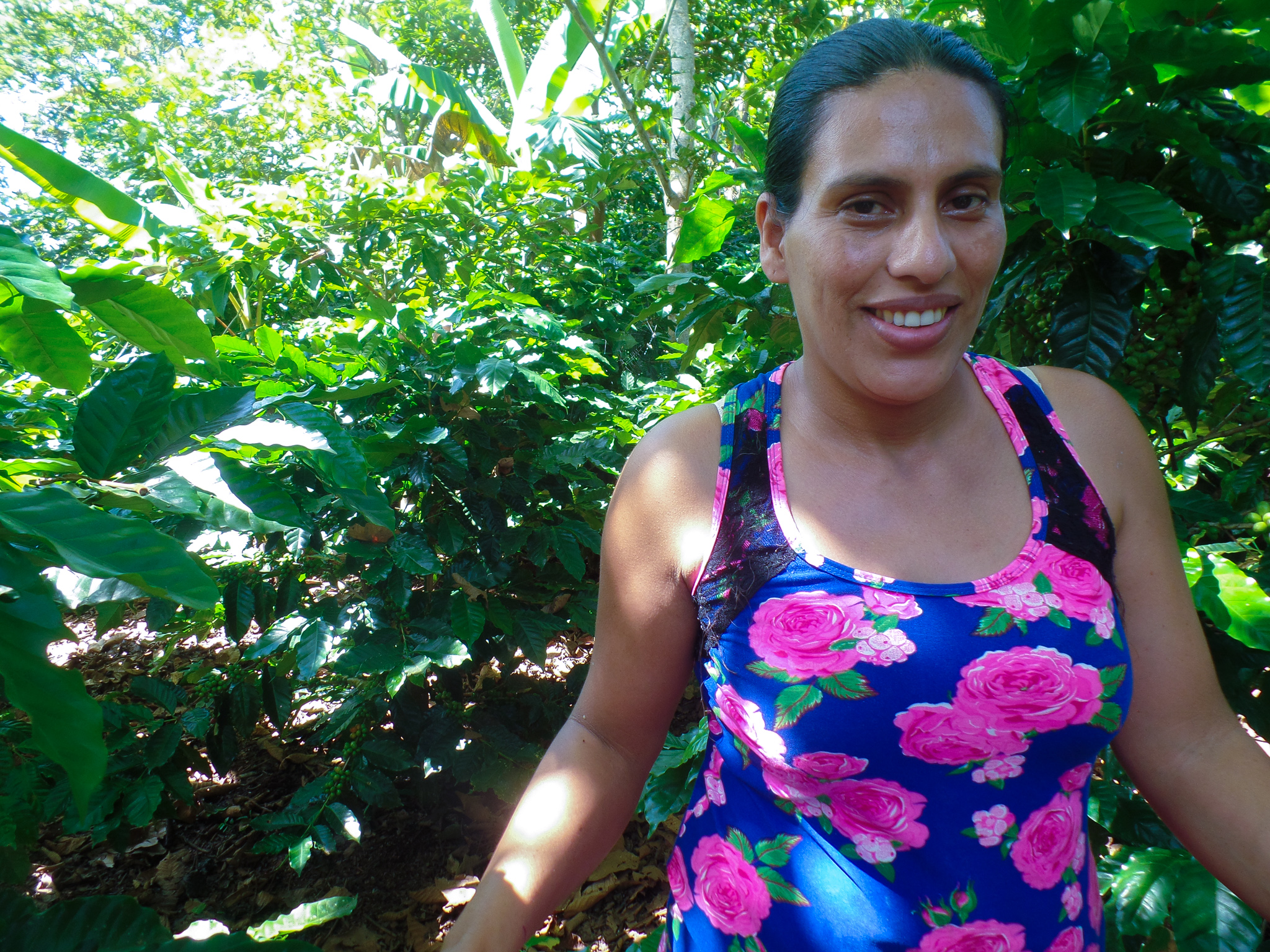
La Cuá, Jinotega, 11 December 2020 (IICA) – In March 2019, for various reasons, about 62,000 Nicaraguans migrated to neighboring countries. Juana Danelia Herrera Fajardo, a coffee farmer from the municipality of El Cuá, in Jinotega, was one of those people.
“We are a very big family. There wasn’t enough work for everyone on our rundown farm. I went to Panama for a year, to try to make some income. My husband stayed in the farm to look after our children; that’s what we both agreed to”, she recalls.
“Well, I was doing well”, she replies immediately, without hesitation. With the money she sent home, the family bought food. However, the farm she had inherited from her father was still almost entirely devastated by coffee rust. Despite having bought some fertilizers and fungicide, nothing seemed to be working. But her remittances guaranteed three meals for her children.
“I returned home because my oldest daughter was going to graduate from high school and said she wouldn’t attend graduation unless I was there. So, I went back. When I returned, I was surprised to learn that the Central American Program for Integrated Coffee Rust Management (PROCAGICA) was providing assistance to grow the plant, because we weren’t succeeding on our own. Thanks to PROCAGICA, our plants are coming back to life”, she explains.
Two years after her oldest daughter’s graduation, Danelia’s plot has grown increasingly healthy and good results are expected for the next harvest. However, these changes and achievements have taken time. The decision not to migrate again was a very difficult one for her and her family; even more difficult was taking over the plot again and restoring it, from scratch.
“It’s exhausting. We work all day, every day—especially during harvest time. I wake up at half past three to breastfeed my baby, change her diaper and put her back to sleep. Then I go to the kitchen, because the farm workers arrive between 5:30 and 6 in the morning and I feed them. While they eat, I wake the children up and have them distribute the baskets, ropes and sacks. The oldest one then begins to assign furrows to each boy. My husband works outside, but when we are all there, we all work; I am the one who decides where to sell and to whom we deliver. I’m the owner; I’m the one in charge”, she remarks.
Danelia hopes to produce between 40 and 60 quintals of coffee during the current harvest. A year from now, however, once the plant has fully matured, and if it is healthy, she estimates a yield of about 90 quintals of pergamino coffee.
PROCAGICA, which is led by the European Union and the Inter-American Institute for Cooperation on Agriculture (IICA) in Central America, has proposed a diversified coffee farming model in Nicaragua, promoting and supporting the cultivation of bananas and Tahiti lime. This provides families with an additional food option and the possibility of marketing any surplus.
“I haven’t attended all of the training sessions because I don’t have enough time. I’ve had my daughter attend for me, so she passes on what she learns. Right now, we’re cutting coffee. If there’s any cleaning up to do, I do it. If we have to weed or remove leaves, I do it. We have to do the work ourselves. I supervise and look for other workers when we need more help”, she explains.
Understanding and recognizing the leadership of female coffee farmers is also part of PROCAGICA’s work approach. Beyond just guaranteeing their participation, it is crucial to generate platforms and opportunities to enable female heads of household to reach their full potential, based on their specific circumstances.
Danelia began participating in the program in 2017, as part of the initial interventions. She has received support to strengthen the nutrition and diversification of her coffee plantation.
“With the help I have received, the whole family has felt motivated. After having experienced so many hardships, when something like this comes along, we all feel motivated. We know what goes into everything, because we’ve had to struggle to succeed”, she remarks.
– “Do you ever think about returning to Panama?”
– “No!”, she replies bluntly.
More information:
Institutional Communication Division
comunicacion.institucional@iica.int