Comprised of organizations in a number of countries, the network will focus on education, extension and research on the role of youth in agriculture.

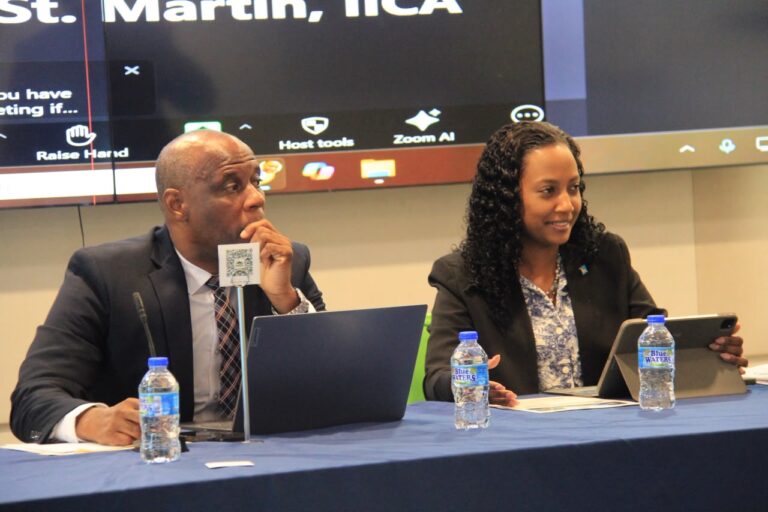
San Jose, Costa Rica, September 18, 2014 (IICA). A roundtable will be held in Costa Rica from 17-18 September entitled, “Innovations for the development of youth in agriculture in the Americas,” convened by the Inter-American Institute for Cooperation on Agriculture (IICA) to promote the integration of the young people into agriculture.
The aim of the initiative is to reach agreement on an agenda to promote a hemispheric program on behalf of agricultural youth, which would be implemented via an interagency network.
At a meeting at the Institute’s headquarters, representatives of academic organizations and the agricultural sectors of Brazil, Colombia, Costa Rica, Mexico, Nicaragua, the U.S. and Uruguay will seek concrete solutions to the challenges faced by young people in the agricultural sector, such as access to education, land, financial services and markets, as well as limited participation in the political dialogue.
The activity will be inaugurated by IICA’s Director General, Víctor M. Villalobos.
The roundtable will focus on the discussion of strategies designed to promote greater participation by young people in agriculture and development, and to strengthen interaction among institutions related to the agricultural sector.
“The search for priority actions and common interests is essential, so that the projects that IICA and other organizations carry out to strengthen agriculture in the Americas lead to positive generational change,” Villalobos commented.
The meeting will involve representatives of prestigious higher education centers, such as Nebraska-Lincoln, Tarleton State and Texas Tech universities, in the U.S.; the Universidade Estadual de Campinas, of Brazil; and EARTH in Costa Rica.
Delegates will also be attending from the Multilateral Investment Fund of the Inter-American Development Bank (IDB-MIF), the World Bank, the global network Young Professionals for Agricultural Development (YPARD) and institutions linked to agriculture and youth in Mexico, Costa Rica and Colombia.
For further information, contact:
sandro.lopes@iica.int