In his remarks, Torroba noted that “sustainable aviation fuels, among which biofuels stand out, are the main innovation developed by the civil aviation sector to achieve net zero emissions by 2050
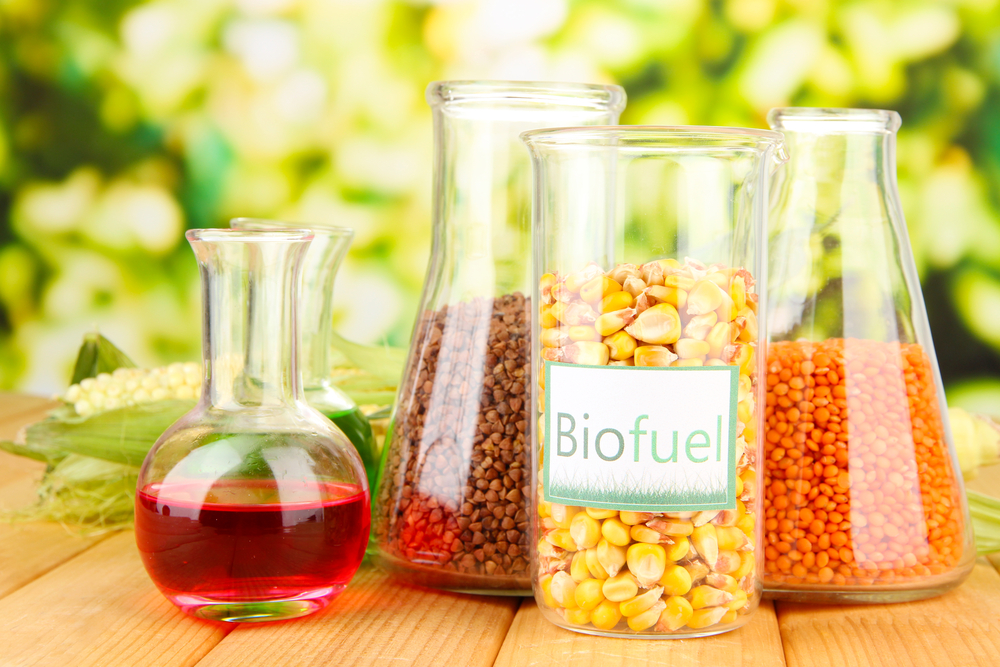
Asunción, Paraguay, 13 October 2022 (IICA) – The Inter-American Institute for Cooperation on Agriculture (IICA) participated in the Ninth Bioenergy Week in Paraguay, organized by the Global Bioenergy Partnership (GBEP) and aimed at analyzing the role of biofuels in the energy transition as well as highlighting opportunities in the global market for sustainable aviation fuels and other new biofuels. IICA was represented by its international specialist in Biofuels and Renewable Energies, Agustín Torroba.
In his remarks, Torroba noted that “sustainable aviation fuels, among which biofuels stand out, are the main innovation developed by the civil aviation sector to achieve net zero emissions by 2050”. He indicated that “this type of fuel will account for 65% of the reduction in greenhouse gas emissions in the sector” and that “noteworthy technological pathways in the short term will be those related to the processing of vegetable oils and animal fats (known as HEFA) and, in the medium term, those related to sugars and starches through the Alcohol to Jet pathway”.
He added that “new technological pathways using alternative raw materials are expected to be developed at the commercial level as costs decrease and markets for sustainable aviation fuels grow”.
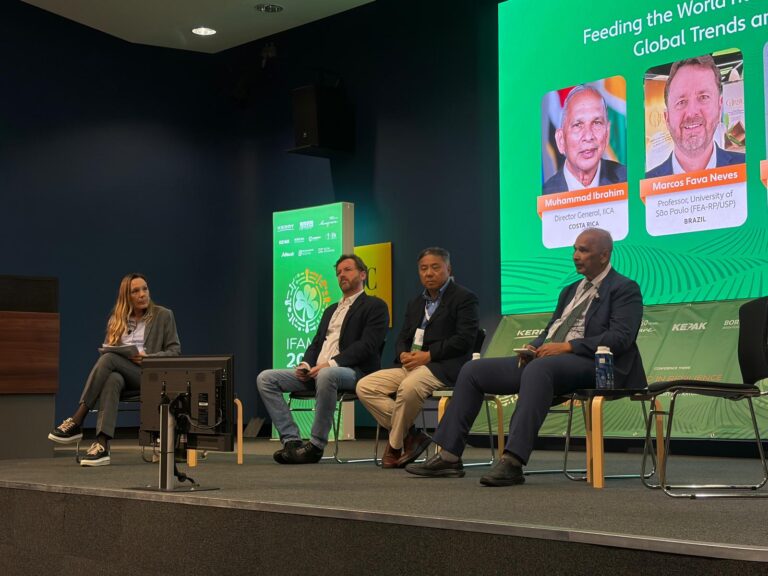
At the event, IICA hosted a panel entitled “Bioenergy in the context of the broader bioeconomy”, aimed at analyzing the evolution of bioenergy in the Americas. Participants identified linkages between national bioeconomy policies and strategies and biofuels. They also agreed on pending agenda items for the sector, namely the implementation of predictable regulatory frameworks, the promotion of markets and the development and measurement of social, economic and environmental indicators that can demonstrate the advantages of bioeconomic activities.
Torroba was joined at the event by Gabriel Rodríguez, IICA Representative in Paraguay, and local IICA technical specialist Nancy López.
The Global Bioenergy Partnership (GBEP) has been organizing bioenergy weeks since 2013, and has held previous editions in Brazil, Mozambique, Indonesia, Hungary, Ghana, Argentina, the Philippines and Ethiopia.
Bioenergy Week 2022 in Paraguay sought to enhance learning from positive experiences on sustainable production and use of bioenergy. It also highlighted various value chains, with a special focus on bioenergy’s contribution to the energy transition, and support for the design and implementation of bioenergy policies in the Americas.
Furthermore, it provided the opportunity to continue a dialogue with the private sector and other stakeholders on ways to improve mutual cooperation towards a more sustainable production and use of bioenergy.
More than 60 speakers participated in the sessions, including more than 20 international lecturers. Representatives of close to 40 public, private and academic institutions participated in the event.
The event was organized by the Ministry of Agriculture and Livestock (MAG) and the Ministry of Industry and Trade (MIC) of Paraguay; FAO; and the Global Bioenergy Partnership (GBEP), with support from IICA and the US Grains Council. Paraguayan Ministers Santiago Moisés Bertoni (MAG) and Luis Alberto Castiglioni (MIC) participated in the event’s inauguration.
More information:
Institutional Communication Division
comunicacion.institucional@iica.int