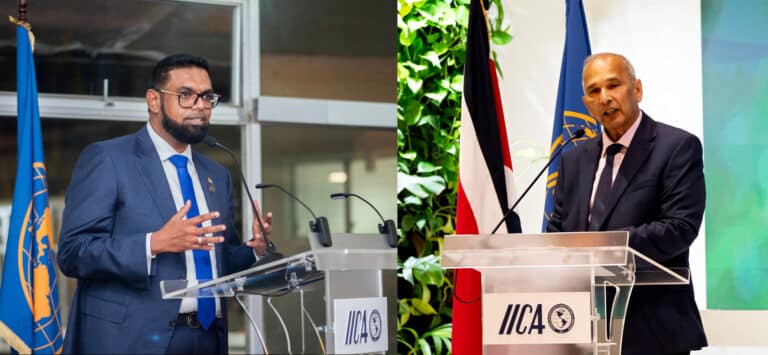
The Delegation of the Inter-American Institute for Cooperation on Agriculture in Guyana in collaboration with the New Guyana Marketing Corporation and Propel facilitated a one-day Cost of Production workshop in the Village of St. Ignatius Region 9. The objective of the workshop was to empower farmers and agro-processors with the skills of identifying costs of input supplies and labour.
The Delegation of the Inter-American Institute for Cooperation on Agriculture in Guyana in collaboration with the New Guyana Marketing Corporation and Propel facilitated a one-day Cost of Production workshop in the Village of St. Ignatius Region 9. The objective of the workshop was to empower farmers and agro-processors with the skills of identifying costs of input supplies and labour.
Since many producers do not know their true costs of production many management decisions made are flawed. With this training in Cost of Production, participants (farmers and agro-processors) from Region 9 are better able to improve their linkages and access to markets both rural, local rural and international markets. This training has been critical since will assist to facilitate producers to have access to differentiated markets for different products. The methodology used in the training can be adapted to other agricultural income earning activities.
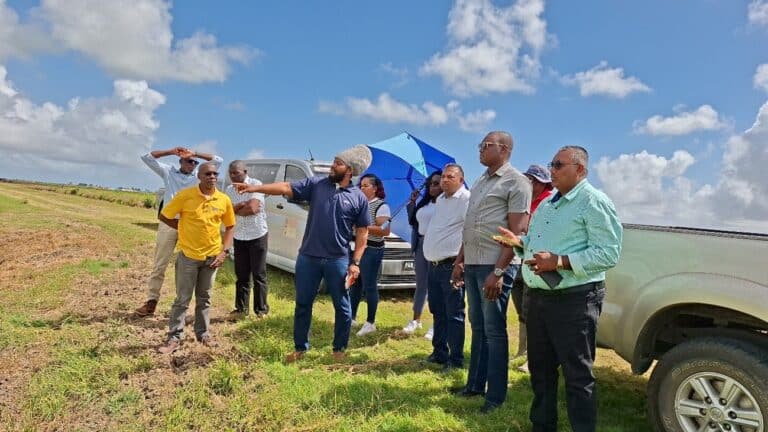
To create awareness of the workshop activity the NGMC and IICA Team conducted several farm visits to numerous villages in the Region to mobilise participation in addition to sharing in an interview on Radio Paiwaomak where a preview of the intended training was announced.
The Training was held on Wednesday 12th April 2017 at the St. Ignatius Benab and attracted forty-seven (47) participants from the following (ten) villages in Region 9. St. Ignatius, Parshana, Moco-Moco, Shulinab, Quarrie, Nappi, Bena Hill, Surama Aranaputa, and Annai. Participants comprised of farmers, agro-processors and five (5) students from the Bena Hill.
In the workshop session, which was very interactive between the participants and facilitators allowed for the development of five different cost of production schedules operable in the Region 9 area. Participants were allowed to form five groups and within each group focused on the production cost along the chain of production of five different agricultural production activities identifying the various costs incurred. These costs were divided into fixed and variable costs. Cost of production was developed for peanuts, cassava bread, hot sauce, plantain chips, and guava jam.
Participants were also given resource material and are now equipped to calculate their various costs of producing knowing their profit margins and have a better position to negotiate prices offered to them for their produce.
More information: arnold.demendonca@iica.int
 http://www.facebook.com/iica.gy