Experts from IDB, ECLAC, FAO, IFPRI and IICA consider collective action by the countries in the hemisphere necessary to strengthen the agrifood trade in the face of a challenging international outlook
San Jose, 11 September 2023 (IICA) – Strengthening the multilateral trading system, avoiding the enactment of rules and regulations not based on science, better leveraging current agreements and increasing intraregional trade would help to promote and strengthen agrifood trade in the Americas and to consolidate its contribution to food security and sustainable development in the region.
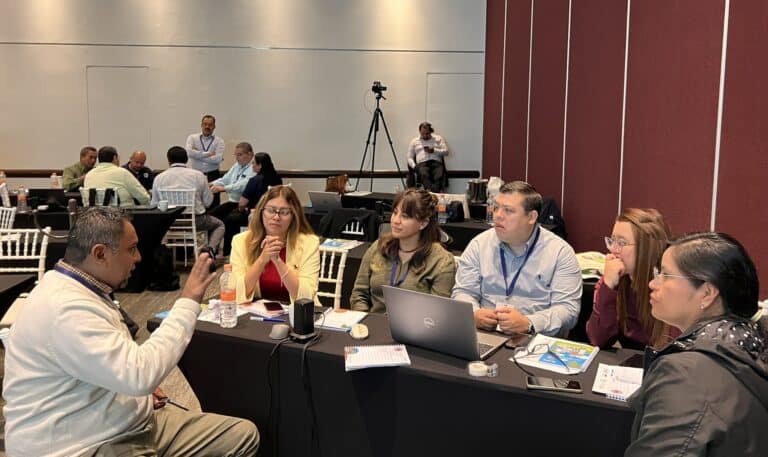
A group of over 30 experts convened by the Inter-American Development Bank (IDB), the Economic Commission for Latin America and the Caribbean (ECLAC), the Food and Agriculture Organization of the United Nations (FAO), the International Food Policy Research Institute (IFPRI) and the Inter-American Institute for Cooperation on Agriculture (IICA) highlighted the importance of these four routes for collective action by the countries in the hemisphere to strengthen the region’s agrifood trade in the face of a challenging international outlook.
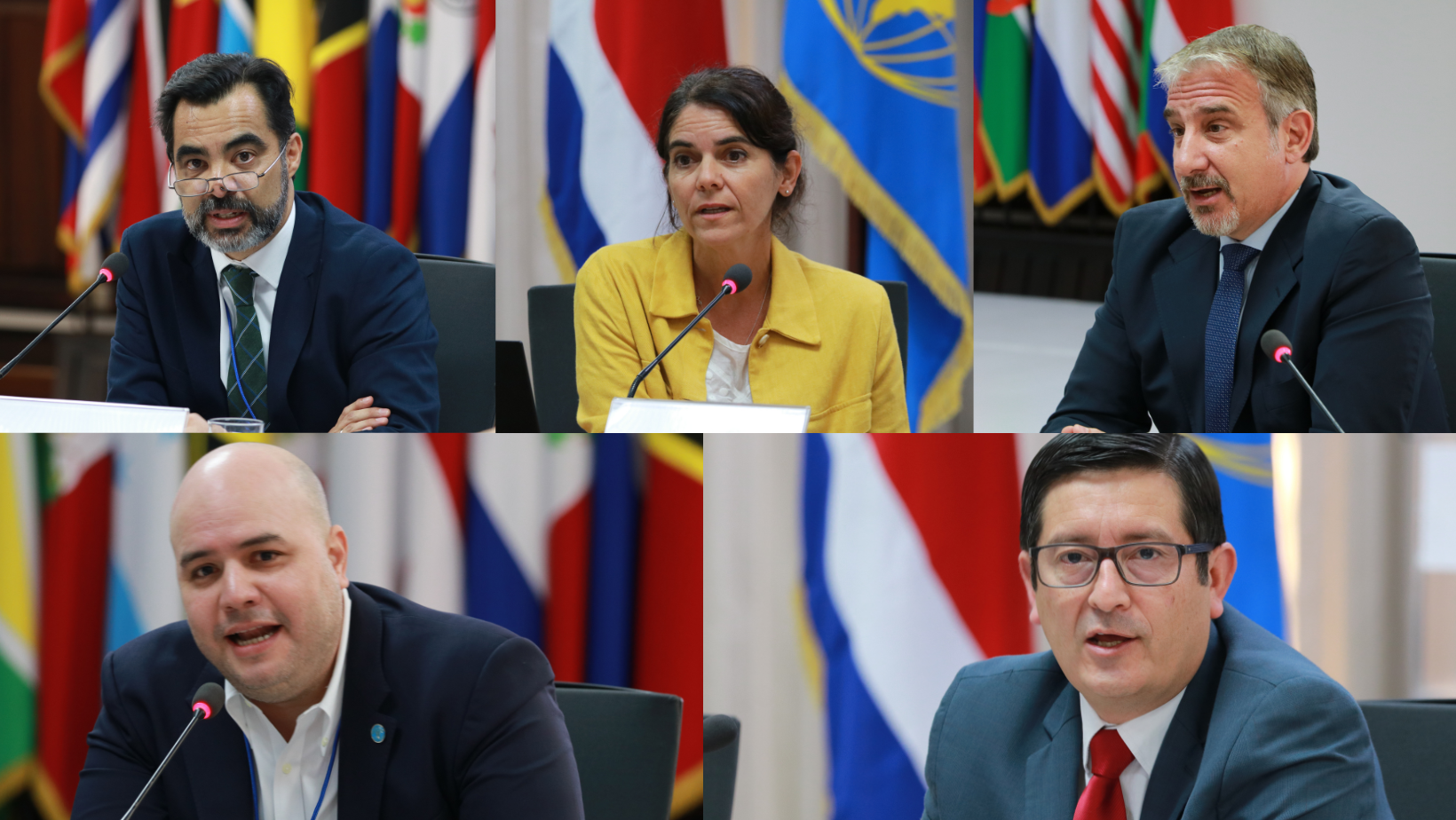
“We are facing an international context of constant changes and fragmentation of economic and trade relations, which is really a wake-up call—the issue of increased protectionist measures, trade restrictions and growing subsidies. Without a doubt, the decisions countries make will have an impact on trade in the region”, commented Daniel Rodríguez, International Trade and Regional Integration Program Manager at IICA.
Valeria Piñeiro, acting head of the Latin American region and Senior Research Coordinator in the Markets, Trade and Institutions Unit at IFPRI, expressed that collective action by the countries in the region in forums like the World Trade Organization (WTO) would result in benefits such as improved decision-making regarding trade policies, transparency and governance. “The international agencies that work in Latin America are joining forces to provide countries with the evidence necessary for decision-making and to strengthen the bloc for negotiating in forums like the WTO”, explained Piñeiro.
“There is a clear need for technical analyses to support governments at a time when environmental or ‘green’ neoprotectionism is rising. We must apply analytical knowledge to early warning systems that translate into action by the countries”, stated Paolo Giordano, Principal Economist for the IDB’s Trade and Integration Sector.
Giordano also spotlighted issues that require greater technical knowledge to facilitate trade-related decision-making, such as safety and waste, among others.
To better leverage existing trade agreements, Pablo Rabczuk, FAO’s Agrifood Systems and Trade Officer for Latin America and the Caribbean, explained that the country’s agriculture, economy and foreign trade sectors must work together, which would require political will and government commitment.
“It is necessary to stimulate the promotion of exports, such as supporting the implementation of trade missions, fairs, business roundtables and the development of capacities for the use of digital marketing and market intelligence tools”, explained Rabczuk.
José Durán, Economic Affairs Officer and Chief of the Regional Integration Unit at ECLAC, commented that international agencies such as IICA, FAO, IDB, IFPRI and the Commission itself could coordinate efforts to institute databases, as an international public good, to show where the barriers to intraregional trade exist.
“In order to increase the exchange between our countries, it is important to map out the companies—including SMEs and family farming—that can produce for the intraregional market, for both imports and exports, and emerging products. This is something that the agencies can also coordinate”, he said.
During the workshop, the experts also reaffirmed the importance of any rules applicable to trade having a scientific basis and being the result of an international consensus compatible with the WTO, and taking into account the capacity of the individual countries to respond to and comply with the provisions.
More information:
Institutional Communication Division.
comunicacion.institucional@iica.int