The underlying Theory of Change of this Project is that Pluralistic Rural Advisory Services based on public-private partnership models, can be effective in responding to organised Rural Advisory Service demand, of individual and organised smallholder farmers.
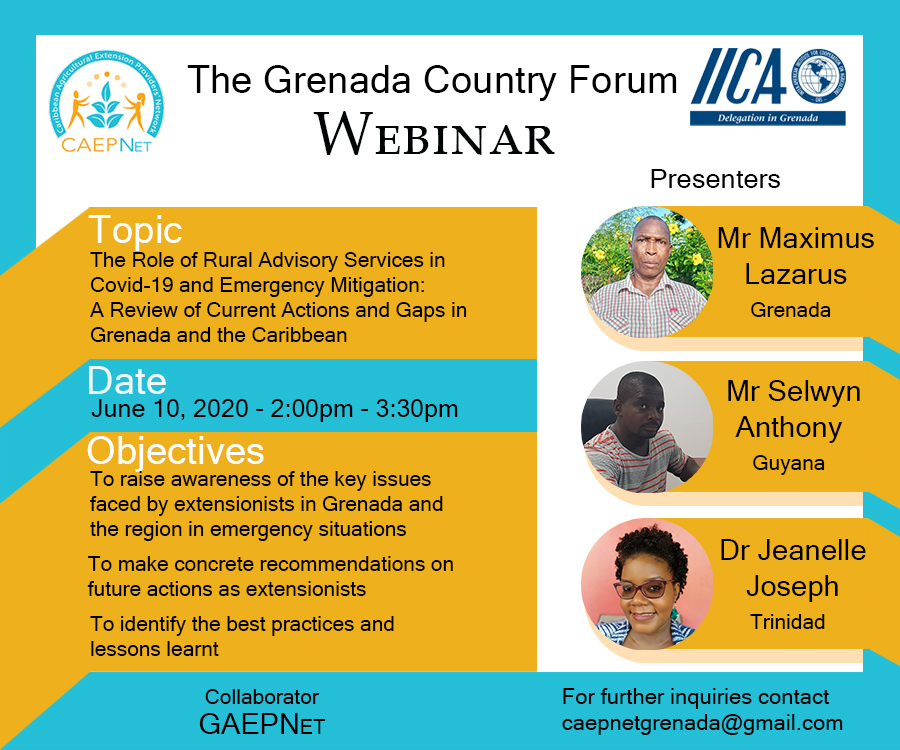
Grenada, 15 June 2020. The Grenada National Forum of the Caribbean Agricultural Extension Providers Network (CAEPNet) hosted a Webinar titled The Role of Rural Advisory Services in Covid-19 and Emergency Mitigation – A review of current actions and Gaps in Grenada with inputs from the Caribbean. This Webinar was financed by the International Fund for Agricultural Development (IFAD) under its project titled Delivering Extension Services to the Last-Mile: Improving smallholders’ access to innovation and pluralistic, demand-driven extension services.
The underlying Theory of Change of this Project is that Pluralistic Rural Advisory Services based on public-private partnership models, can be effective in responding to organised Rural Advisory Service demand, of individual and organised smallholder farmers.
Inter-American Institute for Cooperation on Agriculture (IICA), in collaboration with the Latin American Network for Rural Extension Services (RELASER), officiates as host of this network in the Project which includes and supports activities of the Grenada National Forum.
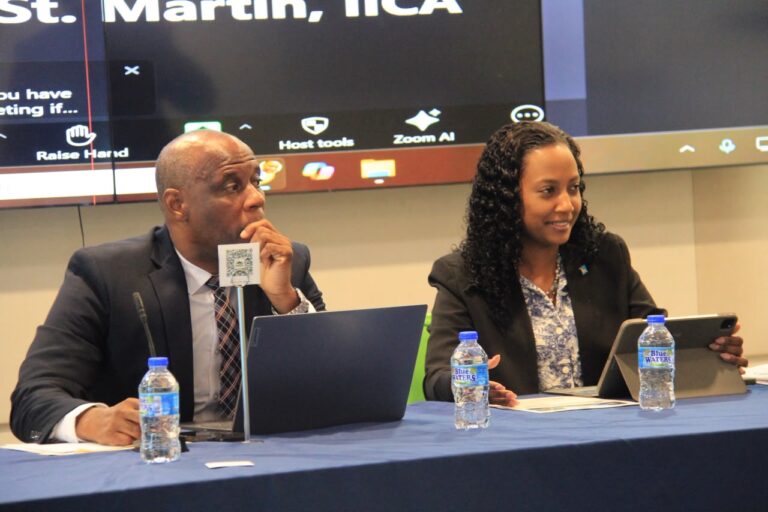
One of the objectives of the Webinar was to provide a platform to raise awareness of the issues faced by the extension service in the Caribbean region in emergency situations and contributes in some small way of actions on the way forward. Approximately fifty agricultural extensionists, farming communities, agricultural networks and agricultural input suppliers and the general public from the Caribbean region participated in this Webinar.
The three presenters one each from Guyana, Trinidad and Tobago and Grenada shared their experiences as extensionists on the issues faced by their respective extension services in the Covid-19 lockdown period. Presenters from Grenada and Guyana contextualized the events and their experiences as agricultural extension services during the Covid-19 lock down period. The presenter from Trinidad and Tobago focused on a Rapid Assessment of the Region’s Extension Capacity in dealing with a Global Health Pandemic. Participants at the Webinar contributed individually and collectively to the concrete recommendations that emerged and the many positive suggestions for improving the rural advisory services during emergency situations in the region.
The Grenada National Forum, which is guided by the Caribbean Agricultural Extension Providers’ Network (CAEPNet) and the Global Forum for Rural Advisory Services (GFRAS), is a group seeking to bring together key agricultural stakeholders in an effort to contribute to strengthening collaboration towards agricultural extension and agricultural development in Grenada. The Forum is in its organizational development stage and interested private and public agriculture related institutions and individuals are welcome to support this Forum as it continues to garner support to satisfy the Theory of Change where it can effectively respond to organised Rural Advisory Service demand, of individual and organised smallholder farmers.
For more information contact:
derek.charles@iica.int