
San Salvador, 1 April 2025 (IICA) – As a result of ongoing joint efforts to boost the competitiveness and sustainability of the Central American dairy sector, the Inter-American Institute for Cooperation on Agriculture (IICA) and its partners have launched a guide that stands to play a key role in guaranteeing the safety of dairy products and facilitating trade in the sector.
This valuable document, which will be made available to the countries, will provide general guidelines to strengthen the design and implementation of national risk-based surveillance programs for residue and contaminants in raw milk.
IICA prepared the publication, entitled “Lineamientos técnicos para fortalecer el diseño y la implementación de programas nacionales basados en riesgo para la vigilancia de residuos y contaminantes en la leche” (in Spanish only), in collaboration with the Central American Dairy Federation (FECALAC) and the Executive Secretariat of the Central American Agricultural Council (SECAC).
The guidelines in the text were prepared based on technical input from public and private sector representatives in the countries during national and regional discussion forums, with the support of IICA specialists and external collaborators.
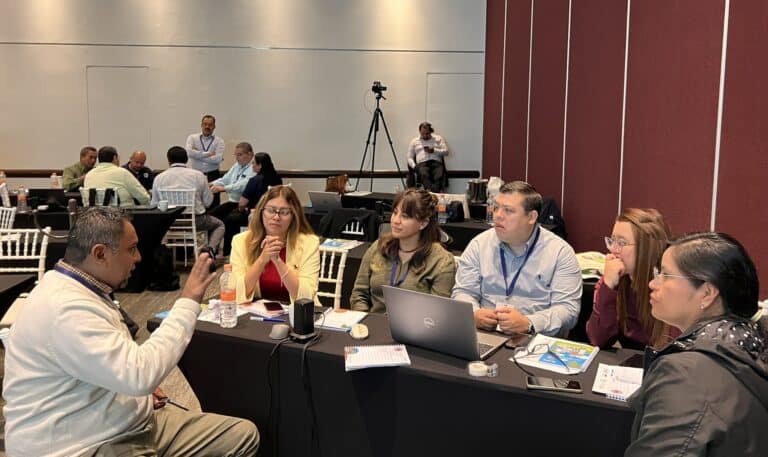
The guide was presented during the FECALAC Regular Meeting that took place in San Salvador, welcoming members of the public sector, as well as representatives of the AD Hoc Dairy Group, the CAC’s Competitiveness, Trade and Agribusiness Technical Group, FECALAC, national dairy sector organizations and other dairy chain stakeholders in the countries.
Food security
“This project clearly demonstrates the work that IICA continues to carry out with its partners to support the countries and production sectors, to contribute to the competitiveness and sustainability of the Central American dairy sector”, said Erick Quirós, IICA Representative in El Salvador and Special Affairs Coordinator of the Central Region, at the opening of the hybrid event, which was held both in person and virtually.
He noted that, “We are facing a series of challenges ahead of us, including a growing population, extreme climate phenomena and animal diseases, such as the New World screwworm in cattle. Through various technical cooperation projects, we will seek to improve national capacities to tackle these issues”.
Héctor Ferreira, President of FECALAC, maintained that the guide addresses an issue that is critical to the dairy sector, and he thanked IICA and the other participants for “a publication that will be very useful for guaranteeing healthy and high-quality food for the population and for identifying new markets in the world”.
Lucrecia Rodríguez, Executive Secretary of the Central American Agricultural Council—a body of the Central American Integration System (SICA) that consists of the ministers of Agriculture of Belize, Costa Rica, Dominican Republic, El Salvador, Guatemala, Honduras, Nicaragua and Panama—highlighted the joint effort of the sector.
She remarked that, “This guide, with its evidence-based conclusions, is a fundamental step in guaranteeing the safety of milk and dairy products. It will facilitate both regional and international trade”.
Alejandra Díaz, a Specialist from IICA’s Agricultural Health, Safety and Food Quality (AHFS) Program, provided details on the content of the document.
The document “Lineamientos técnicos para fortalecer el diseño y la implementación de programas nacionales basados en riesgo para la vigilancia de residuos y contaminantes en la leche” is available at the following link: https://hdl.handle.net/11324/23128.
More information:
Institutional Communication Division.
comunicacion.institucional@iica.int