16 plant health, animal health, and food safety professionals will have tools and skills to implement substantive changes in their countries.
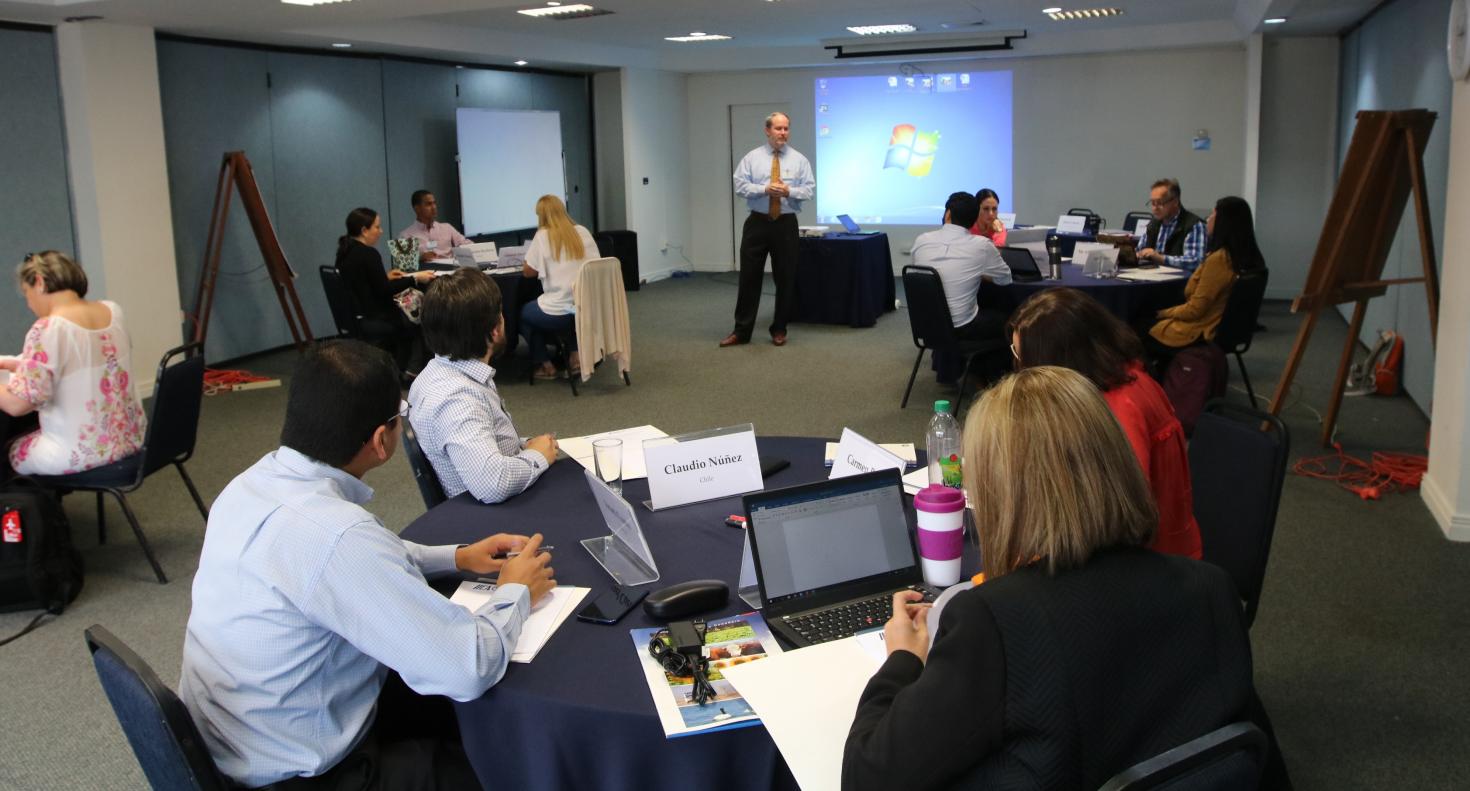
San José, Costa Rica (IICA). The development of leaders with the ability to implement significant changes in the area of sanitary and phytosanitary standards (SPS) in Latin America is the main objective of a new training program organized by the Inter-American Institute for Cooperation on Agriculture (IICA) and the Executive Education Center of the University for Peace.
The initiative, which is funded by the Foreign Agricultural Service (FAS) of the United States Department of Agriculture (USDA), also seeks to promote inter-sectoral collaboration to develop and implement SPS standards at the national, regional and global levels.
The participants will be trained in techniques relating to leadership, social innovation, goal setting, follow-up on progress, overcoming difficulties and measuring results. Technical sessions will also be held, during which the international experts will share their experiences and expertise regarding the scientific and political aspects of international standard setting and current trends relating to SPS.
The professionals who are participating in the program are from Argentina, Belize, Brazil, Chile, Colombia, Costa Rica, Ecuador, Mexico, Nicaragua, Panama Paraguay, and the United States. They are directly responsible for developing or implementing sanitary and phytosanitary measures in their home countries.
The program began this week and, following this first five-day course, the organizers will follow up with the group to determine whether they have put the knowledge acquired into their everyday practice. They will also participate in monthly online learning sessions. According to the leader of the Agricultural Health and Food Safety Program at IICA, Robert Ahern, “the achievements of the participants during these nine months will be the true result of the program. We selected the participants on the basis of their technical qualifications, the relevance of their positions with respect to implementing standards, the quality and viability of the project proposal, and the likely impact of the work proposed at the national, regional and global levels”.
Israel Cueto from Mexico and Carmen Berni from Paraguay, both of whom are participating in the program, agreed that the topics of leadership and interpersonal relationships are usually neglected in the professional ambit, and that this course has proven the importance of developing these skills in order to achieve better results in the technical work areas. “We are focusing on human aspects and that allows me to have a different view of how to successfully pass on my message”, stated Carmen.
In concluding, Ahern pointed out that, “our objective is to develop individuals who form a group, a strong team that will represent the future SPS leader in Latin America. The professionals in the group must get to know each other and work together as a network in order to improve the development and implementation of SPS standards in the region”.
For more information:
Robert Ahern, Leader of the Agricultural Health and Food Safety Program at IICA