The Director General of IICA highlighted the country’s support in promoting issues such as innovation, agribusiness, and agricultural health in the region.
Mexico City, February 24, 2015 (IICA). The Director General of the Inter-American Institute for Cooperation on Agriculture (IICA), Víctor M. Villalobos, has recognized the major contribution that Mexico is making to the technical cooperation actions implemented by IICA in Latin America and the Caribbean (LAC).
In a forum organized by the Senate of Mexico, called Mexico in the World: diagnostic of and outlook for international relations, the participants shared details of the nation’s international cooperation actions and evaluated them.
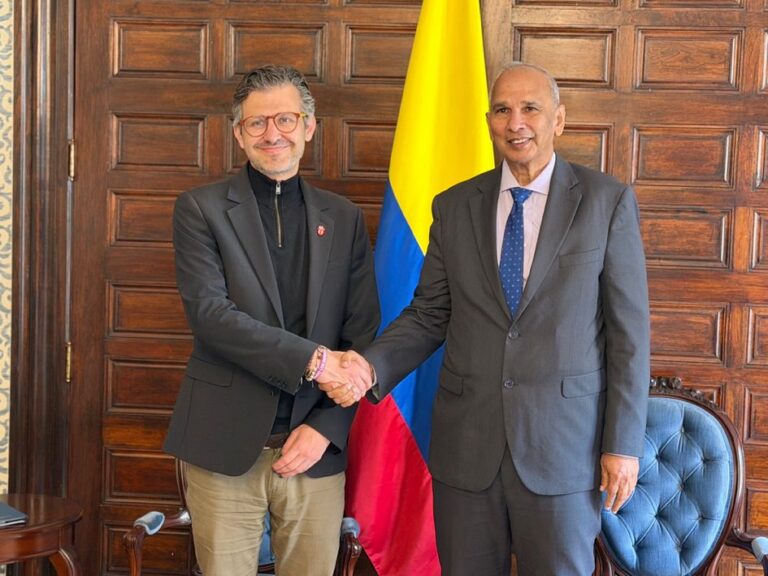
The IICA Director General was one of a number of senior officials who took part in the meeting. Others included the Chair of the Senate Commission for Foreign Relations with LAC, Mariana Gómez del Campo; the Under Secretary of Mexico’s Secretariat of Foreign Affairs (SRE) for LAC, Vanessa Rubio Márquez; Colombian former President and Senator, Álvaro Uribe Vélez; and the Vice President of the World Bank for LAC, Jorge Familiar Calderón.

In the forum, Villalobos underscored the importance of generating and sustaining joint cooperation activities in LAC in order to promote agricultural development and the well-being of rural territories.
“Mexico is not only a founding member of the Institute, it also is a very important supporter of our institution that has demonstrated an enormous sense of responsibility and solidarity with relatively less developed countries,” he told the meeting.
He added that one of the Mexican government’s most valuable contributions to the Institute had been the implementation of a scholarship program under which agricultural professionals from the hemisphere could take postgraduate courses at Mexican universities and thus strengthen their countries’ agricultural capabilities.
This program is the result of an IICA partnership with the Government of Mexico, through the Secretariat of Agriculture, Livestock, Rural Development, Fisheries and Food (SAGARPA) and the SRE’s international cooperation agency–AMEXCID–, under which 100 scholarships are granted each year to students from LAC, with support from the National Council for Science and Technology (CONACYT).
“Cooperation makes it possible to deal with emergencies that require action from the international community, as occurred in 2014 with the coffee rust crisis, when the Central American countries and Mexico provided a rapid response,” Villalobos observed.
He then explained that cooperation also made it possible to provide solutions to strengthen capabilities in areas such as technological innovation, international trade, and agricultural health and food safety.
Former Colombian President Álvaro Uribe agreed with the IICA Director General, and emphasized the need to strengthen cooperation among the LAC countries to tackle the major challenges facing agriculture in the region, such as integrated water management, food security, and efforts to create employment.
“LAC has an immense wealth of natural resources, and that gives us many opportunities. The region contains 50% of the world’s reserves of freshwater and 57% of the planet’s virgin rainforest, but these resources are threatened by poorly organized agriculture and, in some cases, drug trafficking,” Uribe pointed out.
The former president also recognized the work of countries in the region that are at the forefront of food production, such as Argentina and Brazil.
The Vice President of the World Bank for LAC, Jorge Familiar, suggested that the Latin American and Caribbean economies needed to develop strategies for growth in key areas such as agriculture in order to combat poverty and increase productivity and competitiveness.
More information:
gloria.abraham@iica.int