The agreement signed between the organizations covers the next four years, and will promote agricultural sustainability and biotechnology and biosafety actions.
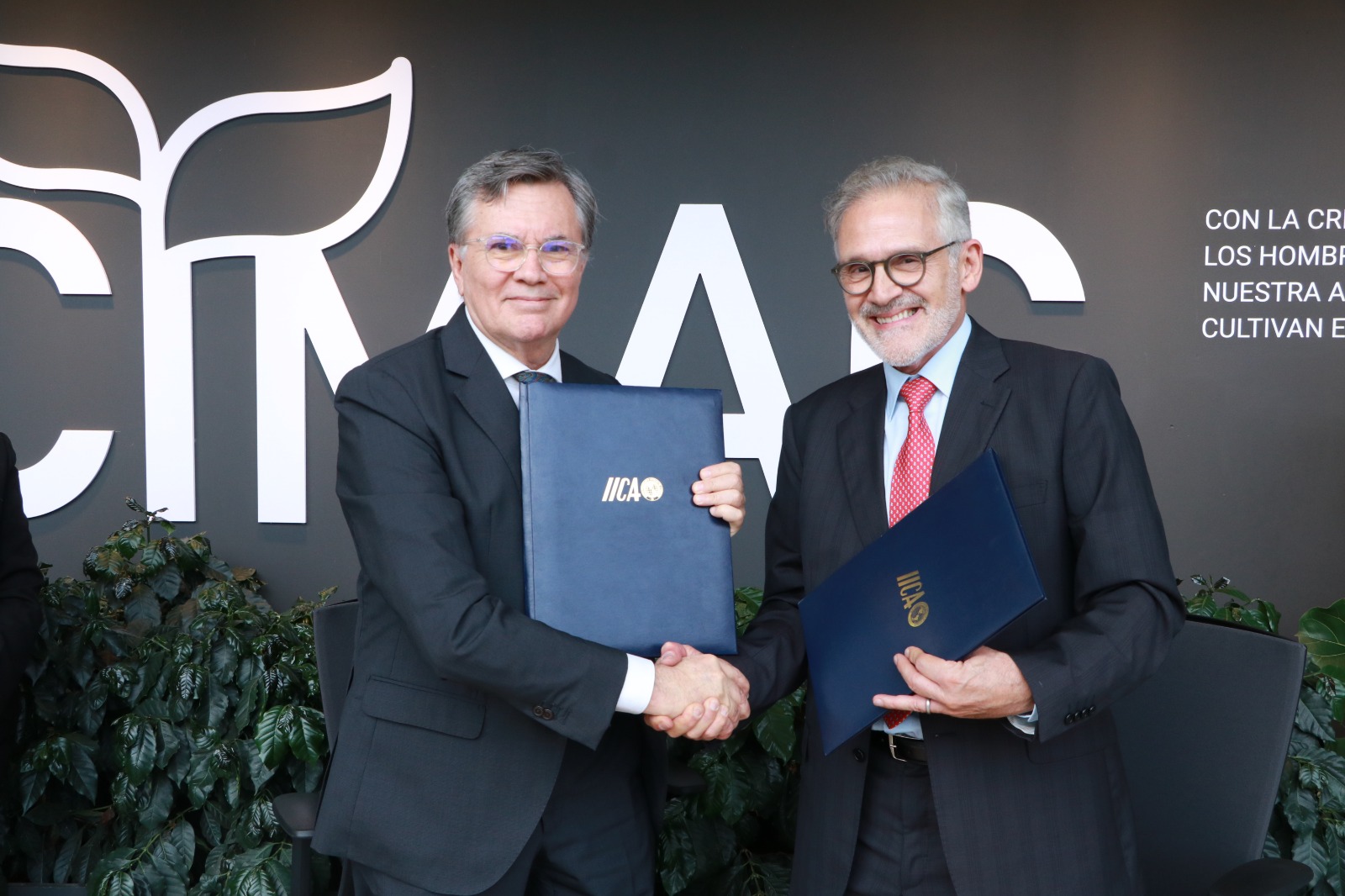
San José, May 23, 2024 (IICA). The Inter-American Institute for Cooperation on Agriculture (IICA) and CropLife Latin America have renewed their technical cooperation partnership to promote technology transfer for the benefit of rural producers in Latin America and the Caribbean (LAC).
The agreement, which will cover the next four years, was signed by the Director General of IICA, Manuel Otero, and the Executive President of CropLife Latin America, José Perdomo.
It calls for the implementation of actions at the national, regional and inter-American levels that promote good agricultural practices and the responsible use of biotechnology in LAC, to boost productivity and sustainability of agrifood systems and facilitate the sharing of scientifically validated biotechnology and biosafety information.
“We’ve made progress in the areas of biotechnology and gene editing in the countries that have worked with us, substantive progress, and there are new issues to address, such as the maximum residue limit, and seeds. We’re going to continue to contribute to this very important task of strengthening the public-private institutional framework of our agrifood sector,” said the Director General of IICA, Manuel Otero.
“Science and innovation are the key input, our agrifood sector is strategically important for the continent, and we always need to think about the leading role that our agricultural producers play,” the head of the Institute added.
Perdomo highlighted the fact that the synergy between IICA and CropLife, which began in 2007, has allowed the countries of the region and regulatory agencies in the field of biotechnology to modernize their systems and advance further in the area of technology.
“We’re collaborating in many areas, we share virtual courses on training platforms for farmers for correct agricultural practices that allow us to maintain that ‘toolbox,’ by which we mean biotechnology, genome editing, fertilizers, agrochemicals, biological controls, drones, everything that comes with Agriculture 5.0,” remarked the Executive President of CropLife Latin America.
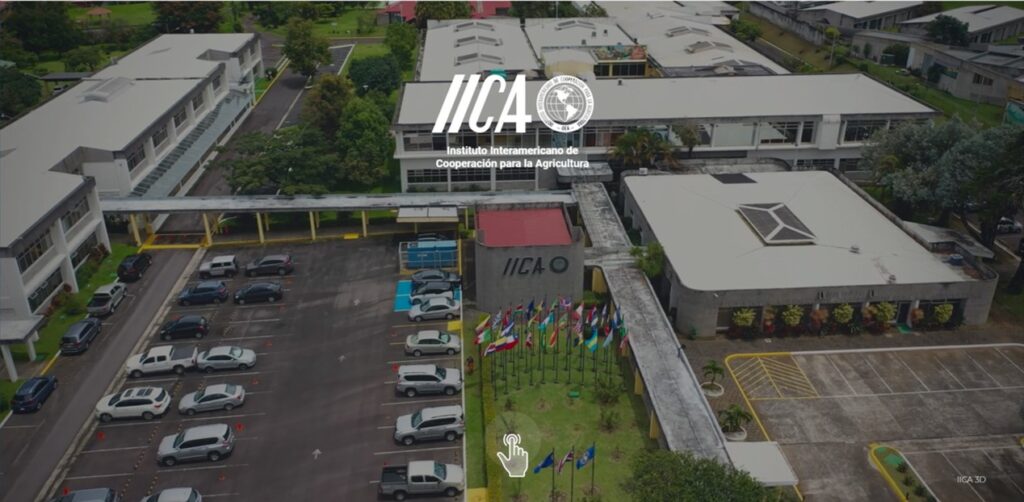
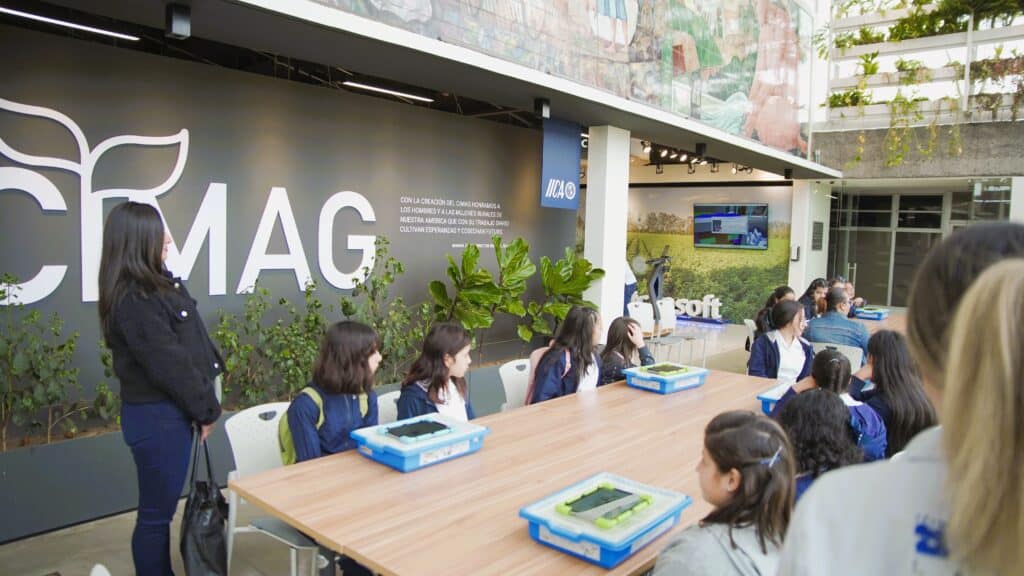
The agreement was signed in the Interpretation Center for Tomorrow’s Agriculture (CIMAG), at IICA Headquarters in San José, where the CropLife delegation was able to familiarize itself with that interactive, educational space equipped with exhibits that show how new technologies can transform regional agriculture.
CropLife Latin America is the international organization that represents the crop science industry, which researches and develops agrotechnologies (agricultural pesticides, biotechnology and seeds) that help farmers produce crops more efficiently and thereby boost food security.
It has six research and development companies and a network of associations in 18 Latin American countries. The organization represents Syngenta, FMC, Bayer, BASF, Sumitomo Chemical and Corteva Agriscience.
More information:
Institutional Communication Division.
comunicacion.institucional@iica.int