The Spanish Political Scientist and Associate Specialist of the Extreme Events Institute of Florida International University (United States), delivered an address in Colombia at the XII International Forum on Territorial Development, organized by the Inter-American Institute for Cooperation on Agriculture (IICA).
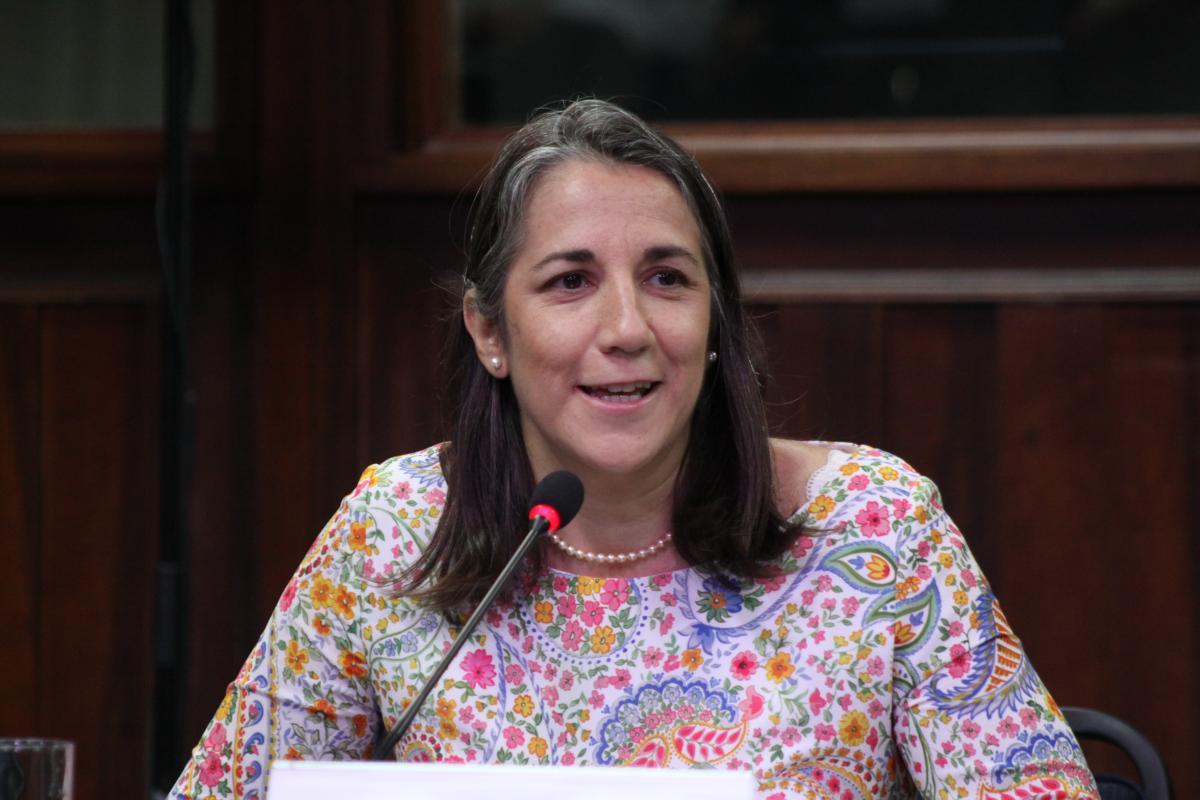
Bogotá, 8 November 2018 (IICA). Mercedes Peñas Domingo, Spanish Political Scientist and Associate Specialist at the Extreme Events Institute of Florida International University (United States), delivered an address to the XII International Forum on Territorial Development in Colombia, organized by the Inter-American Institute for Cooperation on Agriculture (IICA). In her address, she maintained that the specialized hemispheric organization stands to play a key role in conveying a new vision that will be conducive to creating opportunities in rural areas.
The Specialist and former First Lady of Costa Rica stressed that, “IICA should be instrumental in shaping this new vision in the hemisphere, because the prevailing vision continues to reinforce the rural-urban divide and to associate rural areas solely with agriculture. I believe that the huge qualitative leap that this vision of territorial development represents may be taking place in forums like this one, or in other similar situations, but it has not been fine-tuned or adopted at a mass level. IICA, in my opinion, should play a pivotal role in highlighting this issue, and also in undertaking research and innovating work processes”.
She stated further that, “During an era of so much social and technological innovation, IICA has the opportunity and, I think, the capacity to push these different types of approaches that would often not require more financial resources, but rather a different way of thinking and adjustments in cultural patterns and synergies. IICA’s role is critical. Moreover, as a forum for experience sharing, it may be the only entity with the ability to reach governments, given that it is made up of governments. Thus, in my opinion, these forums for reflection, innovation and research are vital”.
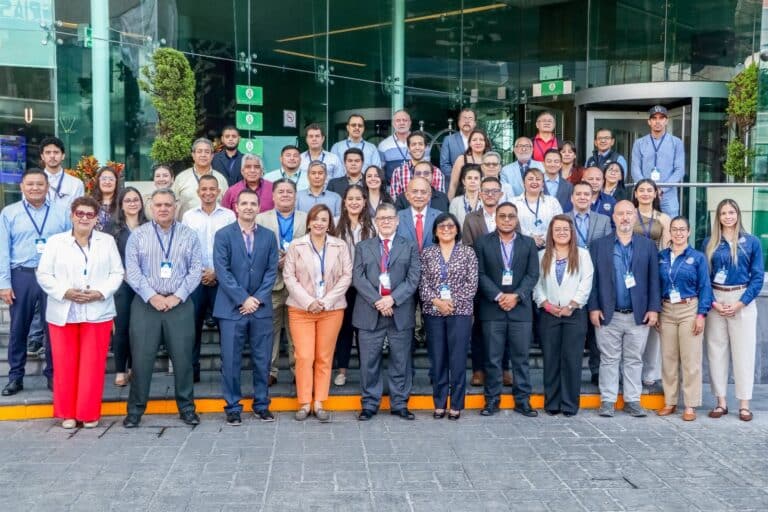
Manuel Otero, Director General of the Inter-American Institute for Cooperation on Agriculture (IICA), gave the opening address. This XII hosting of the International Forum on Territorial Development in Colombia’s capital is being held for first time outside of Brazil. Officials, politicians and academics from twelve countries are in attendance.
The Forum is seeking to develop concrete proposals to successfully tackle the challenges of rural development with a territorial focus, and also to expand knowledge networks in Latin America.
Peñas Domingo also remarked that, “We have to assess how governments are structured; and what is the existing political vision and weighting we assign to everything that we do. I believe an important point that has been made is that we must assign an economic value to everything that is being produced. The contribution of women is often disregarded because the society does not place a value on their work and rural areas face a similar dilemma. We have to assess the value of rural communities and their contribution to economic activity, not only to the GDP, but in other aspects, because the fact that people are abandoning these communities means that we are failing to invest in these areas and to recognize and exploit their potential”.
Thus, she made an appeal for agriculture to be given priority in the political agenda, and called for us to “undertake a more thoughtful analysis of the rural milieu and its value, assigning a value to it. I think that will be the only way to enable rural areas to assume their rightful place (…) and to earn a greater level of political presence”.
During the Forum, IICA’s Director General highlighted the capacities of this agency, specializing in agricultural development and rural-well-being, and also its commonality of interests with the Colombian Government. He also issued an appeal for agriculture to be given priority in national public agendas.
The meeting discussed the pivotal role of rural areas in development processes; the strengthening of the agriculture sector as an instrument for social cohesion; and the urgent need for improvements in infrastructure, the value added component and policies governing land regularization in rural territories.
The Forum was organized by IICA in collaboration with the European Union, the Food and Agriculture Organization of the United Nations (FAO), the Uniminuto University Corporation, the Pontifical Javeriana University of Bogota, the National University of Colombia, the Red Brasileña de la Investigación y Gestión en Desarrollo Territorial – RETE (Brazilian Network of Research and Management for Territorial Development), la Red de Gestión Territorial de Desarrollo Rural de México – Red GTD (Network for the Territorial Management of Rural Development in Mexico), and the Red para la Gestión Territorial de Desarrollo Rural Sustentable – Red GTD PAZ (Network for Territorial Management of Sustainable Rural Development).
More information:
Institutional Communication Division, IICA