
Panama City, 26 August 2025 (IICA). – The New World screwworm (NWS) makes no distinction between species or borders, affecting livestock, pets, wildlife and even posing a risk to human health, the rural economy and regional trade.
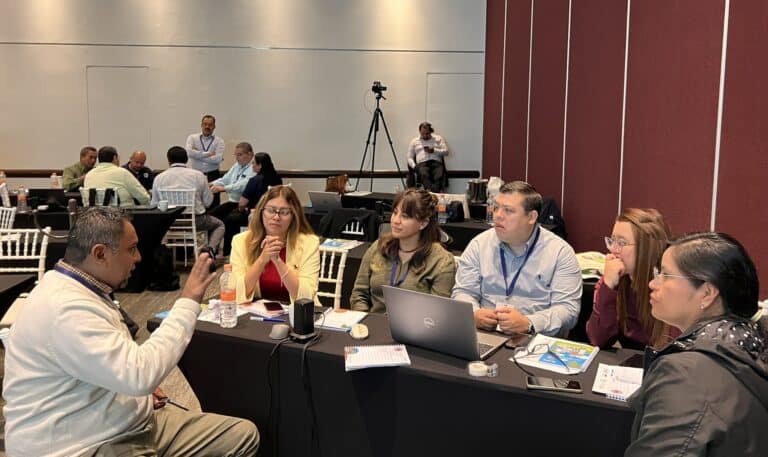
During a workshop in Panama City, seven countries—Belize, Costa Rica, El Salvador, Guatemala, Honduras, Mexico and Panama—joined forces to halt the spread of NWS and strengthen capacities to combat this threat.
For the first time, ministries of Agriculture and Health, the private sector and technical specialists from the Inter-American Institute for Cooperation on Agriculture (IICA), the Panama-United States Commission for the Eradication and Prevention of Screwworm (COPEG) and the U.S. Centers for Disease Control and Prevention (CDC) in Central America worked together to establish a pioneering model of intersectoral collaboration for animal health and public health.
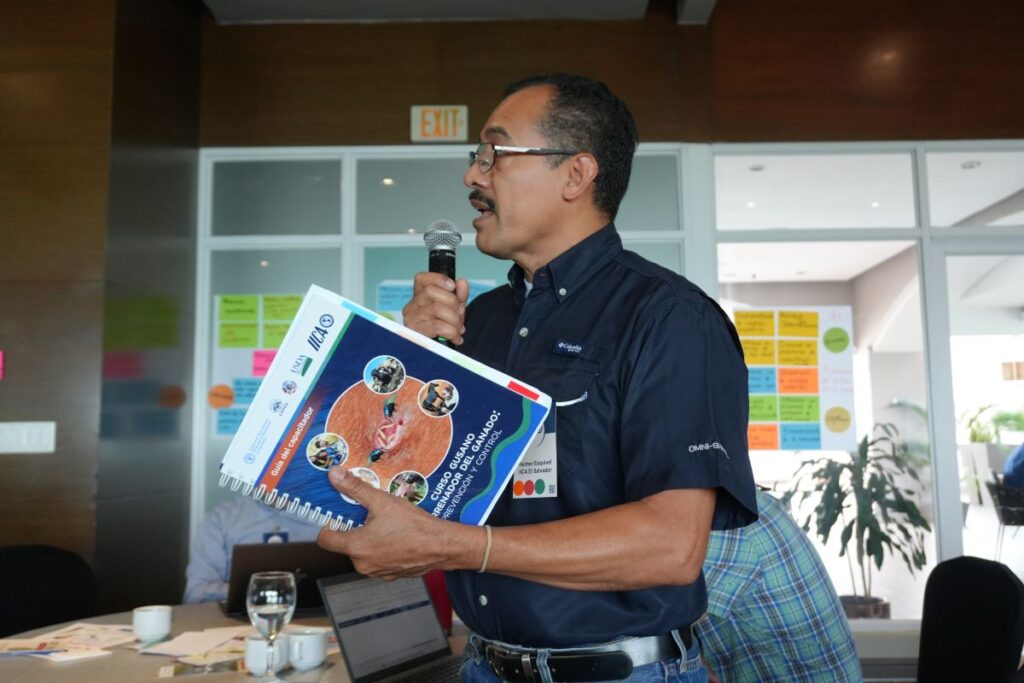
Participants received key materials—such as the NWS Trainer’s Guide, launched by IICA for the workshop, and practical facilitation tools that will enable them to replicate and expand training in their respective countries. Additionally, national teams jointly planned upcoming training sessions, with the involvement of producers, veterinarians, health authorities and public health stakeholders, based on a comprehensive approach to health.
The activity was carried out within the framework of a work plan between IICA’s Agricultural Health, Safety and Agrifood Quality Program (AHFS) and the U.S. Government’s Animal and Plant Health Inspection Service of the Department of Agriculture (APHIS/USDA), in collaboration with international and specialized agencies. The main objective was to strengthen prevention and control measures through the informed and active participation of local stakeholders.
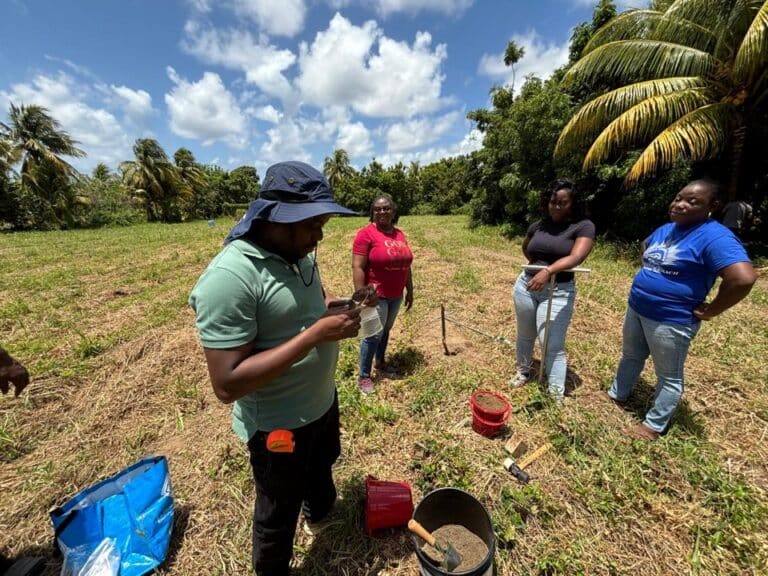
The meeting combined theory, participatory activities and field practice at Finca El Hato (Panama), with the support of COPEG. This allowed for consolidating a regional network of trainers with the mission to save the lives of animals, protect public health, and strengthen livestock production. Horizontal knowledge-sharing and critical reflection was also fostered.
Voices that strengthen cooperation
During the opening session, Miguel Arvelo, IICA Representative in Panama, emphasized the importance of “reducing the fly population and involving the entire production sector in controlling this threat”.
For his part, José Urdaz, Manager of IICA’s AHFS Program, recalled that when cases began to be detected at the Panama-Costa Rica border, “we immediately took steps to address the emergency and work together with USDA/APHIS, which turned to IICA to complement its control measures”.
He added that, after so many years without the presence of the New World screwworm, “we were all relearning how to work. We have now reached a very important level: we are here, collaborating and joining forces, which is key to addressing this threat”.
Christina Lohs, Director General of COPEG (United States), stressed that “sharing and listening to experiences is key; we can only defeat this pest in the region by working together”.
In the same vein, Carlos Moreno, Director General of COPEG (Panama), pointed out that “it is crucial to bring together technical specialists, producers, ministries and governments to strengthen ties and consolidate direct cooperation with the production sector”.
Strengthening regional capacities such as those highlighted by the workshop will be key to preventing, controlling and eventually eradicating NWS. Rather than representing a point of arrival, the meeting was a point of departure: trainers returned to their countries with concrete plans to train new trainers, involve producers in these efforts and bolster prevention measures.
This collective commitment underscores the idea that protecting the region’s livestock, public health and rural economy will only be possible by bringing together the agricultural, health, private and community sectors.
More information:
Institutional Communication Division.
comunicacion.institucional@iica.int