The IICA Office in Costa Rica presented its annual accountability report to the Ministry of Agriculture and Livestock and representatives of the country’s small-scale producers.
San José, Costa Rica, March 25, 2014, (IICA). According to Miguel Ángel Arvelo, IICA Representative in Costa Rica, for every dollar that Costa Rica allocates to the operations of the Inter-American Institute for Cooperation on Agriculture (IICA) in the country, USD 25 are reinvested into projects to promote institutional modernization in the agricultural sector, rural area-based development and sustainable use of natural resources in agriculture, among other initiatives.
On Monday, the IICA Office in Costa Rica presented its annual accountability report to the highest authorities of the Ministry of Agriculture and Livestock (MAG), headed by Minister Gloria Abraham Peralta. IICA’s Director General, Victor M. Villalobos, also participated in this meeting, held at the Institute’s headquarters in San Jose.

Among the results mentioned, support for the implementation of national policies for the agri-food sector stands out, as well as the promotion of rural area-based development, including the Institute of Agricultural Development’s transformation into the Institute of Rural Development (INDER).
According to Minister Abraham, IICA has addressed the needs of the country with flexibility and a sense of urgency, which is demonstrated in the level of technical cooperation provided by this entity and which affirms its commitment to the nation’s agricultural sector.
“Technical cooperation no longer comprises a group of experts prescribing and assigning tasks for government officials to complete. IICA is not concerned with public sector agriculture only, but rather, it now has programs and projects to be implemented in conjunction with small- and medium-scale producers,” Abraham said.
“The number of training sessions in recent years demonstrates that there is a plan in motion and an ambitious one at that.”
IICA’s Director General, Victor M. Villalobos, stated that “The accountability report and transparency validate our commitment to Costa Rica. The affinity and closeness that we share with the Costa Rican agricultural authorities enabled us to forge ahead efficiently with our cooperation strategy, mindful of our capabilities and limitations.”
IICA’s country representative in Costa Rica, Miguel Ángel Arvelo, expressed the view that the results achieved in 2013 were the fruits of efforts made over many years. “To date, we have more than 70 years of experience, during which we have had a great partner and host in Costa Rica. That is why, today, we would like to show them just how we have contributed to the agricultural and rural sectors and how we have invested the resources.”
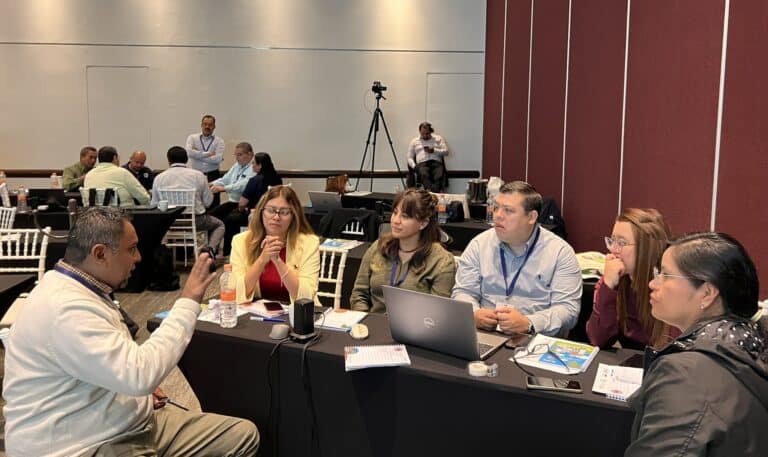
Representatives of Costa Rican public sector agricultural entities, of producer associations and research centers, inter alia, all participated in the accountability process.
Results
Not only did IICA’s Costa Rica Office assist in the implementation of policies and the transformation of the INDER, but it also provided support for the development of strategic and operational plans for the National Seed and Seedling Office (Oficina Nacional de Semillas), the Costa Rica Coffee Institute ((ICAFÉ) and the Institute for Agricultural Innovation and Technology Transfer (INTA).
Within the context of the Central American Rural Area-based Development Strategy (ECADERT) 2010-2030 and the Innovative Policies for Latin American Rural Area-based Development project (PIDERAL), the Office was instrumental in the creation of policies and strategies to promote the empowerment of rural dwellers, to enable greater participation, on their part, in the well-being of their communities.
Support was also provided for the formulation and implementation of the National Groundwater, Irrigation and Drainage Service’s (SENARA) Program for Integrated Management of Water Resources. This effort laid the foundation for the country’s first Irrigation and Drainage Policy.
Each year, IICA presents its accountability report to agricultural authorities from the Institute’s 34 member countries, with the objective of transparently demonstrating how resources are managed and the impact of the technical cooperation provided by this organization.
Video (Spanish only): Annual accountability report
For further information:
miguel.arvelo@iica.int