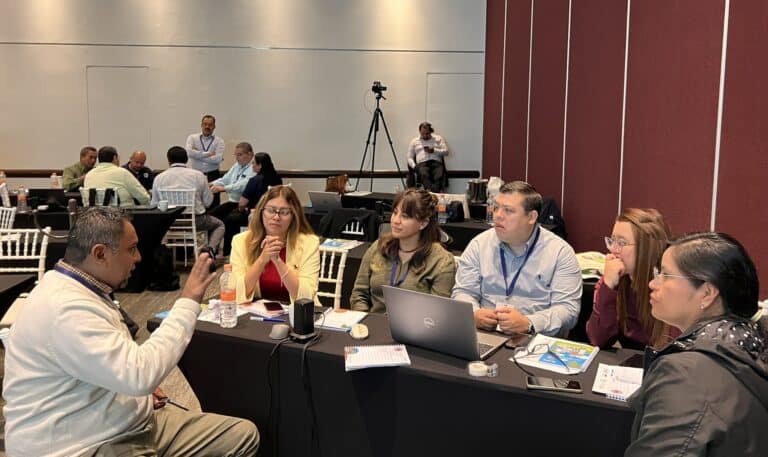
Fifteen representatives from the National Plant Protection Organizations (NPPOs) of the Andean Community countries, along with specialists from the Inter-American Institute for Cooperation on Agriculture (IICA) and the German Agency for International Cooperation (GIZ), participated in a regional phytosanitary intelligence simulation as part of the implementation of the Regional Phytosanitary Intelligence Center project.
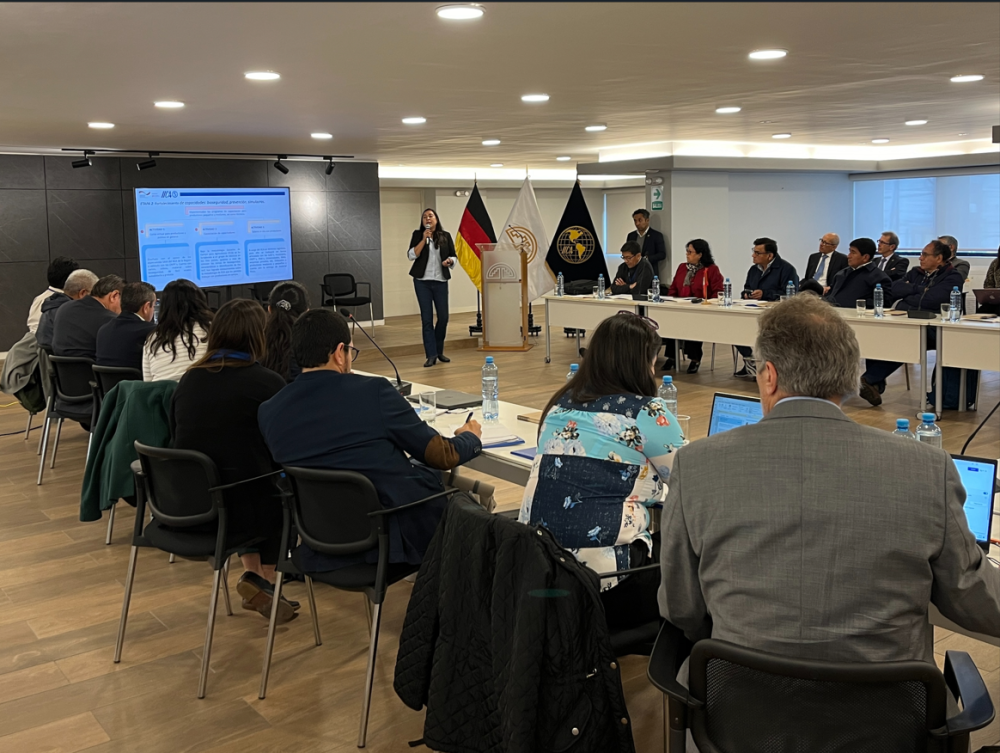
Lima, 28 June 2024 (IICA). Fifteen representatives from the National Plant Protection Organizations (NPPOs) of the Andean Community countries, along with specialists from the Inter-American Institute for Cooperation on Agriculture (IICA) and the German Agency for International Cooperation (GIZ), participated in a regional phytosanitary intelligence simulation as part of the implementation of the Regional Phytosanitary Intelligence Center project.
This project is part of the implementation of the ALER4TA initiative in Ecuador, Colombia, Bolivia, and Peru, addressing Fusarium oxysporum f. sp. cubense Tropical Race 4 (Foc TR4) in bananas, executed by IICA with funding from GIZ.
ALER4TA has contributed to improving the capacities of the Andean countries to tackle this disease by standardizing regional contingency plan guidelines, developing training processes through desk simulations, and strengthening Foc TR4 prevention capacities for technicians, producers, and the general public using the farmer field school (FFS) methodology.
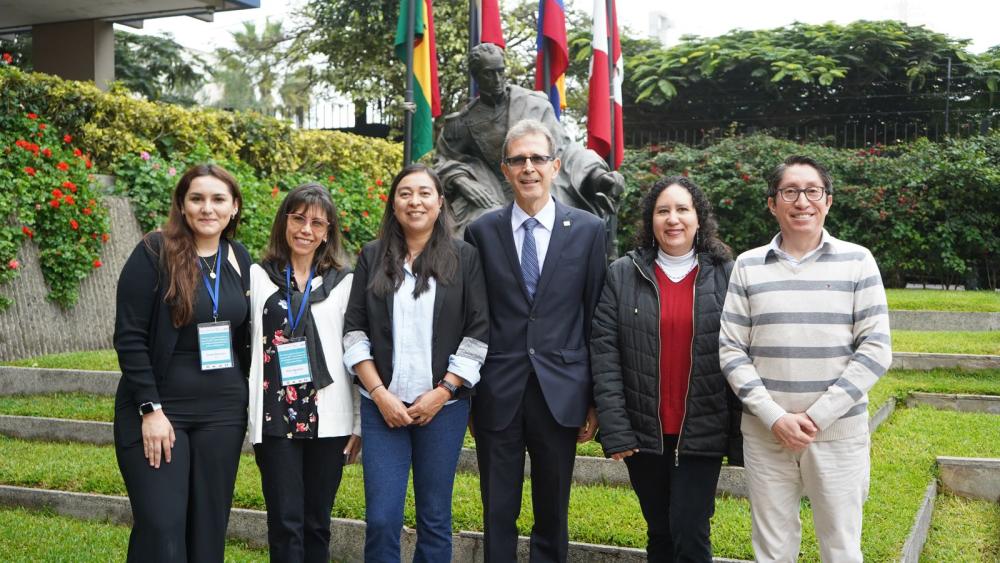
The objectives of the simulation were to facilitate and support the construction of two supranational guidelines related to process standardization, encourage dialogue between countries for decision-making, and improve the capacity to respond to phytosanitary emergencies in the Andean region.
The Andean Community and the NPPOs previously developed the documents: “Guidelines for Developing Simulations for Phytosanitary Alert and Emergency of Prioritized Pests” and “Creation and Implementation of the Regional Phytosanitary Command.”
Lorena Medina, an expert in agricultural health and food safety at IICA, explained that the Institute accompanied this process by providing technical and methodological assistance as part of activities focused on strengthening the technical capacities of the countries, developed in each territory and focused on biosecurity and Foc TR4 prevention.
It is expected that these technical support actions by IICA will enable the Andean Community and the National Plant Protection Organizations (NPPOs) to have solid and practical guidelines for addressing future phytosanitary emergencies.
More information:
Lorena Medina
Specialist in Agricultural Health and Food Safety at the IICA Office in Ecuador
lorena.medina@iica.int