Projects aimed at strengthening food security and risk management in the agriculture sector, key issues during the Covid-19 pandemic, are currently underway.
San José, 24 April 2020 (IICA). – With support from the Inter-American Institute for Cooperation on Agriculture (IICA), Caribbean countries are working to develop projects aimed at strengthening food security and risk management in the agriculture sector, which represent key issues during the Covid-19 pandemic.
Projects currently being implemented include the renovation of an abattoir in Grenada, the sowing of drought-resistant forage for livestock in Antigua and Barbuda, and the provision of training in the use of drones for agricultural disaster risk management in Suriname.
IICA’s food security initiatives in Grenada are focused on the Mirabeau abattoir, where activities are currently underway. In collaboration with the ministries of Agriculture and Finance, respectively, IICA obtained grants from the CARICOM Development Fund (CDF) last year to assist in renovating and procuring equipment, as well as providing training in and improving procedures in the facilities.
The staff at the Mirabeau Abattoir are safer in their workplace thanks to personal protective equipment, first aid materials and disinfectants donated to the Ministry of Agriculture and Lands by the IICA Delegation in Grenada.
National Specialist for IICA in Grenada, Derek Charles, stated that the equipment and materials donated were part of IICA’s Agricultural Health and Food Safety Hemispheric Program that was implemented in Grenada in 2019.
Before the Covid-19 pandemic, IICA received external funds from the Australian High Commission Direct Aid Program to establish four demonstration plots in Antigua and Barbuda to produce a variety of drought tolerant grasses and legumes, such as mulberry, vetiver and dwarf elephant grass.
In light of the pandemic and mill feed shortages that could result from shipment delays, this project will enable famers to rapidly multiply forage material for livestock to replace feed manufactured in mills.
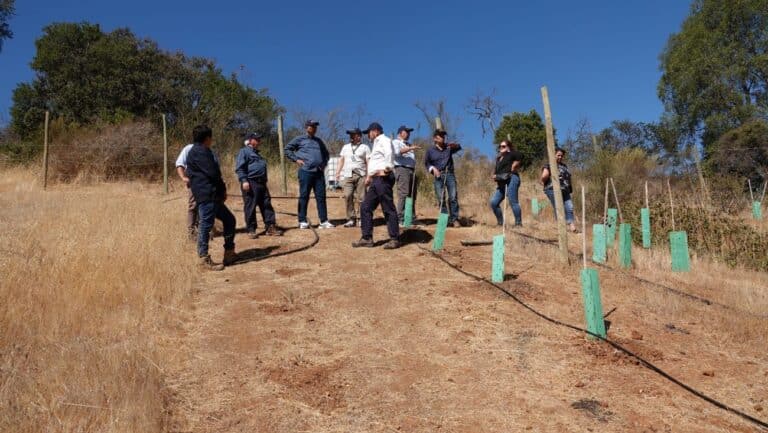
Planting material is currently being prepared as part of the project, which was launched in February 2020. The initiative will provide 250 mulberry plants, 150 glyceria plants and 200 dwarf elephant grass plants. Other high protein forages will be propagated and planted in each of the four plots, which will be watered using only drip irrigation.
The project will benefit more than 35 livestock farmers who form part of the National Livestock Association, and the Ministry of Agriculture will establish a demonstration plot at a government station.
In Suriname, IICA held a workshop on geospatial 3D-modeling tools and drone usage aimed at improving technical and institutional capacities for agricultural disaster risk management (ADRM) and sustainable agriculture.
In addition to agricultural and environmental planning, these same knowledge and skills sets can be utilized in socioeconomic development planning, particularly in the many remote rural communities in Suriname.
More information:
Curt Delice, IICA Representative in Suriname