Panama City, 23 January 2026 (IICA) – Panama, with the support of the Inter-American Institute for Cooperation on Agriculture (IICA), is debating the incorporation of ethanol into the gasoline used by vehicles as part of a strategy to decarbonize land transportation, develop its agro-industrial sector and generate employment in rural areas.
IICA is providing technical support in the discussion of the initiative, based on the premise that ethanol and other liquid biofuels—fuels produced from biological sources—represent a major opportunity for Panama and for the rest of the countries of the Americas, given the wide availability of biomass both in the isthmus and in the region.
The Panamanian government, through the National Energy Secretariat (SNE), the Ministry of Agricultural Development (MIDA) and the Ministry of Commerce and Industries (MICI), together with actors linked to the agro-industry (AZUCALPA) and fuel companies, submitted to the legislative branch a bill to amend the law that proposes, in a first stage, a mandatory blend of fossil fuel with 10% ethanol.
This fuel is produced from sugarcane and other plant-based raw materials. The initiative is already under debate in the National Assembly of Panama.
“Ethanol is a bio-based fuel used globally. More than 60 countries have already incorporated it into their energy matrix, generally with 10% blends, as proposed in Panama. Today we are fully confident that it works perfectly in all engines, improving combustion in automobiles”, said IICA International Biofuels Specialist Agustín Torroba.
The IICA official carried out a working visit to Panama during which he participated in a debate forum held at the Assembly and organized by the Commission on Commerce and Economic Affairs. He also met with representatives of the productive and industrial sectors.
“In Panama, ethanol will have very positive effects on the agro-industry, especially along the sugarcane value chain. Based on the growth projections provided by the government, we estimate that 30,000 jobs could be created, both direct and indirect”, Torroba added.
A tool for the energy transition
With global production growing by 50% over the last decade, liquid biofuels continue to consolidate as a key tool for the energy transition.
According to the 2024–2025 edition of the Atlas of Liquid Biofuels, a comprehensive report produced by IICA with key data from the sector, two countries of the Americas—the United States and Brazil—are the world’s leading producers, accounting for 42% and 20% of the total, respectively. In addition, the American continent produces 87% of global ethanol and has 11 countries that consume it blended with gasoline.
Among the different types of liquid biofuels, ethanol has the highest global production (65% of the total), with growing use of corn as a raw material, in addition to sugarcane.
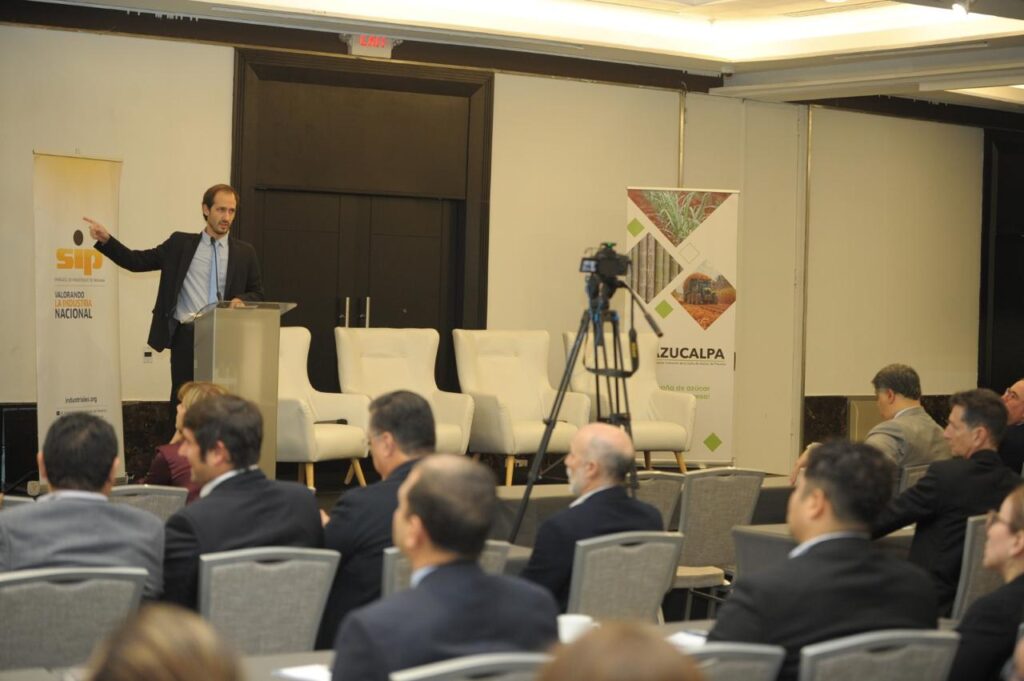
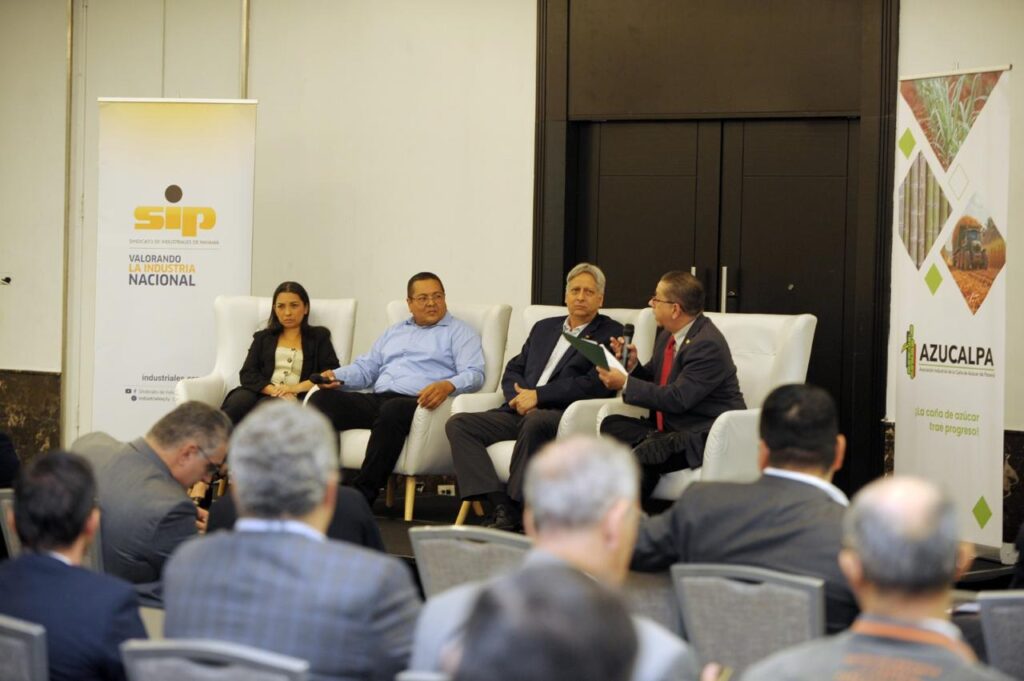
IICA also took part in a discussion organized by the Panamanian Industrialists’ Union (SIP) and the Panamanian Sugarcane Industrial Association (AZUCALPA), in which various stakeholders agreed on the need to establish an adequate regulatory framework so that the country can take advantage of the opportunities offered by the production and consumption of ethanol in terms of job creation, economic strengthening and the promotion of development.
From AZUCALPA, Rodrigo Cardenal and Cristina Thayer highlighted the importance of the project, underscoring the relevance of IICA’s technical support both for the National Energy Secretariat and for independent producers, not only in the initial stage but over the long term.
The Secretary of Energy, Rodrigo Rodríguez, described the economic benefits and the investments that would need to be made to ensure the availability of ethanol and noted that the money currently spent on gasoline imports would remain within the Panamanian economy.
From the productive sector, the spokesperson for independent sugarcane producers, Patrocinio Saldaña, said that if the project moves forward, producers could increase their cultivated areas by between 100% and 400%, incorporating new actors.
“Biofuels are consolidating as a key tool, and Panama has significant comparative advantages to develop them. The IICA Delegation in the country is working together with Panama’s public and private sectors to provide technical support for this development and to maximize opportunities so that they translate into more jobs and prosperity”, said Miguel Arvelo, IICA Representative in Panama.
IICA leads and serves as the Technical Secretariat of the Pan-American Coalition on Liquid Biofuels (CPBIO), created in 2023 and made up of the main business and industrial associations of the Americas dedicated to the production and processing of sugar, alcohol, corn, sorghum, soybeans, vegetable oil and grains, among other agricultural products.
More information:
Institutional Communication Division.
comunicacion.institucional@iica.int