The Leaders of Rurality award is a recognition for those who fulfill an irreplaceable double role: being guarantors of food and nutritional security and at the same time guardians of the planet’s biodiversity through production in any circumstance.
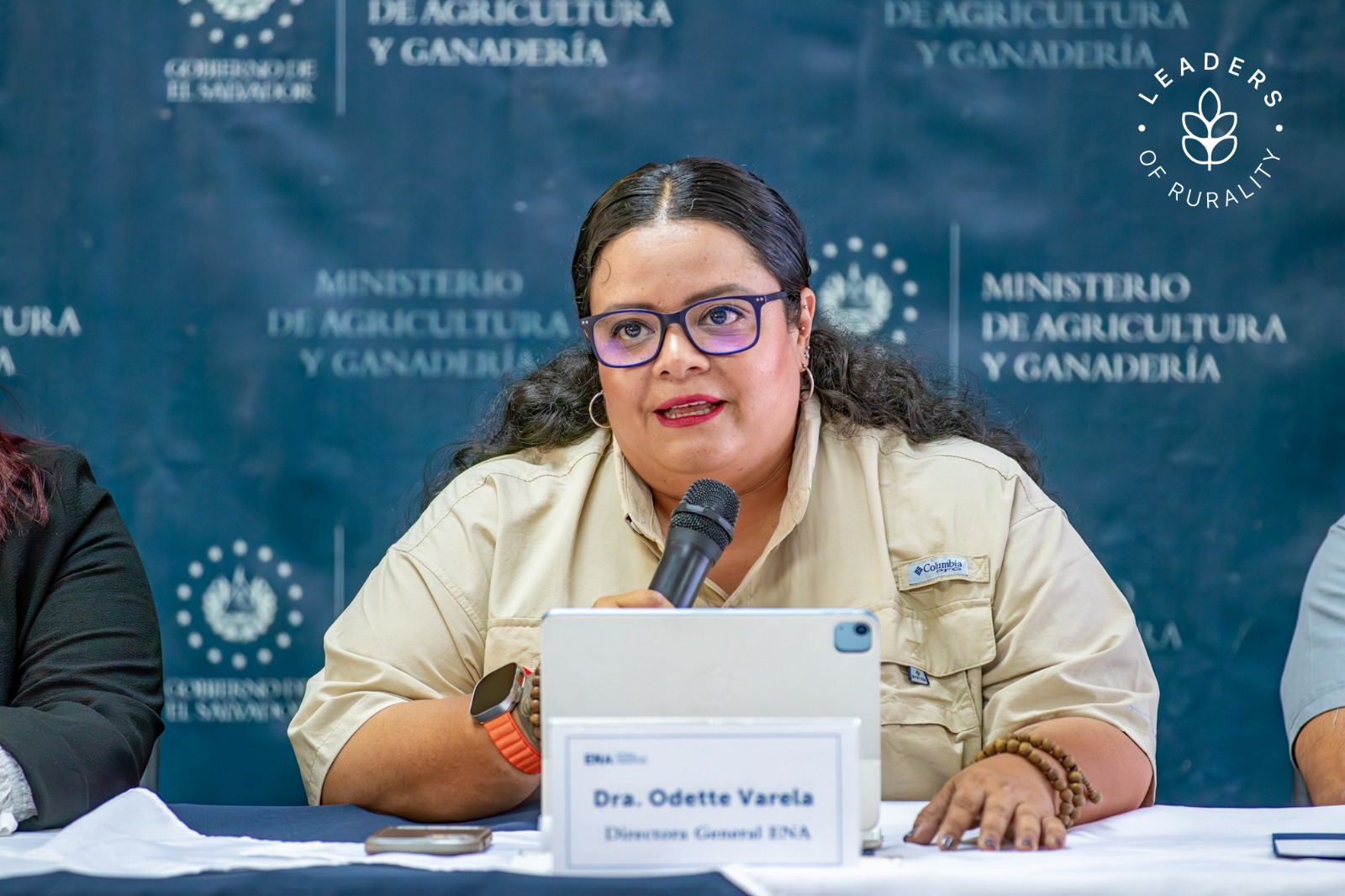
San Jose, 26 February 2023 (IICA) – Odette Varela, General Director of El Salvador’s National School of Agriculture (ENA, for its acronym in Spanish), who works to strengthen rural women and to provide tools so that small-scale farmers in the Central American country can overcome poverty, was recognized as a “Leader of Rurality” of the Americas by the Inter-American Institute for Cooperation on Agriculture (IICA).
In recognition, Varela will receive the “Soul of Rurality” award, which is part of an initiative by the specialized agency for rural and agricultural development to recognize the men and women who are leaving their mark and making a difference in the rural areas of the Americas, a region that plays a key role in global food and nutrition security and environmental sustainability.
ENA, a state-owned technology institute of higher education, was created in 1956 by the Ministry of Agriculture and Livestock with the objective of training professionals in the area of agriculture in El Salvador. Its priority is to provide opportunities to young people from low-income families across the country through the vocation of agriculture.
In October 2021, Odette Varela, an agro-industrial engineer with a rich academic and professional history, became the first woman to head ENA. Starting in 2023, she is also the acting Executive Director of El Salvador’s National Center for Agricultural and Forestry Technology (CENTA), a public institution dedicated to scientific investigation that provides innovative solutions to food production.
Today ENA has around 320 students who will graduate as agronomy technicians with a three-year degree. The majority of the students, who live, work and study at the school, are on scholarship, meaning their studies are paid for by the government of El Salvador with the support of private companies, NGOs and international agencies. The methodology at ENA is to learn through doing, so the students work on the farms in the morning and take classes in the afternoon.
“We are working to attract young people with new technologies and to promote a different kind of agriculture in the country—one that is more productive thanks to science and research. Our priority is also to incorporate more women. Today, 30% of ENA students are women, which is a big achievement in El Salvador where training in the area of agriculture was always considered exclusively for men. It has always been taboo for women”, reveals Varela, who fully understands that her position requires her to focus especially on the most vulnerable farmers.
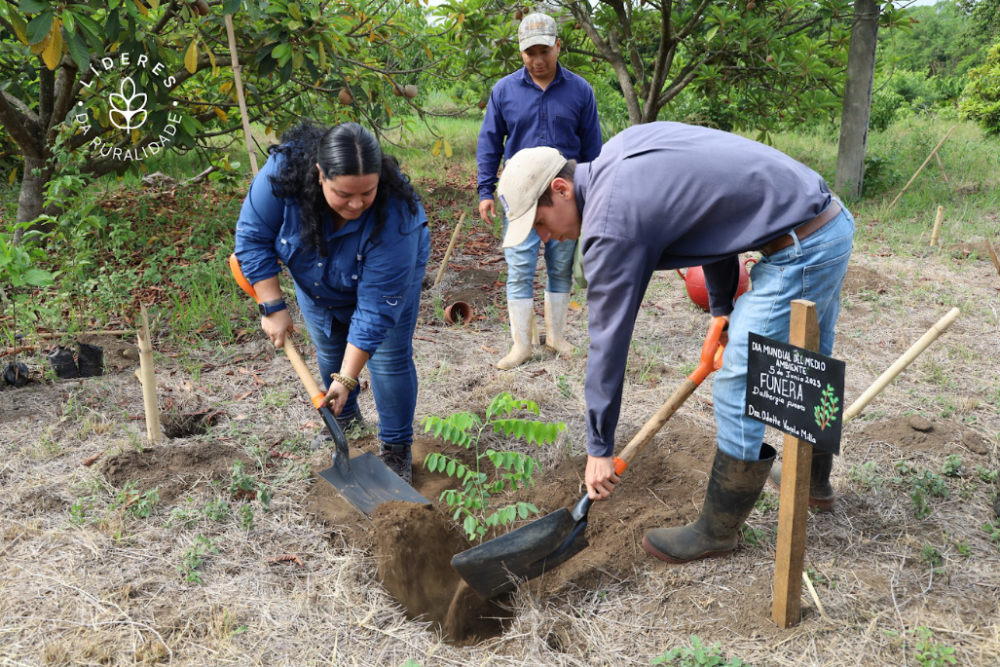
“Large-scale producers know how to do business and can go at it alone. It is our obligation to prioritize assistance to small- and medium-scale farmers”, she explained.
The Leaders of Rurality award recognizes individuals who play a unique dual role as guarantors of food and nutrition security and guardians of the planet’s biodiversity through production under any circumstances. The award also highlights positive examples for the region’s rural areas.
Reducing the dependence on imports
The granddaughter of a dairy farmer, Varela graduated as an agro-industrial engineer and later received a scholarship to pursue a master’s degree in agribusiness at the National Pingtung University of Science and Technology in Taiwan. Later, she received another scholarship for doctoral studies in agriculture and the environment, during which she focused on the production of biochar to restore agricultural soils.
Her professional career includes a stint at the National Administration of Aqueducts and Sewerage (ANDA) of El Salvador, where she worked in the area of environmental impact studies, climate change and water resource recovery. She was also Director of the Graduate School at the Universidad Católica del Cibao (UCATECI) in La Vega, Dominican Republic.
From her important position at ENA, Odette Varela aims to contribute to the objective of reducing food imports into El Salvador, which today equal 80% of total consumption.
“First, we suffered through the civil war, which lasted about 15 years and caused agricultural yield to decrease as many people emigrated and only few were left in food production. Then came the gang violence, which also reduced the country’s productivity. But this is an agricultural country with good soil and plenty of rain, so we can get back on our feet. El Salvador has grown in population and housing and agriculture are competing for the land, and so we have to produce more in smaller spaces and educate the population to achieve this mission”, she explains.
ENA produces a wide variety of foods for sale, including fish, poultry, honey, cows, pigs, rabbits, goats, milk and meat. It also processes dairy products, vegetables, fruits, coffee and cocoa, and has greenhouses for production. It provides training with drones and puts strong emphasis on digital agriculture, which is supported by specialists from the Fab Lab, the technological innovation laboratory for agriculture that operates out of IICA’s headquarters in Costa Rica. Moreover, with IICA’s support, ENA has built a biorefinery to produce biofertilizers.
“We don’t focus on organic farming at ENA, but we try to ensure the agroecological management of stubble, biochar, compost and solid and liquid microorganisms. We have improved the soil and lowered the incidence of pests. We promote reducing the use of agrochemicals and using biofertilizers instead. We are committed to education in order to leave predatory farming behind and be resilient in the face of climate change, which has a huge impact on production due to natural disasters”, explains Odette.
CENTA provides technical assistance to family farmers, many of whom farm on less than a hectare of land and produce basic grains, such as corn and beans, which are staples for many Salvadorans. Moreover, it provides incentives through the allocation of seed capital, built by non-refundable funds.
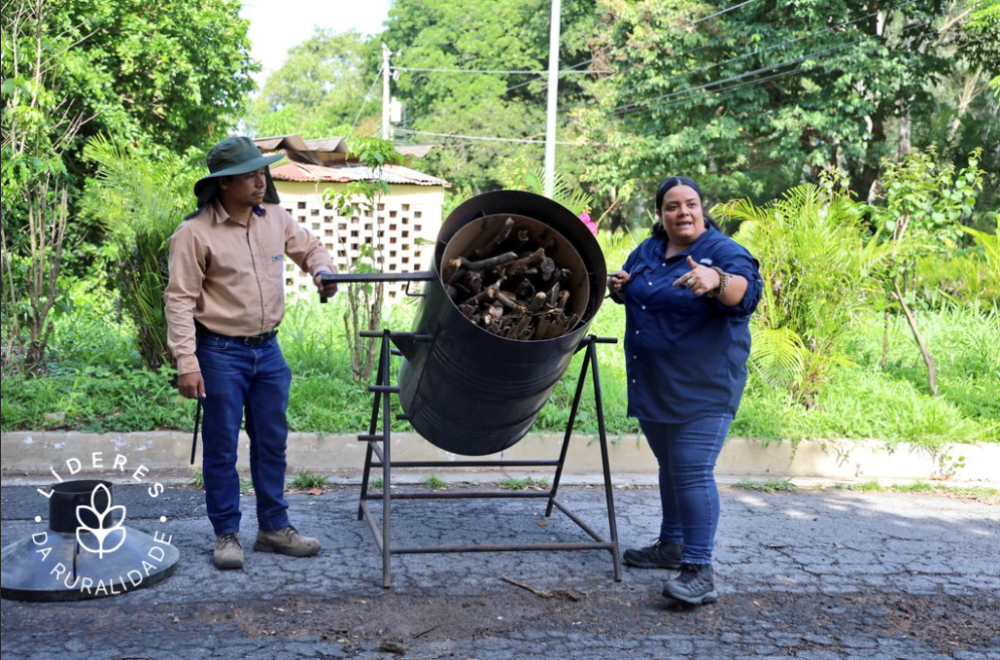
“Our goal is to encourage young people and to change their perspective. Agriculture is not for the poor, as often even farmers themselves believe. On the contrary, it is for entrepreneurs who can take advantage of great opportunities”, says Odette.
The director of ENA especially invites women to train in modern and productive agriculture: “Being a woman does not mean we have to work in the home. We can occupy important positions and be leaders, in addition to running a home and a house. Women have it harder, but we can achieve our dreams if we study and work hard”.
More information:
Institutional Communication Division.
comunicacion.institucional@iica.int