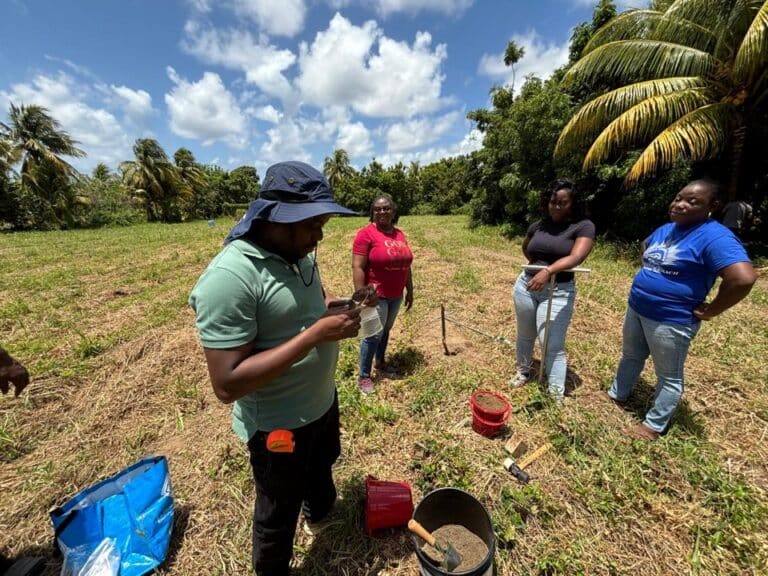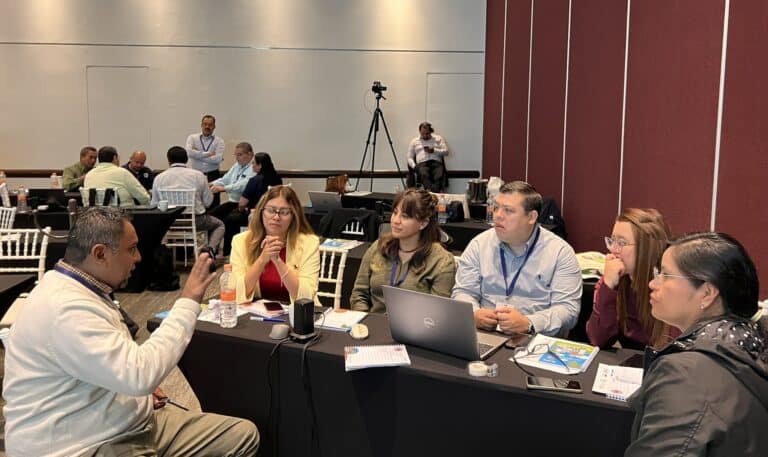
IICA provided support by training census takers from the National Institute of Statistics and Census of Costa Rica and created a virtual classroom to function as a reference source for census takers while they visited farms.

San Jose, May 19, 2015 (IICA). The main results of the 2014 National Agricultural Census of Costa Rica were presented at the headquarters of the Inter-American Institute for Cooperation on Agriculture (IICA) in San Jose, and show the changes the country’s agricultural sector has faced over the past 30 years.
The census, which was carried out by the National Institute of Statistics and Census (INEC) with support from the IICA Office in Costa Rica, indicates that 41.7% of Costa Rica’s territory (which spans 51,100 square kilometers) is devoted to agricultural activities, 21.6 percentage points less than what was calculated in 1984, the year in which the previous census was carried out.
The main agricultural activity in Costa Rica is cattle farming: 28.5% of the close to 93,000 farms in the country are devoted to that activity, followed by 24.3% for coffee growing.
Fernando Ramírez, President of the Board of Directors of INEC, delivered the results of the census to Luis Felipe Arauz, Minister of Agriculture and Livestock. Miguel Ángel Arvelo, IICA Representative in Costa Rica, acted as witness of honor.
Didier Hernández, coordinator of the census, also participated in the delivery of the census results.
Arauz acknowledged the work IICA carried out in training more than 2,000 census takers who travelled across the Costa Rican territory, and highlighted the importance of having up-to-date data for the development of policies that will benefit the sector.
“This information is critical for decision-making, will help improve policies, and will make it possible to promote actions so that agricultural entities will work in an articulated manner. A lot can be done with this data,” Arauz asserted.
Arvelo agreed with Arauz, stating that the results of the census provide a clear panorama for directing cooperation activities that promote the competitiveness, sustainability and productivity of agriculture in the country.
“This data clearly reflects the situation of agriculture in the country, which will facilitate support for the priorities defined by the Ministry of Agriculture and Livestock and will help to serve the sector in a more efficient way,” said Arvelo.
IICA provided advisory services for the creation of the census form and trained the census takers. This support had two objectives: to collect information from producers in the most precise way possible, and to record that information in a clear manner.
Additionally, IICA developed a virtual training classroom which allowed INEC census takers to access the materials they had received during their training.
The census was carried out from June 2 to June 30, 2014.
Video: Spanish only
More information:
miguel.arvelo@iica.int
INEC – General results of the Agricultural Census (Spanish only)
Related news: IICA supports agricultural census in Costa Rica