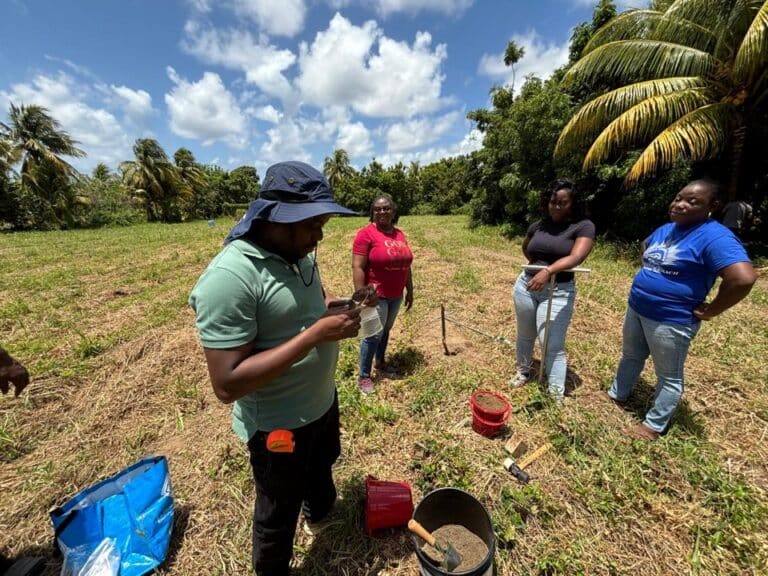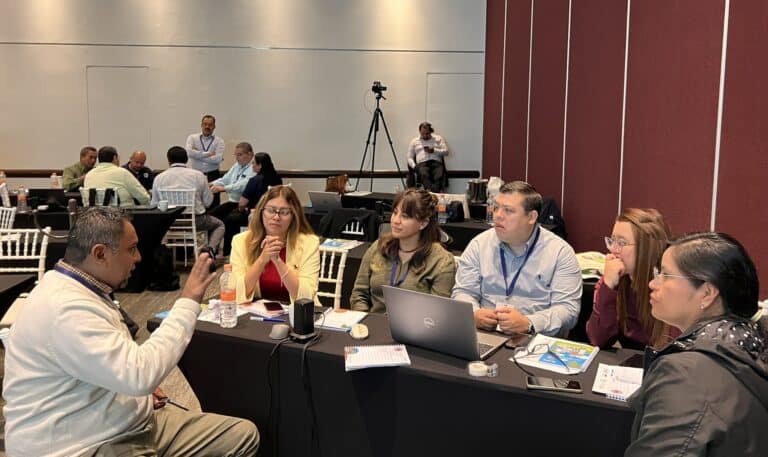
Agricultural professionals and producers took part in training promoted by Mexico and IICA in the Caribbean.

Trinidad and Tobago, October 24, 2014 (IICA). Seventeen professionals working in Trinidad and Tobago’s public and private sectors are better equipped to implement agricultural projects in their country after receiving training promoted by the Government of Mexico and the Inter-American Institute for Cooperation on Agriculture (IICA).
The Trinidadians took part in six courses on protected and family farming, natural resource conservation and rural tourism, among other subjects. They are about to embark on the second phase of the program, in which they will put into practice the knowledge acquired.
At a meeting in Port of Spain, the participants shared their experiences on the training courses and discussed the next steps in the program.
The IICA Representative in Trinidad and Tobago, Gregg Rawlins, pointed out that the initiative would make it possible to promote a new model of agriculture in the Caribbean, one designed to make the sector more competitive and increase its contribution to food security.
Mario Arriola, Mexico’s Ambassador to the country, agreed with Rawlins, underscoring the importance of the training because of the wide range of agricultural subjects covered and the number of people taking part.
The training was provided by specialists from Mexico’s Colegio de Postgraduados (COLPOS), Centro Regional de Servicios Integrales para la Agricultura Protegida (CRESIAP), Universidad Autónoma de Chapingo (UACH), Instituto Mexicano de Tecnología del Agua (IMTA) and Centro de Investigación Científica de Yucatán (CICY).
During the second phase of the program, the Mexican instructors will provide virtual support as the professionals implement their respective projects. In the third and final stage, the Mexican experts will visit the Caribbean country to evaluate and tweak the expertise that the participants acquired.
Rawlins described the program as a valuable opportunity for the Caribbean participants, particularly those from Trinidad and Tobago, because it was enabling them to enhance their knowledge and expertise in their different disciplines.
The Deputy Permanent Secretary of Trinidad and Tobago’s Ministry of Food Production, Joan Hannibal-Phillips, pointed out that the actions undertaken would help achieve the objectives of the National Food Production Action Plan 2012-2015.
The training program promoted by Mexico and IICA has benefited nearly 150 professionals and producers from 15 Caribbean countries. It is being carried out under a cooperation agreement between the Secretariat of Agriculture, Livestock, Rural Development, Fisheries and Food (SAGARPA) and IICA signed in Yucatán during the Third Mexico-Caribbean Community (CARICOM) Summit, which took place in April this year.
For further information:
lisa.harrynanan@iica.int