
Research Assistant, Ronald F. Robles Martinez; International Specialist, Elizabeth Johnson and Farmer, Joseph Baptiste, inspect Sweet Potato in the Field in Saint Lucia.
Castries, Saint Lucia, April 16, 2026 (IICA). – Efforts to strengthen sweet potato production and preserve vital genetic resources across the Caribbean are gaining momentum under the Next Generation Sweet Potato Production in the Caribbean Project, now actively engaging stakeholders through a Community of Practice with technical specialists in Antigua and Barbuda, Barbados, Saint Lucia, Jamaica and Trinidad and Tobago.
The project is implemented by the Inter-American Institute for Cooperation on Agriculture (IICA) in collaboration with national Ministries of Agriculture of Antigua and Barbuda, Jamaica and St. Lucia, along with the Caribbean Agricultural Research and Development Institute (CARDI).
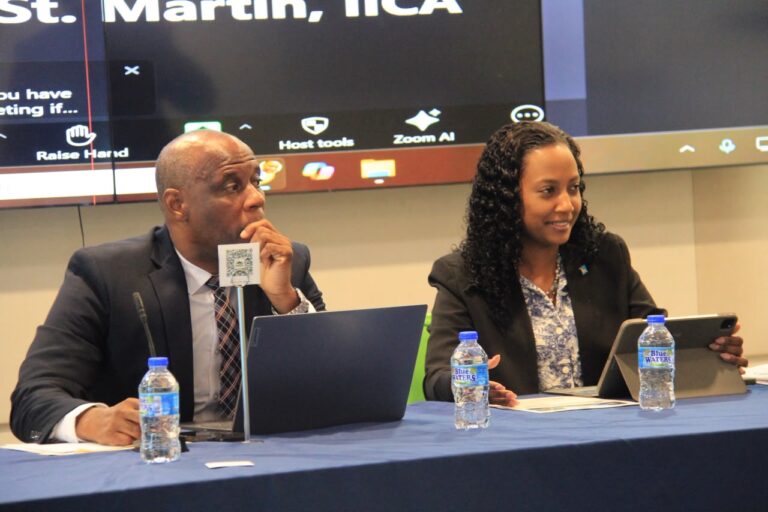
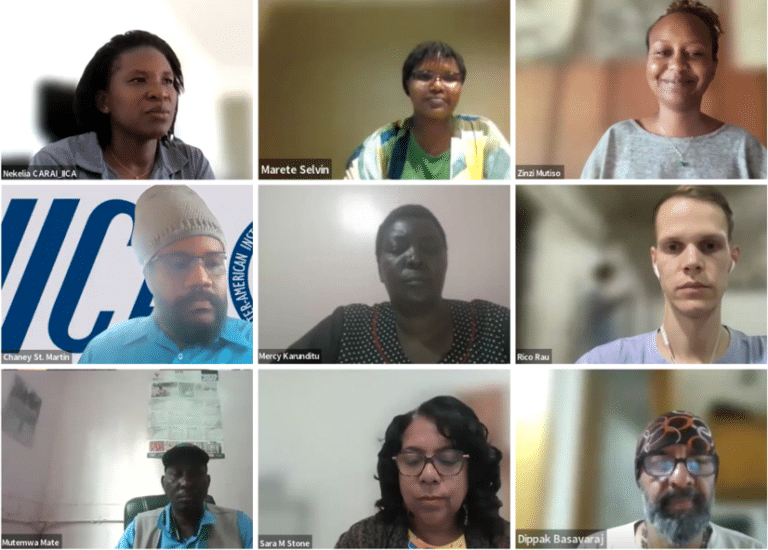
Recent online theoretical and practical training activities brought together 73 agricultural professionals from academia, technical missions, public and private sectors for the identification, morphological characterization, and cataloguing of sweet potato varieties. These sessions, conducted in collaboration with the International Potato Center (CIP), form part of a broader regional initiative aimed at improving crop genetic diversity, strengthening seed systems, and enhancing climate resilience in sweet potato production across the Caribbean.

Participants From Jamaica Assess Production with Dr. Robles.
Participants first engaged in 5 virtual sessions focused on the 30 internationally recognized descriptors used to identify key traits such as leaf shape, vine characteristics, and root features for sweet potato genetic resources before applying their knowledge in practical field exercises in four of the participating countries.
In Antigua and Barbuda, officials noted that approximately 73 sweet potato accessions are currently documented, with an additional 19 varieties expected to be introduced under the Next Generation Sweet Potato Production in the Caribbean project, through collaboration with CIP, further expanding the country’s genetic base.
The project is equipping agricultural professionals with the skills needed to identify and preserve valuable genetic resources for better utilization, while supporting farmers in adopting high-performing, climate-resilient varieties. These efforts are expected to contribute to improved food and nutrition security across participating countries.

Antigua and Barbuda Participant Inspects Sweet Potato in the Field.
Funding is provided through the Benefit-sharing Fund of the International Treaty on Plant Genetic Resources for Food and Agriculture, facilitated by the Food and Agriculture Organization of the United Nations (FAO), with co-financing from the European Union.
The four-year initiative continues to foster regional collaboration and knowledge sharing, building a strong community of practice to support sustainable sweet potato production across the Caribbean.
More information:
Institutional Communication Division.
comunicacion.institucional@iica.int