Inter-American Institute for Cooperation on Agriculture

Agriculture

Peru and Ecuador’s food inspection systems enhance their capabilities with technical assistance from US and IICA specialists

Tiempo de lectura: 3 mins.

The different agencies and organizations were encouraged to set up work teams and strategic partnerships for the nationwide rollout of the new risk-based inspection model.
Principal


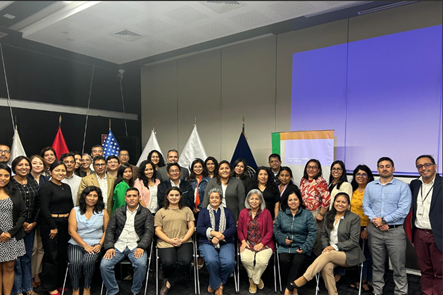
Lima and Quito, May 15, 2024 (IICA). Workshops on risk-based food inspection systems were held in both Peru and Ecuador in order to strengthen food security in the Andean region. The workshops were carried out under the Promotion of Agricultural Trade in Latin America and the Caribbean (PATLAC) project, financed by the Foreign Agricultural Service of the United States Department of Agriculture (USDA/FAS) and the United States Agency for International Development (USAID), with technical and logistical support from the respective US embassies and the Inter-American Institute for Cooperation on Agriculture (IICA).

The meetings took place on April 23 and 24 at Peru’s Ministry of Foreign Trade and Tourism (MINCETUR), and from April 30 to May 1 at the facilities of Ecuador’s Plant and Animal Health Regulation and Control Agency (AGROCALIDAD).



Segunda
<em>Zeke Bryant, USDA/FAS Foreign Agricultural Service officer; Mónica Patricia Saavedra Chumbe, Executive President of Peru’s SANIPES; and Héctor Danilo Villavicencio Muñoz, General Manager of Peru’s DIGESA.</em>


In the workshops, Peru’s National Fisheries Health Agency (SANIPES) and Environmental Health Bureau (DIGESA), and Ecuador’s National Agency for Sanitary Regulation, Control and Surveillance (ARCSA) and AGROCALIDAD, presented the progress made with their risk-based inspection models.

The objective of these models is to modernize food safety management and the inspection of establishments, making both more efficient and aligned with the risk analysis principles of the Codex Alimentarius.

The participants in the meetings, which were targeted at representatives of Peruvian and Ecuadoran industry and academia, included Fernando Sampedro, a speaker and expert from the University of Minnesota; Sonia Allauca, a USDA/FAS official; and Susana Miranda, an IICA specialist in agricultural health and food safety and quality (AHFS).

The different agencies and organizations were encouraged to set up work teams and strategic partnerships for the nationwide rollout of the new risk-based inspection model.

The organizers pledged to continue furnishing technical assistance through virtual sessions, to equip the government entities of the two countries with the tools required to validate the models.
 

Tercera
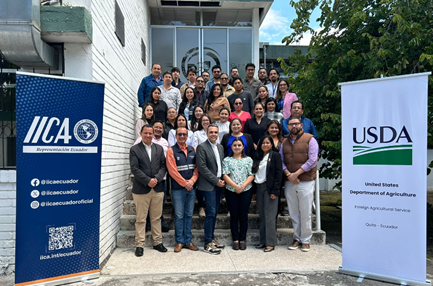
<em>In Ecuador, AGROCALIDAD and ARCSA agreed to join forces thanks to the technical cooperation provided by IICA under the PATLAC project, in collaboration with USDA/FAS.</em>


More information:
Institutional Communication Division.
comunicacion.institucional@iica.int

Share

Related news​

Ciudad de México, México y San José, Costa Rica

April 24, 2026

AGRICULTURA and IICA strengthen cooperation to promote food sovereignty and agricultural health in Mexico

The Secretariat of Agriculture and Rural Development (AGRICULTURA) and the Inter-American Institute for Cooperation on Agriculture (IICA) signed a General Cooperation and Project Management Agreement designed to strengthen technical cooperation targeted at the agrifood sector, the wellbeing of rural communities, and the food sovereignty of Mexico.

Tiempo de lectura: 3mins

San José, Costa Rica

April 23, 2026

IICA and the Hemispheric Bioinputs Platform launch a series of international dialogues on innovations that are revolutionizing this key sector for agriculture in the Americas

As many as 180 people from a number of countries across the region took part in the first session in the series, which was entitled The new generation of CRISPR-edited microbial biofertilizers. CRISPR is a biotech tool used to modify the DNA of microorganisms such as fungi and bacteria with great precision, so that they absorb nutrients and interact with crops more efficiently, giving rise to technologies with less environmental impact.

Tiempo de lectura: 3mins

San José

April 22, 2026

With IICA’s participation, consortium of national agricultural research systems solidifies its standing as a united voice to influence global innovation agendas

A year after its launch, the global consortium that brings together national agricultural research systems (NARS) has taken important steps towards solidifying its standing as a united voice, with the aim of influencing policymaking, mobilizing resources, and participating effectively in international agendas on this topic.

Tiempo de lectura: 3mins