Guatemala City, 23 June 2025 (IICA). The Central American countries and the Inter-American Institute for Cooperation on Agriculture (IICA) took a concrete step in their joint efforts in support of integration with the launch of a digital platform for the region designed to promote higher productivity, sustainability, and market access in the agriculture sector.
A specially equipped room was inaugurated at the Headquarters of the Secretariat for Central American Economic Integration (SIECA) in Guatemala City, where the regional chapter of the Public Policy Observatory for Agrifood Systems (OPSAa) has already begun operating.
SIECA is the technical and administrative body of the Central American Economic Integration Process. Its mission is to facilitate the economic integration of its member states and their access to international markets.
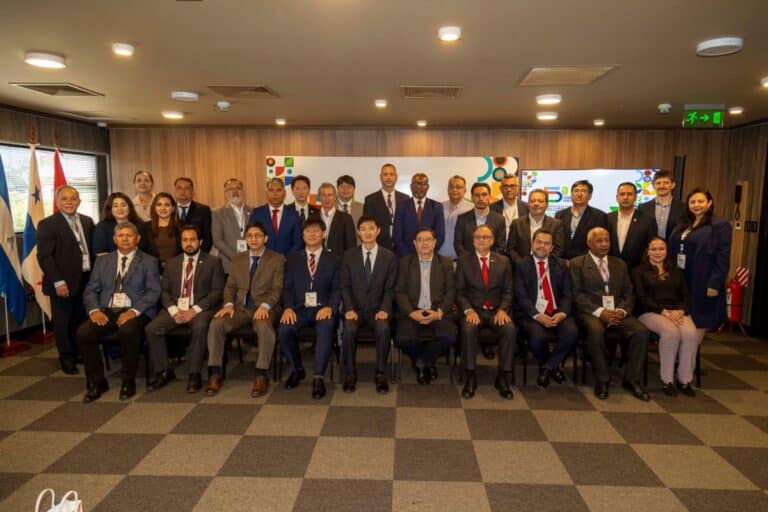
SIECA Secretary General Francisco A. Lima Mena and IICA Director General Manuel Otero cut the ribbons to inaugurate the new physical space, which is extremely important for the coordination of policies designed to strengthen the agriculture sector in Central America. Senior officials and representatives of the public and private sectors of the countries involved took part.
The Observatory, which was launched at the continental level by IICA in 2022, is a digital platform for monitoring, systematizing, and promoting measures and legislation that strengthen agricultural productivity and sustainability.
Its objective is to transform knowledge into evidence, in order to improve public policy management in the Americas, promote better regional coordination, and help make international technical and financial cooperation more effective and efficient.
The new OPSAa Situation Room for the region will provide public officials, researchers, representatives of the private sector, civil society, and academia with real-time access to information on sector initiatives, offering a cross-cutting view of thematic areas, funding sources, beneficiaries, instruments, economic sectors, and best practices.

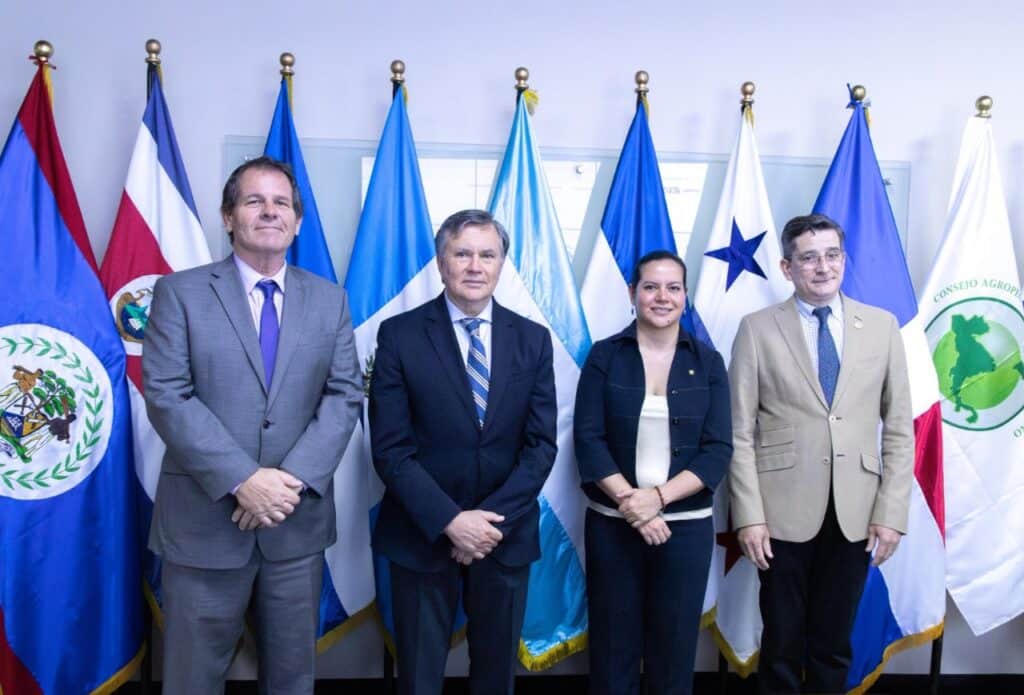
Francisco Lima, Secretary General of SIECA, and Manuel Otero, Director General of IICA.
MORE THAN A PHYSICAL SPACE
“This space is more than simply a technologically equipped infrastructure; it is a tangible symbol of the mutual trust that exists between IICA and SIECA, which share the goal of positively influencing the design of integrated public policies for the development of the agriculture sector in the SIECA region,” observed Francisco Lima, who also acknowledged the valuable financial support provided by IICA to promote Central American food exports through the organization of business roundtables.
“With the same confidence with which we began this project,” he added, “we reaffirm our commitment to making available to governments and productive sectors information, data, and strategic analyses that will enable them to construct a long-term roadmap designed to strengthen the Central American Integration System. Our goal is to make a concrete contribution to realizing the vision of Central America as a development region.”
Lima suggested that the launch of a regional chapter of the OPSAa in Central America “opens the door to a new stage of coordination among countries that will allow them to make evidence-based decisions and contribute to the efficiency of the regional production system.”
Manuel Otero thanked the officials from the Central American ministries of agriculture present, as well as the private sector representatives. “Without the active participation of the private sector, there can be no transformation of agriculture,” he remarked.
The IICA Director General said the Observatory’s new Situation Room for the Central American region is “a clear and concrete sign of our commitment to public policies based on technical analysis and territorial impact. Difficult challenges lie ahead for the agriculture sector, but it has a key role to play in the global agenda, given its responsibility for production, nutrition and the environment, and in the service of peace.”
Otero explained that the Observatory is not simply a data platform: “It is a bridge between knowledge and action; between rigorous analysis and transformative public policies.”
The Observatory Coordinator, Joaquín Arias, gave details of the way in which the information on the platform is structured, and pointed out that the Central American chapter of the OPSAa is the first of several that IICA plans to launch in the near future in other regions of the continent.
The installation of an Observatory Situation Room at SIECA Headquarters was agreed upon last February by Lima and Otero, when the former visited IICA Headquarters in San José, Costa Rica.